Portugal | Lisbon
Lisbon Digital Nomad Guide: Why It's Still Europe's Top Base for Remote Workers
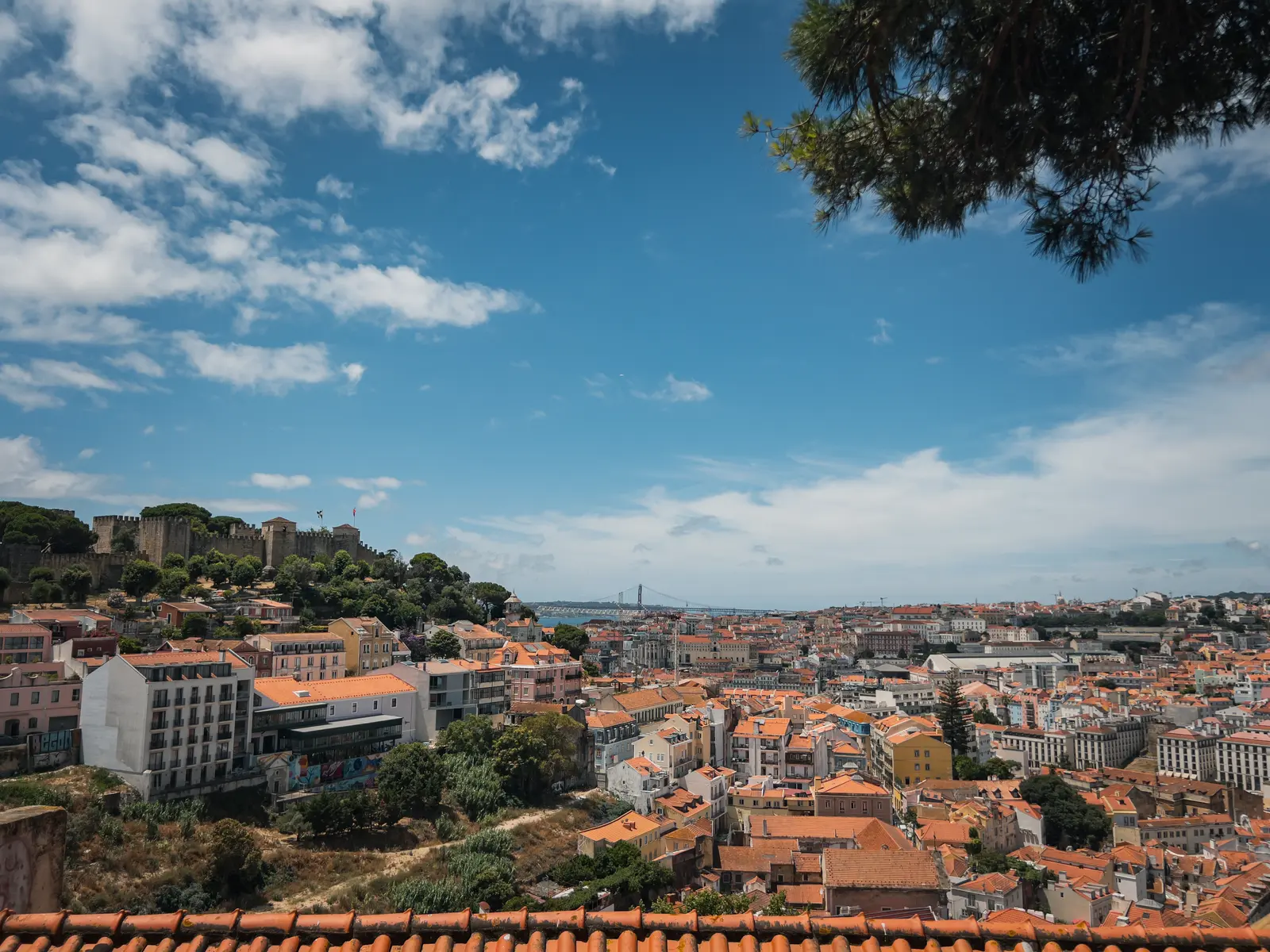
Whenever someone asks me to portray what it's like to live in Lisbon, I usually think of centuries-old tascas and red-tiled roofs meeting a booming international remote work scene, a buzzing specialty coffee culture, and sunset wine meetups overlooking the Tagus.
Somewhere between an exploding number of events for all things tech — Tech Week, Web Summit, Female Founder Breakfast — and growing interest in Portuguese culture and the desire to move somewhere with a mild winter climate, the community of digital nomads and international crowds keeps up its pace.
Nomad Snapshot
Monthly budget
€1,300 – €3,950 / month (depending on long-term vs. short-term rental)
Wi-Fi & speed
Excellent (Fiber 200–500 Mbps standard in most modern/serviced stays)
Safety
High — consistently ranked among the safest capital cities in Europe for solo women
Best season
April – June (Jacaranda blooms, Sardine Festival) & September – November
Avoid / mind: July – August (extreme tourist crowds & heat); Jan – Feb (rainy, damp unheated historic apartments)
In this guide
Is Lisbon Worth It? A Solo Female & Remote Work Reality Check
I've spent a little less than a year cumulatively visiting Lisbon and staying for a month or two every single time, and my opinion on whether this city is worth checking out to stay long-term as a nomad is based on my personal experience staying there throughout the past 3 years (2024–2026). To give you a quick and straight answer: Lisbon, as of today, is still one of the most well-set-up places for digital nomads and has one of the most developed infrastructures for it, one of the biggest communities of nomads, builders, and entrepreneurs from around the world, and a mild and warm climate throughout the year.
Okay, now let's get down to real concerns and drawbacks that have been growing in the past couple of years. Lisbon is not the same hub for nomads as it was during its rise in 2018, when Web Summit brought lots of attention and a tech crowd to the event, making everyone fall in love with the Portuguese hospitality and warmth. After a long-lasting crisis, Portugal was attempting to attract more and more external capital by promoting its country as an untapped tourist destination and a great place to settle in and relocate your business and taxes, providing a wide range of perks. Over the years, it grew the community of remote workers and young entrepreneurs who were attracted by the idea of starting a business alongside various start-up studios and incubators like Lisbon Unicorn Factory, benefiting from significant tax reductions suggested by the government, which was a way better deal than building anywhere else. Things started changing only in the past couple of years, when the incoming crowd and incoming capital started becoming a problem: prices for rent skyrocketed, and most of the central properties were taken by expats or turned into Airbnbs serving nomads and tourists. The biggest change that you, travelling to Lisbon as a nomad, would notice straight up is that affordable and cheap Lisbon is no longer affordable at all. So many sources online still cite prices from 2021, and the situation has changed big time since then. Scroll down to see an actual cost of living breakdown for Lisbon to be able to plan it accordingly.
Lisbon's Built-In Global Community
Lisbon is one of the easiest cities in Europe to make friends quickly: daily nomad coffee meetups, active Slack/WhatsApp groups, weekly co-working days, and beach surf trips.
You can find 2–3 really interesting, worth-checking-out events to visit in a day if you'd really like to. Throughout the time I spent in Lisbon, I've met some of the most curious minds, creatives, builders, and entrepreneurs alike, and to this day I'd probably name Lisbon one of the biggest hubs I've ever been to — where digital nomads are so well represented that it's almost impossible not to run into one just randomly walking around.
Where to Stay in Lisbon as a Digital Nomad
If you prefer more residential living, consider these areas. For hotel picks, flat vs hilly streets and noise, see my full guide on where to stay in Lisbon.
Estrela & Lapa
Best for: 1-to-3 month stays wanting a balance of local living and co-working proximity.
For a more residential feel, Lapa is one of the most peaceful neighborhoods, yet still within walking distance of Santos's streets, which are abundant with coffee shops and brunch spots. It has tree-lined streets, historic mansions, embassies, and close proximity to green spaces like Estrela Park, which is perfect for a picnic on the grass with friends and for curling up with a book on one of the benches.
Santos & São Bento — Nomads' Favourites
Vibe: Design district, flat walking paths near the riverfront, specialty coffee dens, and calm residential lanes.
Príncipe Real — Leafy, Upscale & Laptop-Friendly
Vibe: Garden plazas, organic weekend markets, wine bars, and high-end residential energy.
Best for: Solo female travelers seeking calm evenings and safe walkability.
Baixa & Chiado — Central First-Time Hub
Vibe: Grand plazas, fast metro access, easy orientation, flat downtown grid (Baixa).
Best for: Short stays (under 2 weeks) for those who want to walk everywhere without taking Ubers.
Avenidas Novas & Picoas — Budget & Modern Workspace
Vibe: Wider avenues, 100% flat modern sidewalks, modern residential apartments with central heating/AC.
Best for: Long stays for those who'd love to be within walking distance of everything, including the nearest parks and boulevards.
Best Coworking Spaces & Laptop-Friendly Cafés in Lisbon
Lisbon has one of the best growing infrastructures for digital nomads, or simply people who sometimes need to get some work done when they're on a trip. Depending on what kind of work you do, and whether or not you need to be somewhere peaceful to concentrate on a task — or somewhere lively, to soak in energy and get inspiration from the interior of a cute coffee shop — over the months I've collected a long list of places for any occasion.
Coworking Spaces
- •LACS (Santos / Anjos): Creative community hub right on the riverfront with floating desks, private booths, and a rooftop bar.
- •Second Home (Cais do Sodré): Plant-filled biophilic space inside the Time Out Market building, ideal for high-productivity days.
- •Idea Spaces (Saldanha / Palacio): Great for long-term nomads needing ergonomic setups and community events.

Tested Laptop-Friendly Cafés
Year over year, as Lisbon's population of digital nomads and remote workers grew, alongside an expat community who permanently moved to Portugal, the number of coffee shops, brunch spots and cafes has been expanding to serve the demand of a new urban category Lisbon hadn't seen before (at least, not in that volume). That created a noticeable tension, and the warmth and hospitality slowly took a new turn, with signs appearing on the tables that say ‘No laptops allowed’. Walking around Lisbon, I noticed that it hasn't been the case for all coffee shops, but a very big proportion of them applied new rules for everyone who would love to settle down at a table with a laptop: some places restrict using laptops at all, and some of them allow them only at certain dedicated tables (usually by the bar or in a corner, the ones that are not used by the crowd who comes to grab a brunch with friends and have some social time).
It is happening in all big cities, where cafe owners simply can't afford one visitor with a laptop occupying a table for 3 to 5 hours straight, when there's a line of people waiting at the door, ready to sit down for a brunch. Lisbon, despite not falling into the big city category, has nevertheless fallen into the same pattern.
Some Café Co-Working Etiquette
I'm sure that none of us, people enjoying camping with our laptops at cute cafes, actually intend to do any harm to small-business owners. Even if a place doesn't enforce any strict laptop policy or limits, it's good to be mindful and stick to these principles.
Plan your cafe work block for early morning or later afternoon
Based on my observation, there are generally two peak-hour blocks with high occupancy: morning hours, when everyone is getting breakfast, 10:00–12:00, and lunch time, 13:00–15:00. Most of the cafes are at 94–100% capacity from 12:00 to 13:00. Across 70 Lisbon cafés, the typical peak is 13:00.
The best time to plan your cafe work block is early morning, right after opening (8:00 to 10:00), and later afternoon, from 15:00 until closing.
My Favorite Cafés to Work From
There aren't many cafes I've tested — and the ones I did, I just kept coming back to, because I'd sorted out the best dynamic for when I can settle and get a table for a few hours to knock out some work.
Copenhagen Coffee Lab
For a long time, this chain has been a savior for me whenever I had to stop over to get something done on my laptop within an hour or two. They have reliable Wi-Fi, power outlets, solid filter coffee and incredible cardamom buns. Generally, light laptop use is allowed at dedicated marked tables.
Locations:
- •São Paulo (Cais do Sodré), Rua de São Paulo 62 (opens in new tab)
- •Santos, Avenida 24 de Julho 56 (opens in new tab)
- •Baixa, Rua dos Douradores 190 (opens in new tab)
- •Praça das Flores, Rua Nova da Piedade 10 (opens in new tab)
- •Estrela, Av. Álvares Cabral 13C (opens in new tab)
- •Alfama, Escolas Gerais 34 (opens in new tab)
- •Alcântara, Rua Prior do Crato 1A (opens in new tab)
Lisbon Weather & When to Come
Tap a month to see temperatures, rainfall and what Lisbon is like that time of year.
Rainfall by month (mm)
High temperature by month (°F)
November in Lisbon
Autumn65°
High
59°
Average
53°
Low
Spring (April – June) — The Golden Window
Purple Jacaranda trees blooming across town, mild 20°C–24°C temperatures, and June's Festas de Lisboa (Sardine Festival).
Autumn (September – November)
Warm ocean waters, post-summer crowd drop, and perfect crisp walking weather.
Winter (December – February) & The Heating Factor
Rain levels, humidity, and an essential warning for remote workers: historic Portuguese apartments often lack built-in central heating, so look for stays with AC/heat units or portable radiators. If you're coming in the colder months, here's my 3-day Lisbon itinerary for winter.
Cost of Living in Lisbon for Digital Nomads
The cost of living for a nomad can vary widely depending on lifestyle and accommodation preferences, but to give you at least an approximate estimate, you can use these numbers as a reference:
| Category | Budget | Mid-range | Comfortable |
|---|---|---|---|
| Rent (furnished, mid-term) | €900–€1,200 (co-living / room) | €1,400–€1,800 (serviced studio or 1-bed) | €1,800–€2,200 (1-bed in Príncipe Real, Chiado or Estrela) |
| Utilities & internet | Included | €0–€100 | €100–€160 |
| Groceries & markets | €200–€250 | €250–€300 | €300+ |
| Dining out | €100–€150 (prato do dia a few times a week) | €300–€400 | €500–€700 |
| Coffee & pastries | €30–€50 (espresso at the counter) | €80–€120 | €120–€150 |
| Transport | €30 (Navegante city pass) | €40–€80 (metro-area pass + some Bolt) | €80–€150 (mostly Bolt/Uber) |
| Coworking | €0 (laptop-friendly cafés) | €180–€250 | €250–€300 |
| Monthly total | €1,300–€1,700 | €2,250–€3,050 | €3,150–€3,950 |
For the tascas where a prato do dia lunch still costs what it should, here are the best spots to eat in Lisbon.
Getting Around Lisbon
Public Transit: Metro, Trams & Ferries
Get a Navegante card for seamless metro, bus, and Santa Justa funicular access.
Uber and Bolt
Uber and Bolt are go-to apps when it comes down to getting around Lisbon. They're super reliable and the ride costs are pretty modest by European standards, around 5 to 10 euros per trip.
Walking
Depending on the area where I was staying, I enjoyed walking everywhere in Lisbon and rarely relied on the Metro or Ubers. You have to be mindful of Lisbon's famous ‘7 hills’: wearing heels might be challenging, and it also gets quite slippery when it rains. My best advice is to wear grippy shoes, something that would be comfortable to walk up and down the steep streets. For what to see on foot, here are the best things to do in Lisbon.
Where to Meet Other Nomads in Lisbon
It's almost impossible not to run into nomads on the streets, or strike up a conversation at a cafe or at the gym — you would meet nomads and international expats almost everywhere you go.
Depending on your interests and professional sphere, you can find various events taking place — almost every day there's one or two interesting, worthy events you'd be willing to attend. However, it still takes a little research on what kind of people you're interested in meeting — and here are my favourite places to stay up to date on what's happening in the city.
- •Luma (opens in new tab) — I subscribed to and follow this event digest in Lisbon, and there are frequently some fun happenings: community Pilates classes, offline club nature getaways, hackathons, and builders.
- •Meetup (opens in new tab) — This is a second source for finding events or any activities to meet other people, from speaking clubs to dancing lessons, but also occasionally worthy marketing and tech events.
- •People of Lisbon (opens in new tab)
- •Creative events by Fable (opens in new tab)
- •Lisbon Digital Nomads (opens in new tab)
A quick piece of advice on what helps me pick an event that's worth attending: I check how many attendees have already signed up. For social events, it can start with at least 6 people signing up (where 10% will probably cancel). I check if the organizer has recurring events, so I could join more in the future and connect with a community more deeply, and I make sure that the organizer has a history of hosting events in the past.
A Community I Could Swear By: Founder Running Club
Founder Running Club (opens in new tab) — if you're a runner, or, like me when I first started running, what I called ‘a social runner’ who would go on a run if there's good company and nice chat.
Outsite Coworking
I attended a few social happy hours at Outsite (opens in new tab) last autumn and made some connections that turned into friendships I keep until today. They post about their events on their website, but you can just drop by and cowork there.
Once you're settled in, here's how to explore Lisbon like a local.
Final Words
Lisbon still deserves its place among the top 10 Nomad Hubs in the world, but in 2026 it just comes with a different price tag — it is no longer a budget option. However, you can still plan to spend some time there to enjoy the largest community, but it comes with a few less comfortable trade-offs (you might need to trade a private studio for a room in a co-living space). It still remains affordable to many nomads who moved from Western Europe, where the cost of living is still higher, and there is a settled community of long-term expats who're building lives and businesses there.
Lisbon is pretty safe for solo female nomads, but as a capital city with a growing population, it requires standard precautions. In my personal experience, I've never felt unsafe walking alone in Lisbon at any time of day, and it's safer than many other places I've ever travelled to and lived in. I had many friends arriving in Lisbon after staying as a nomad in Bali or Vietnam, deciding that they'd love to settle down in Lisbon for the longer term — and their reason has always been: community, like in the best SEA hubs but with a European level of comfort, fast fiber internet, coworking spaces, and great healthy food.
FAQ
Read next
Where to Stay in Lisbon
Flat vs hilly neighborhoods, safety for solo women, noise, elevators, and hotel picks from Baixa to Belém.