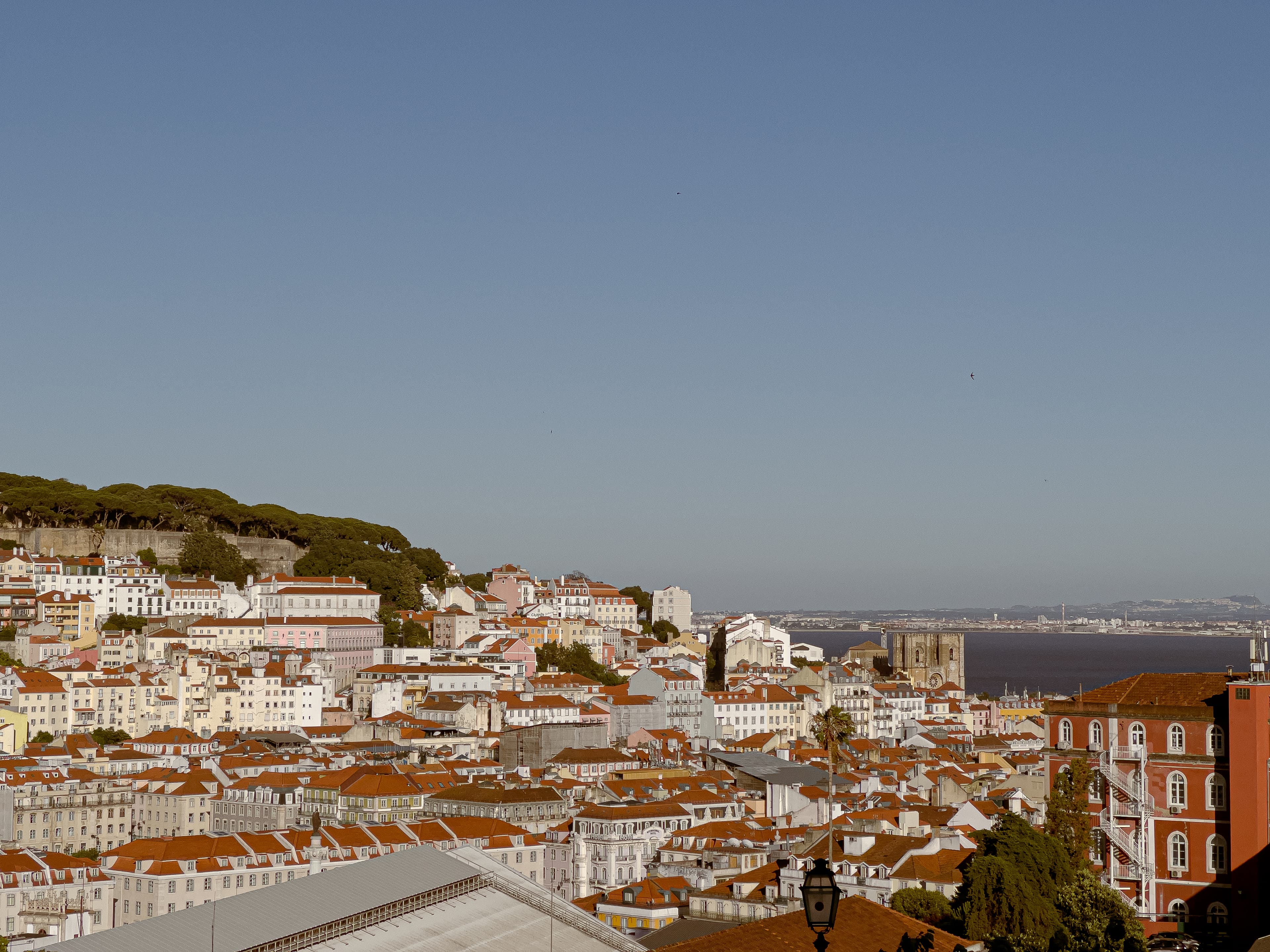
Lisbon Like a Local: Solo Female Guide to Neighborhoods, Tascas & Cafés (2026)
I've been coming back to Lisbon for years. The first time, it was pouring rain and the city didn't exactly roll out the welcome mat. Second visit, I stayed longer — as someone who works remotely, the Lisbon digital nomad community just made sense. I made friends, found the best laptop-friendly spots, and figured out which tourist traps you can skip entirely. Here is my ultimate Lisbon solo female travel guide for your first visit.
The Best Time to Visit Lisbon for Remote Workers & Travelers
The golden window is April through June.
In May there's jacaranda season — the whole city turns purple. The trees line entire streets and the scent hits before you see them. Worth planning around.
The highlight of June is the Sardine Festival (Festas de Lisboa), centered in Alfama. Every street vendor is grilling sardines, the streets fill with locals, and the whole city smells like smoke and the sea. It runs through the month and is genuinely one of the best things you can experience in any European city.
July and August are hot — mid-30s Celsius. If you run warm, factor that in. Crowds are also at peak.
September through November gives you cooler temperatures, thinner crowds, and the same gorgeous light. A great window if you want to walk around without sweating through your outfit or queuing for everything.

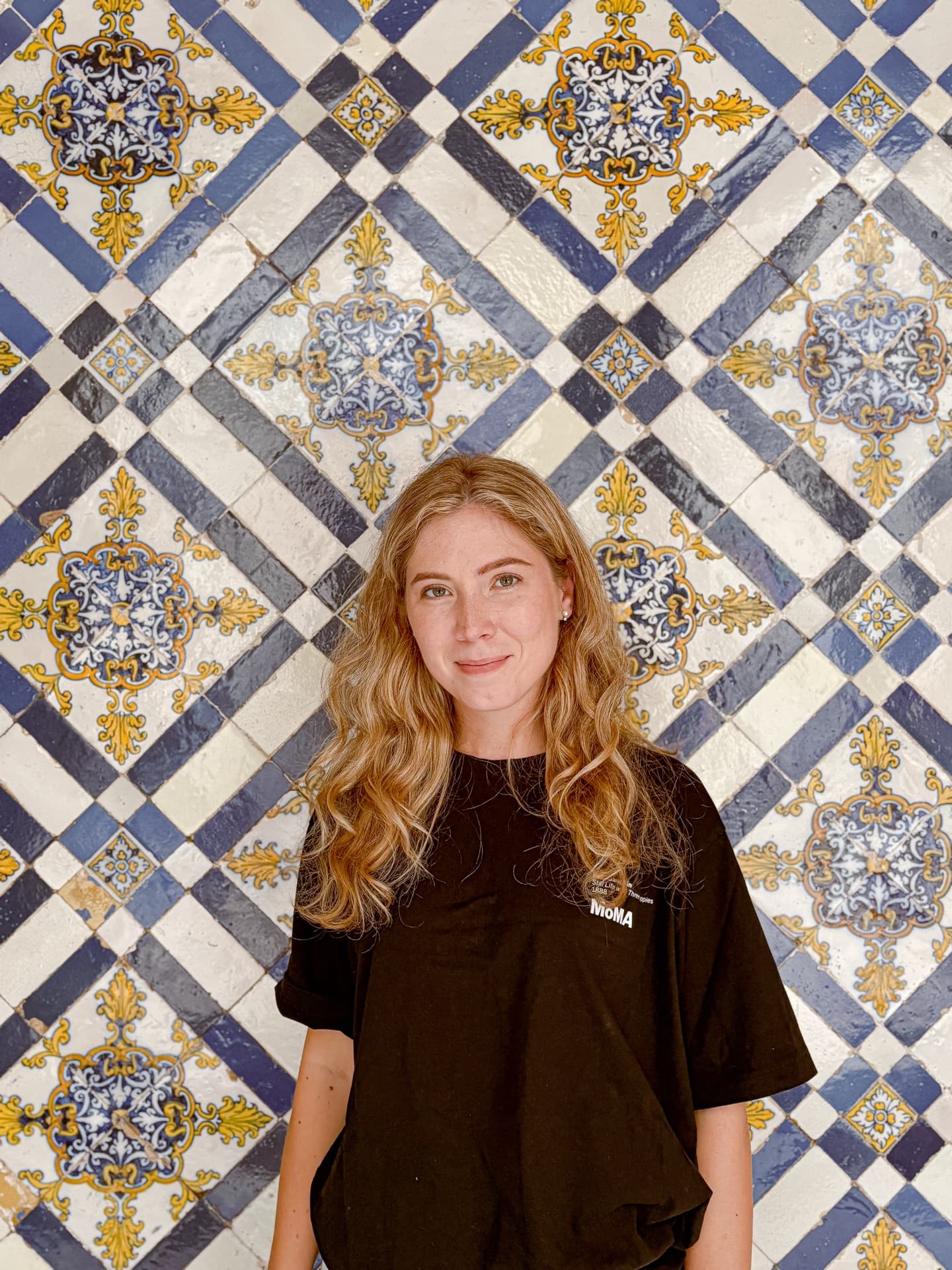
The Best Lisbon Neighborhoods to Explore (and Where to Stay)
Lisbon is a city of neighborhoods stitched together by staircases, funiculars, and views that hit you without warning. Smaller than it looks on a map, and more walkable than most people expect — until you hit the hills.
Baixa and Chiado: Best for First-Timers
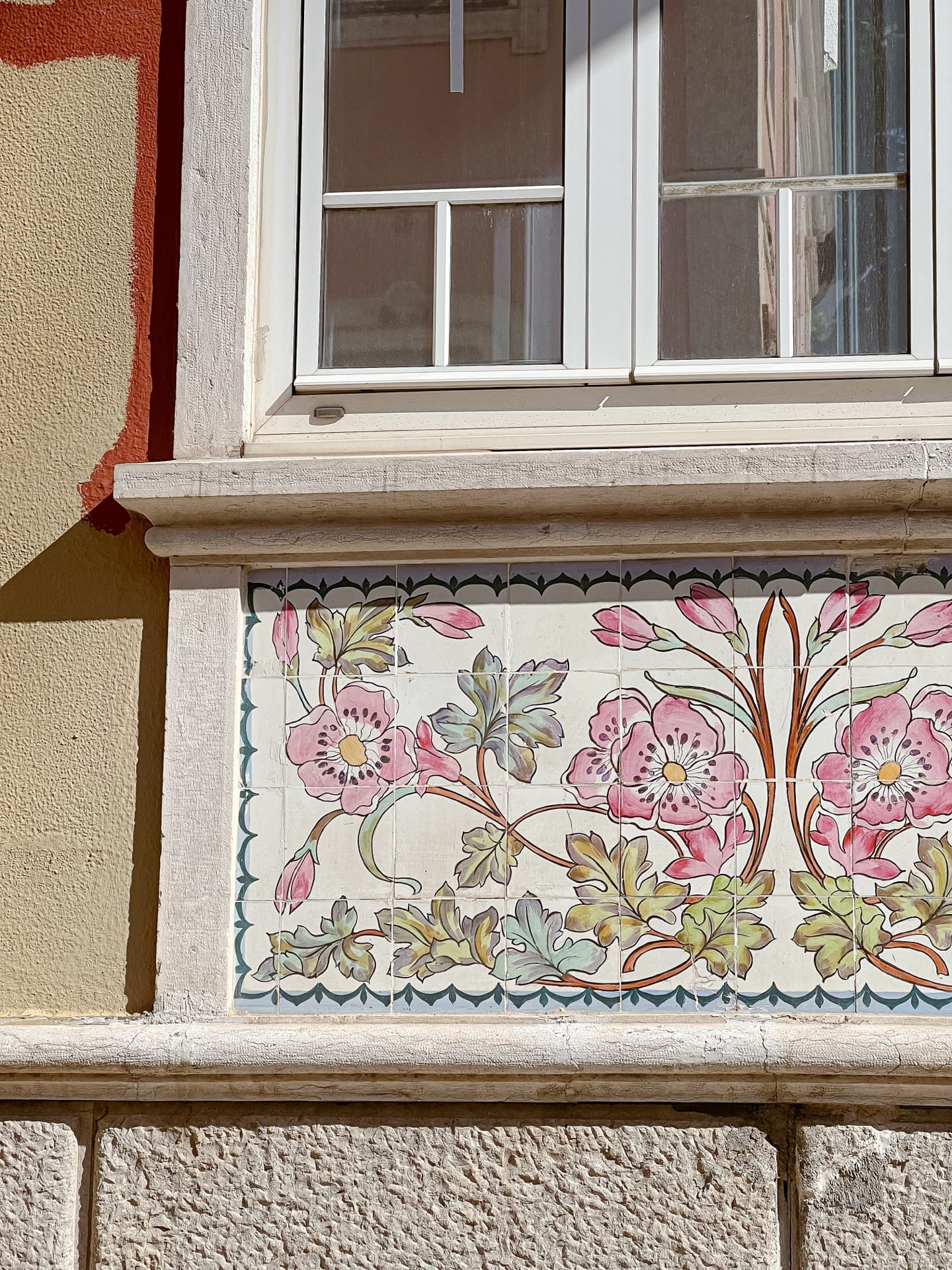
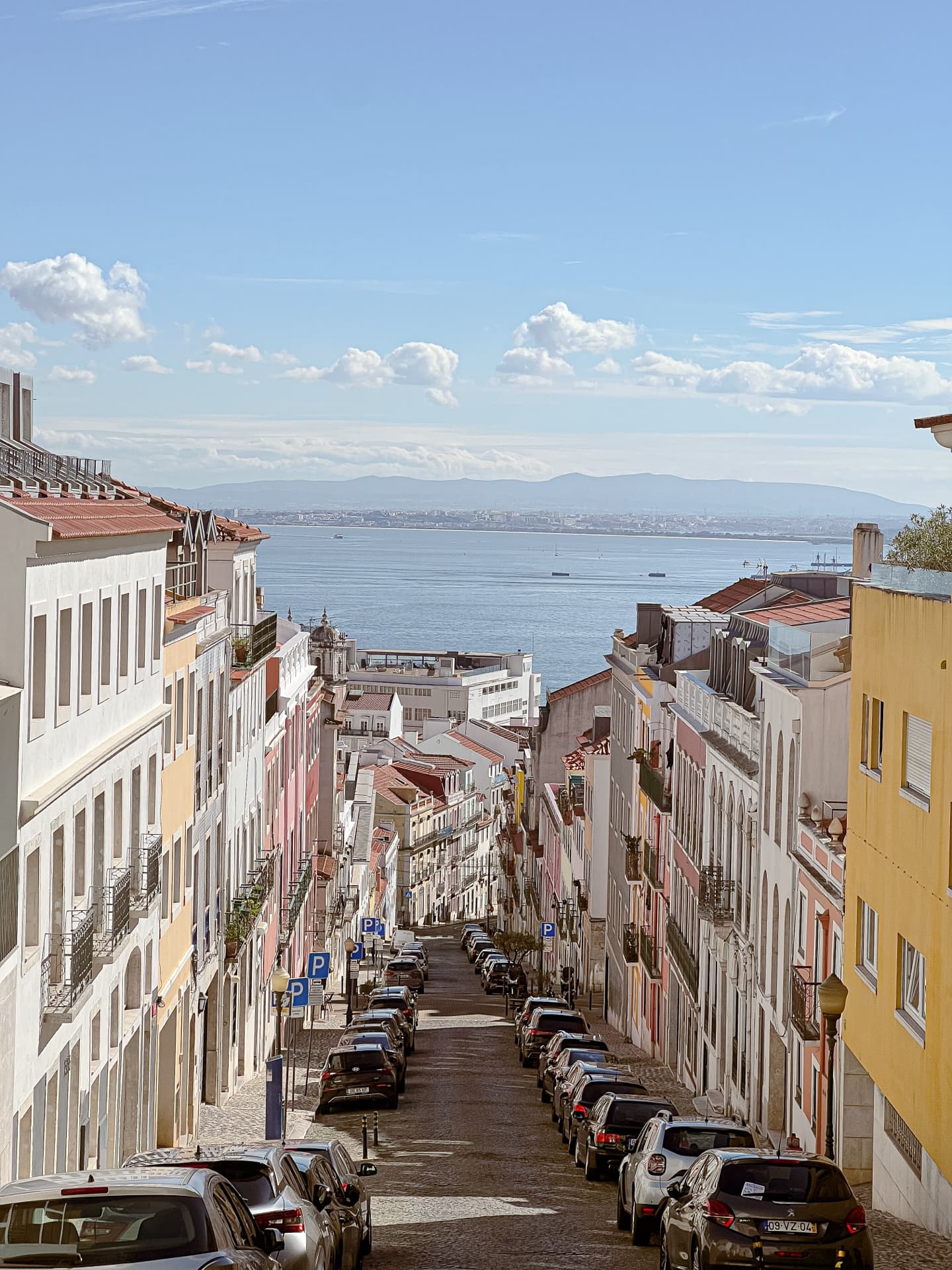
Start here. Grand plazas, elegant tiled facades, Rua Augusta for your first coffee. Cross toward the river for your first proper view of the Tagus. Central, walkable, easy to orient from.
Alfama and Graça: Historic & Steep
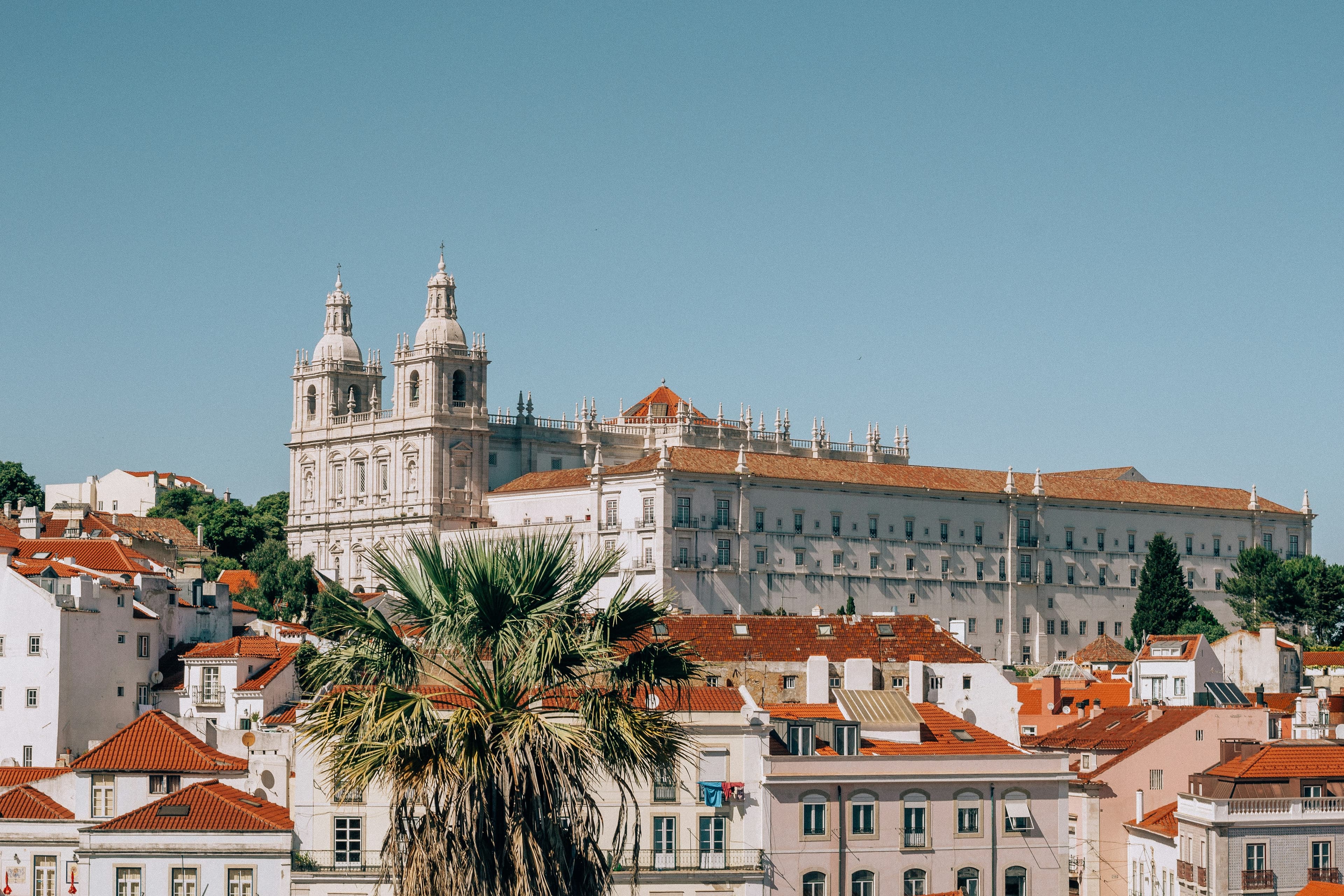
Give yourself a full morning with no agenda. Follow the sound of a guitar, stop at every miradouro (viewpoint), and accept that you will get lost. That's the point. Alfama is tourist-heavy — don't expect a secret. Go anyway. The views from Graça are better and quieter than the famous spots.
Mouraria and Intendente: Gritty & Local Fado
Multicultural, local, slightly raw in the best way. This is where Fado actually comes from — not the polished restaurant versions but the street-level kind. Good tascas, cheap lunches, real neighborhood energy.
Príncipe Real and São Bento: The Digital Nomad Hubs
Leafy squares, wine bars, the weekend market at Jardim do Príncipe Real, and the kind of restaurants where you want to stay for three hours. If you're here for longer than a week, this is where to eat dinner. Príncipe Real is easily one of the best neighborhoods in Lisbon for digital nomads because of its digital-nomad-friendly cafes and walkable streets.
Belém: Waterfront Landmarks
The monuments are real (Jerónimos Monastery, Torre de Belém), the crowds are real, and the pastéis de nata at Pastéis de Belém are worth the queue. Go late morning on a weekday. Then walk the waterfront.
If I'm on a short visit, I stay in Baixa or Chiado. For a month or two, Príncipe Real or Santos.
Neighborhoods to avoid staying in
TODO — add your notes here: which areas to avoid and why (e.g. parts of Intendente at night, stretches near certain train stations).
Where to Stay in Lisbon: Safe & Centrally Located Hotels
Four options across different neighborhoods and budgets — picked for location, character, and reviews that hold up. For the full listing, see the Lisbon stays guide.
Chiado · $$
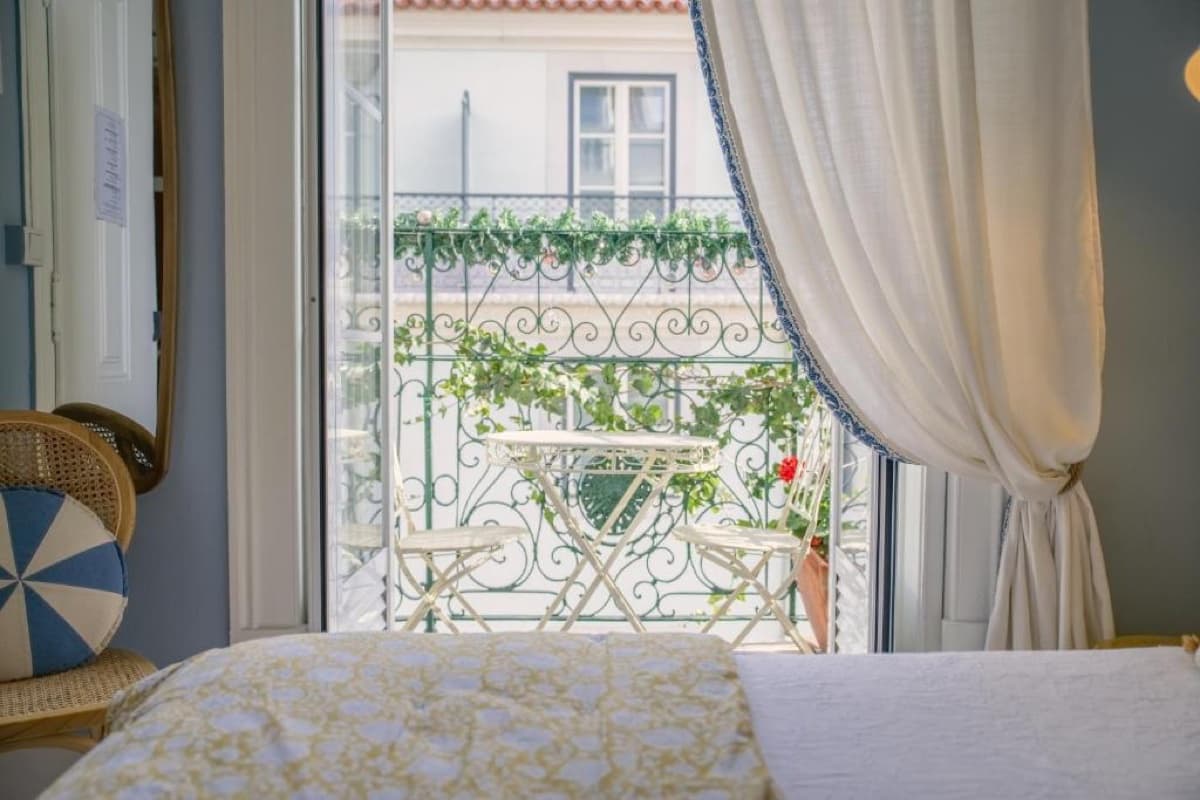
A 12-room guesthouse on Rua das Flores, steps from Taberna da Rua das Flores and the Baixa-Chiado metro. The common areas include an 18th-century tiled kitchen and a century-old library. Breakfast included. Rated 9.4 — one of the most consistently reviewed small properties in the city. Best for: first-timers who want central and characterful without paying boutique hotel prices.
Check availability (opens in new tab)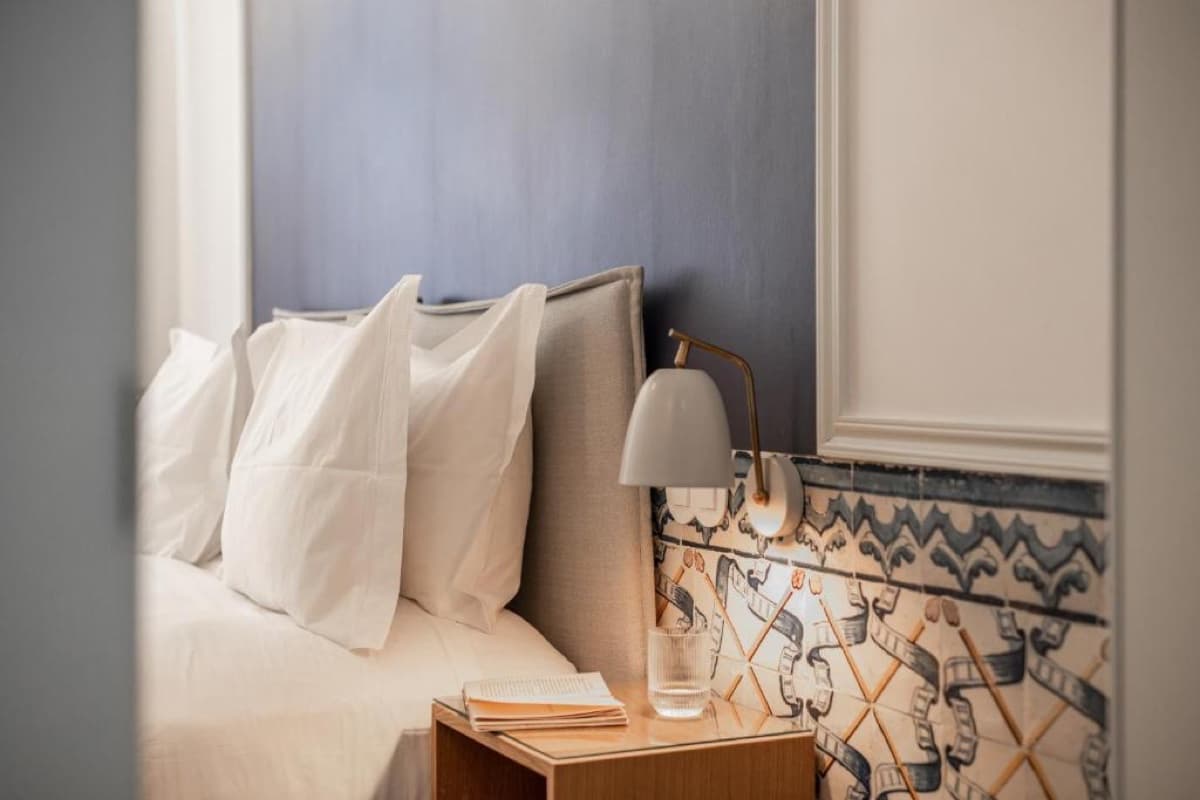
Chiado · $$
15 individually decorated suites on a quiet side street off Praça Luís de Camões — sheltered from noise but central to everything. Rated 9.6. Rooms have kitchenettes and balconies with city views. Best for: a longer stay where you want space and a base that feels like somewhere, not just somewhere to sleep.
Check availability (opens in new tab)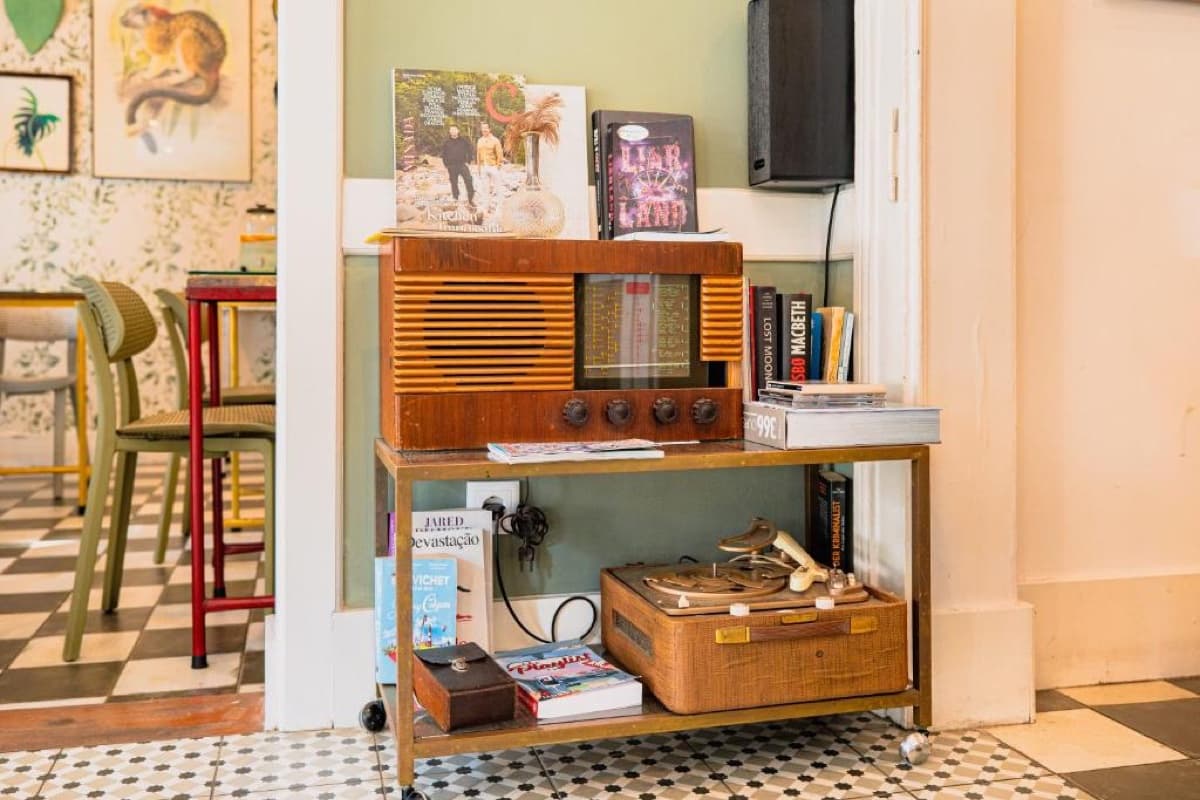
Príncipe Real · $$
23-room guesthouse on Rua do Jasmim, in the middle of the neighborhood I keep coming back to. Homemade breakfast, peaceful terrace, staff that actually gives useful recommendations. Rated 9.6. The Botanical Garden is a three-minute walk. Best for: anyone staying more than a few days who wants a residential neighborhood over a tourist one.
Check availability (opens in new tab)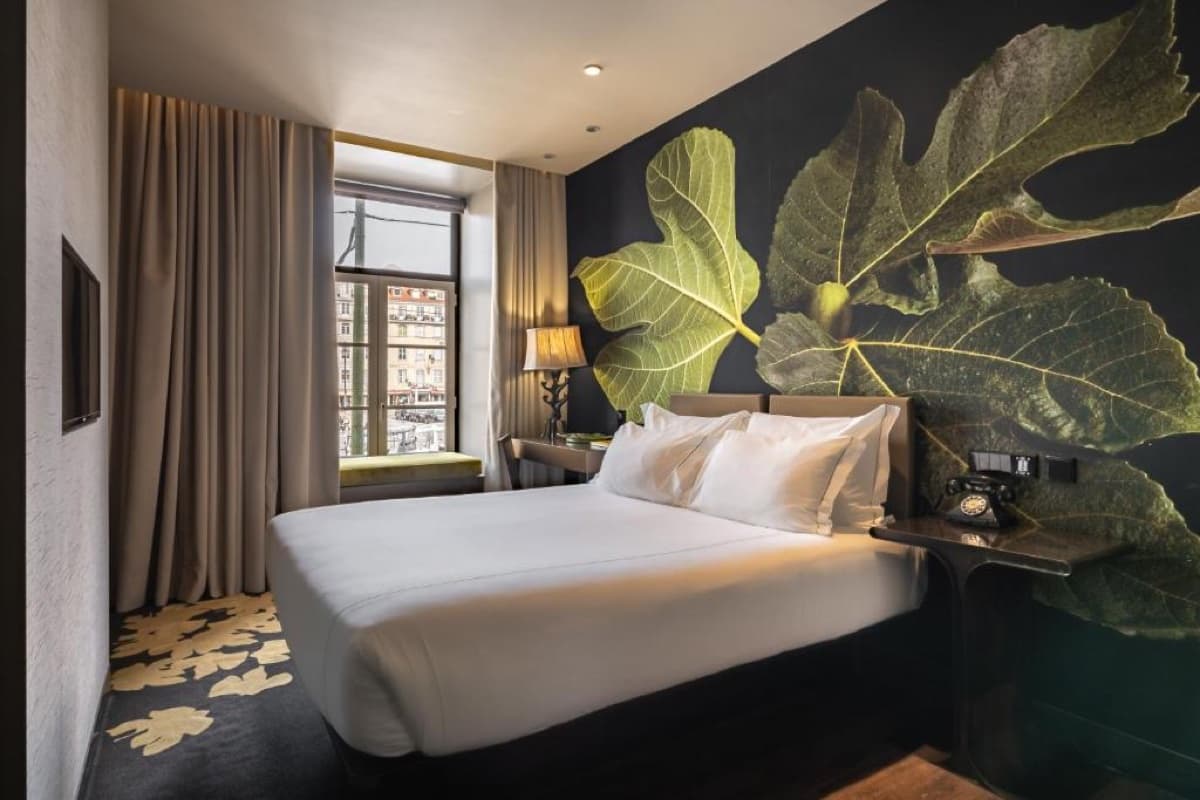
50 rooms on Praça da Figueira, with rooftop spa views of São Jorge Castle and Rua Augusta one minute on foot. Interior designed by Nini Andrade e Silva — fig tree motifs, earthy tones, the kind of place that photographs well and also has a working spa. Best for: a shorter trip where you want the most central possible location and don't mind paying for it.
Check availability (opens in new tab)Getting Around Lisbon Safely: Public Transport & Solo Travel Tips
Lisbon is smaller than it looks on a map — until you hit the hills. Some routes that look like a five-minute walk involve a climb that will wreck your knees in sandals. Factor that in before committing to walking everywhere. These Lisbon travel tips will help you move around confidently, whether it's your first day or your fifth.
Metro
The cleanest, fastest way to move between neighborhoods. Baixa-Chiado, Príncipe Real, Cais do Sodré, and the airport are all on the network. You can pay directly with a contactless card or your smartphone (opens in new tab) — no separate card, no ticket machine. Fares start around €1.85 per journey.
Uber and Bolt
For anything the metro doesn't reach, use Bolt or Uber. Bolt tends to be cheaper and is what locals use; Uber is slightly more expensive but more reliable during peak hours. Most rides within central Lisbon run €4–8. Download both apps before you arrive — Bolt sometimes needs SMS verification that's easier to complete on your home number.
Tuk tuks
Common in Alfama and the historic center. Useful for a narrated ride up to a miradouro without walking the stairs. Agree on the price before you get in — €5–15 per person for a short point-to-point ride.
Is Lisbon safe for solo female travelers? Yes — it's one of the more relaxed capitals in Southern Europe for solo women. The main risks are opportunistic pickpocketing (Alfama, tram 28, Baixa crowds), not personal safety. Walk confidently, keep your bag in front, and you'll be fine at any hour in the central neighborhoods.
A few words to learn in Portuguese
Learning even five phrases gets you warmer service everywhere. In tascas especially, a bom dia when you walk in changes the whole interaction.
Greetings & basics
Getting by
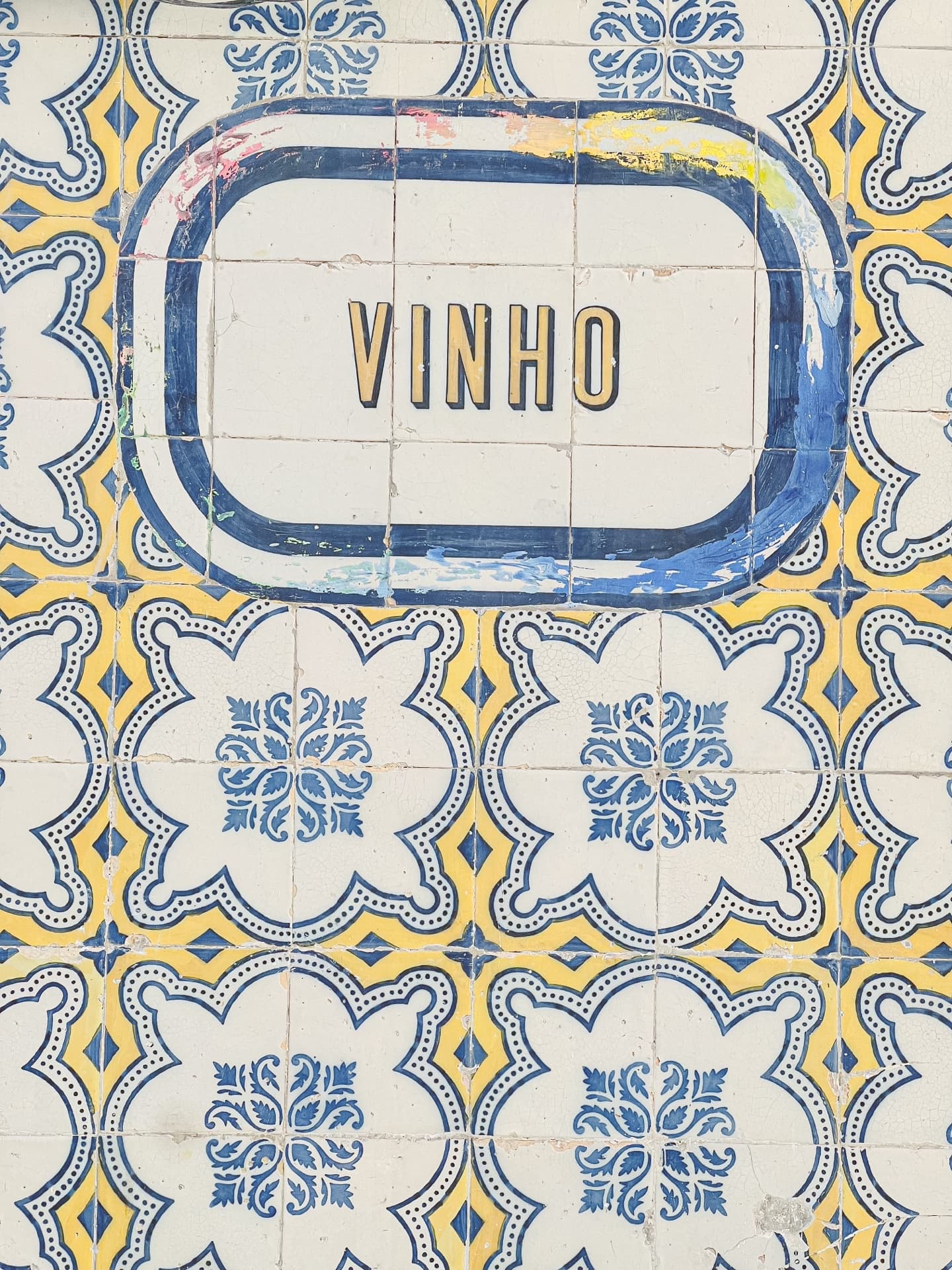
Restaurant essentials
One thing most tourists get wrong: obrigado vs obrigada. In Portuguese, the ending reflects the gender of the speaker, not the person you're thanking. As a woman, you always say obrigada, regardless of who you're addressing.
(If not, no worries — in Lisbon everyone speaks excellent English.)

What to Eat in Lisbon: Traditional Portuguese Food You Must Try
My favorite thing about Portugal is comida típica. Portuguese cuisine has a variety of dishes I was trying for the first time — I couldn't believe how good it was and how on earth it isn't world-famous.
5 dishes you need to try
1. Pastel de nata
The custard tart that defines Lisbon. Egg custard in a flaky pastry shell, caramelized on top, eaten warm with a dusting of cinnamon. One at Manteigaria in Chiado costs under €2. Order two — they're small and you'll want a second before you finish the first.
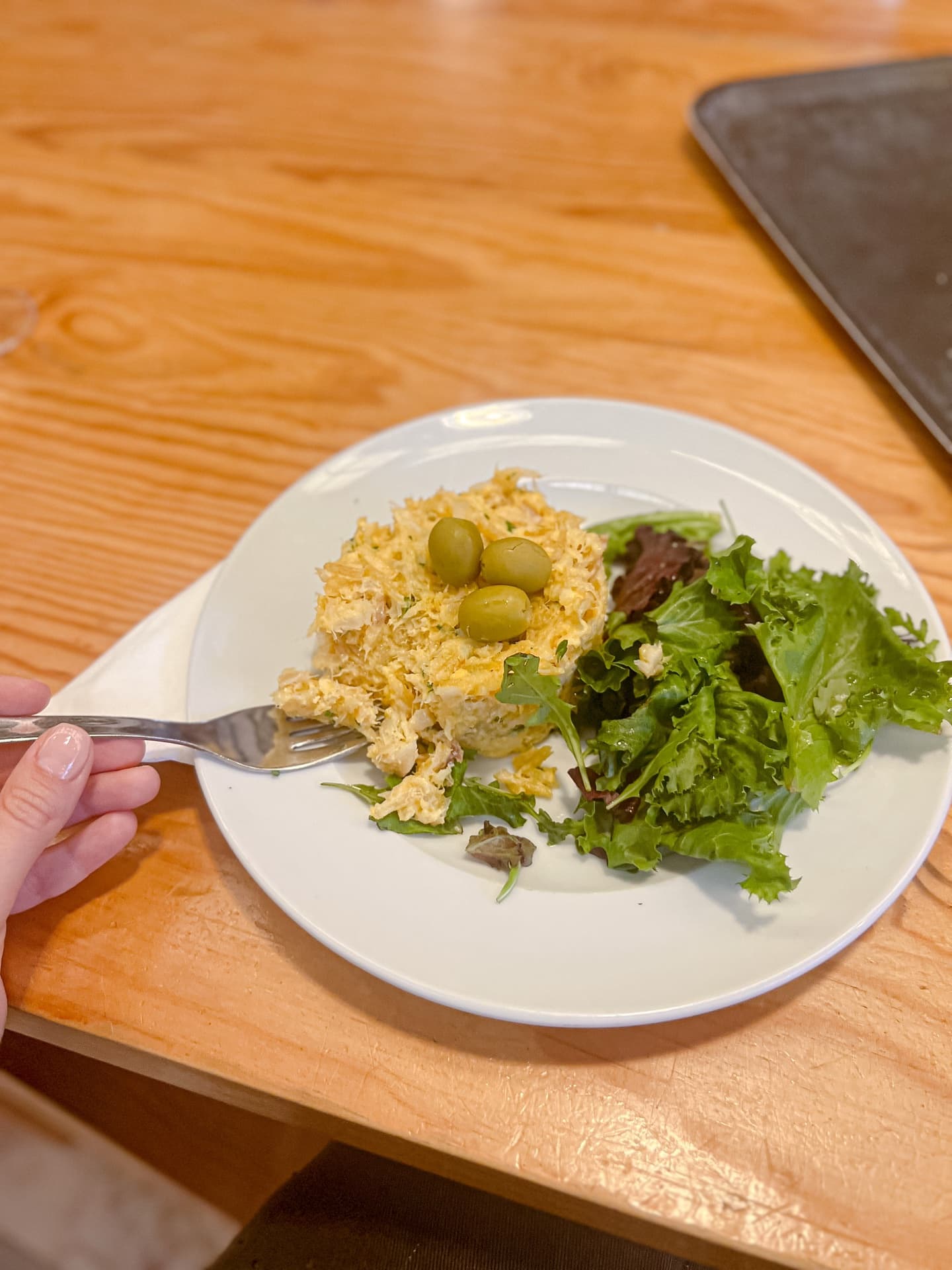
2. Bacalhau à Brás
Shredded salt cod scrambled with egg and crispy potato. Portugal has more than 365 bacalhau recipes — this one originated in Lisbon, in Bairro Alto. It's the correct order in a traditional tasca.
3. Bifana
Marinated pork sandwich — the city's best street food. Pork shoulder cooked in wine and garlic, stuffed into a crusty roll with mustard. Under €3 at a proper spot. Order it at any tasca with a counter.
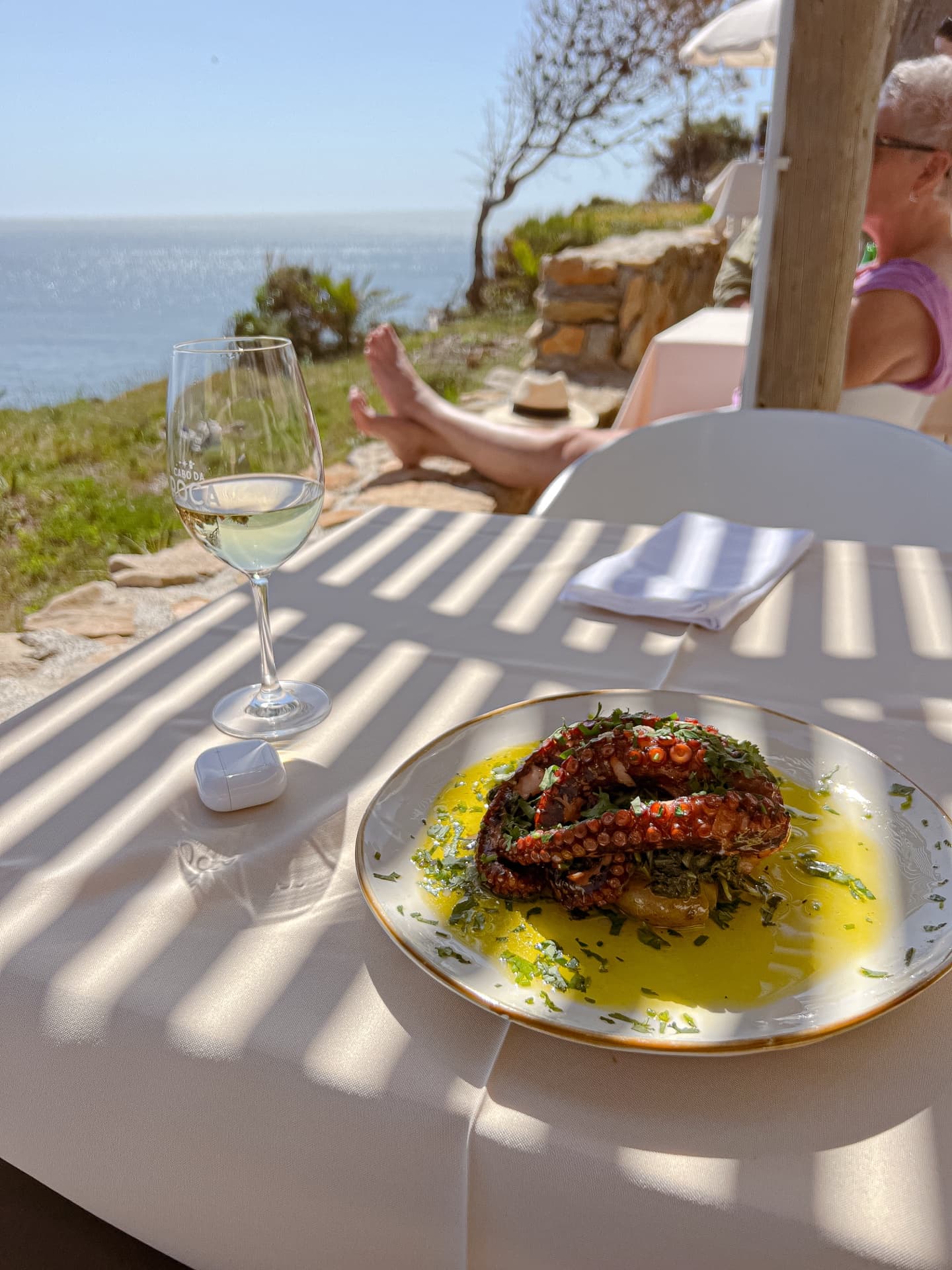
4. Polvo à lagareiro
Roasted octopus with olive oil and garlic. Tender enough that it shouldn't require much effort to eat, with crispy charred edges. If the restaurant menu is four pages long and has photos, walk out.
5. Ginjinha
Cherry liqueur, €1.50, best drunk standing up. There are dedicated ginjinha bars in Baixa that are nothing but a counter, a barrel, and a tiny glass. A Ginjinha on Largo de São Domingos has been doing it since 1840. Order, drink at the counter, leave. That's the format.

The Best Tascas in Lisbon: Authentic, Family-Run Restaurants
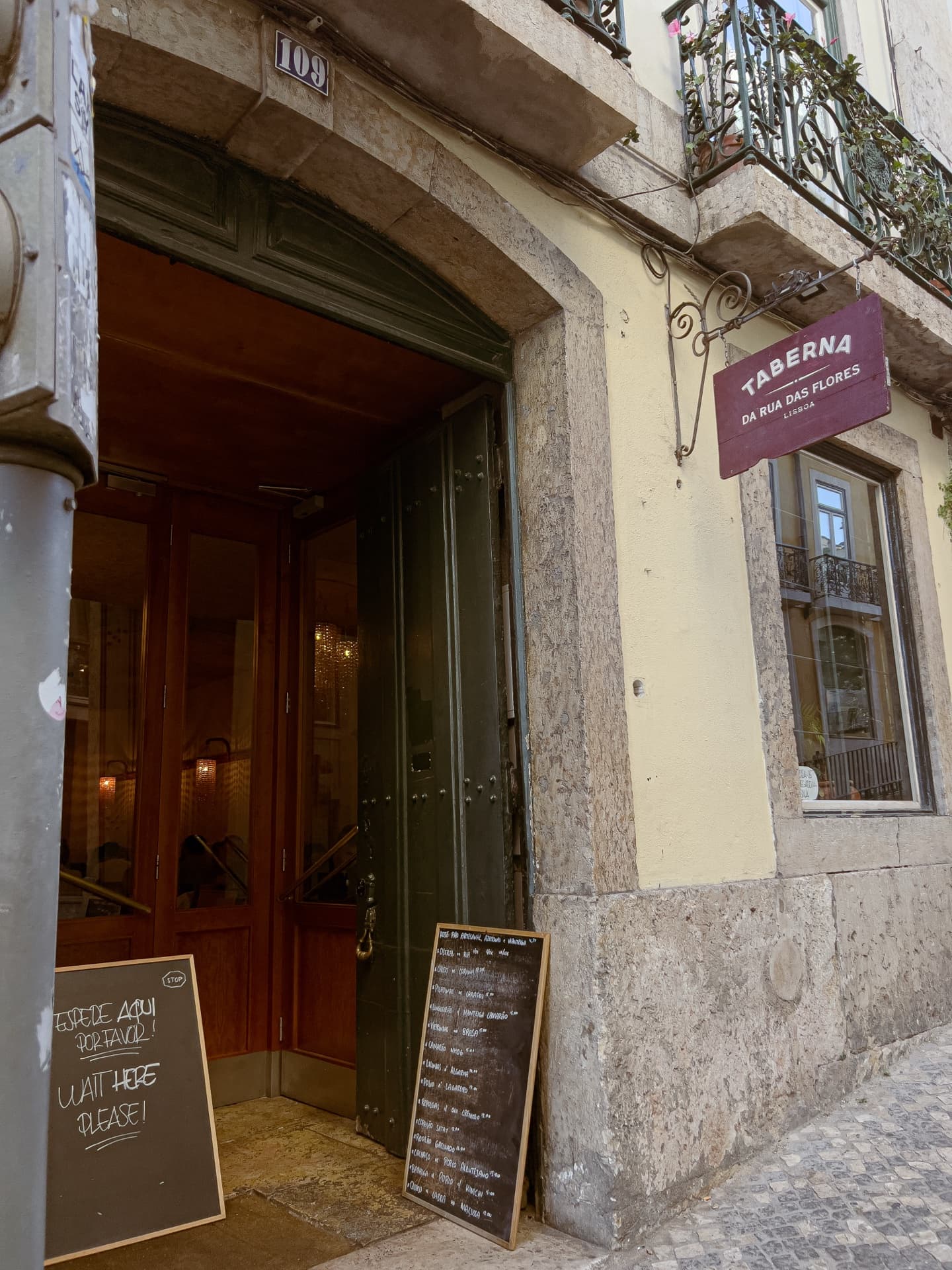
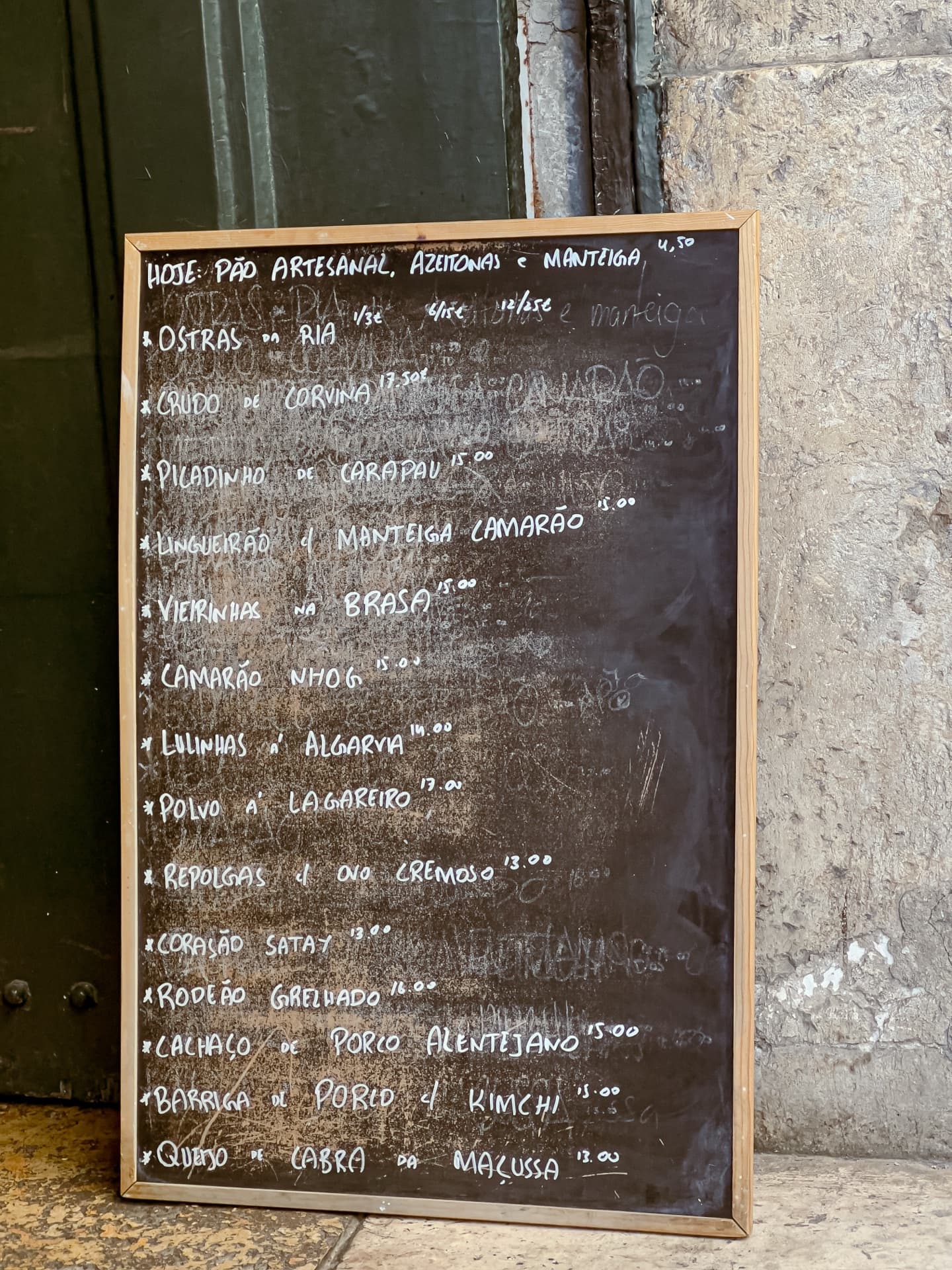
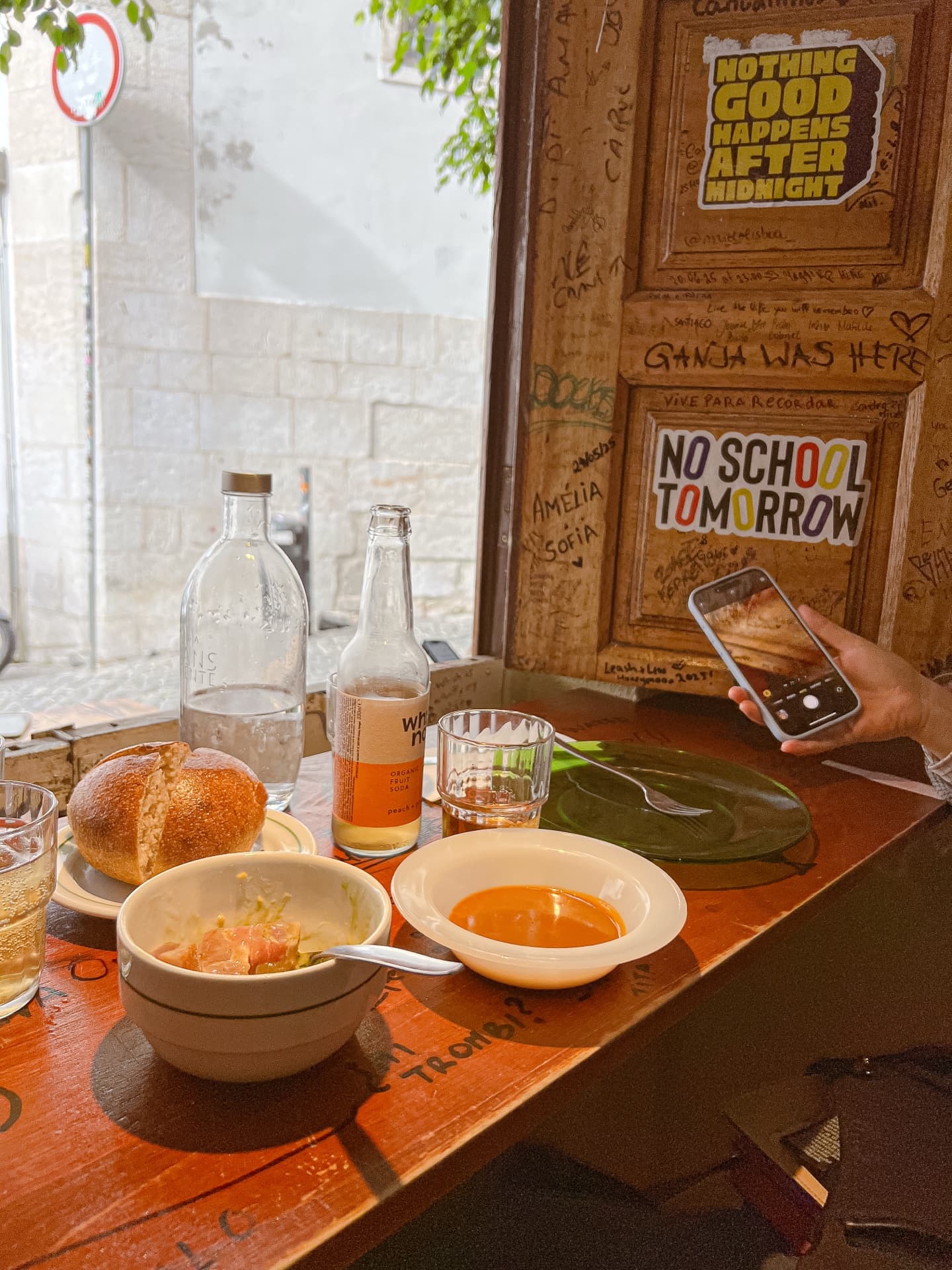
A tasca is a small, often family-run restaurant with a handwritten menu on a chalkboard, a counter with regulars at lunch, and food that hasn't changed in decades. Not tourist restaurants. Some have been serving the same neighborhood for forty years. They are the best meals you will have in Lisbon. The full list is in our Lisbon tascas guide.
In Mouraria
Family-run tasca where one of the brothers is constantly refilling your glass and the music actually hits. Modern take on traditional Portuguese food in a neighborhood with real character — nothing like the tourist-trap versions elsewhere. The dining room feels intimate enough that you genuinely forget you're in a restaurant.
In Chiado
A proper traditional Portuguese taverna where petiscos — small shared plates that predate Spanish tapas — are done right. Natural wine list that knows what it's doing. Always packed because people actually want to be there.
In Alfama
A fado restaurant where the musicians actually matter — serious fadistas, not background performers. The room is small and the traditional Portuguese food is genuinely good, not just an afterthought to the show. This is the real deal.
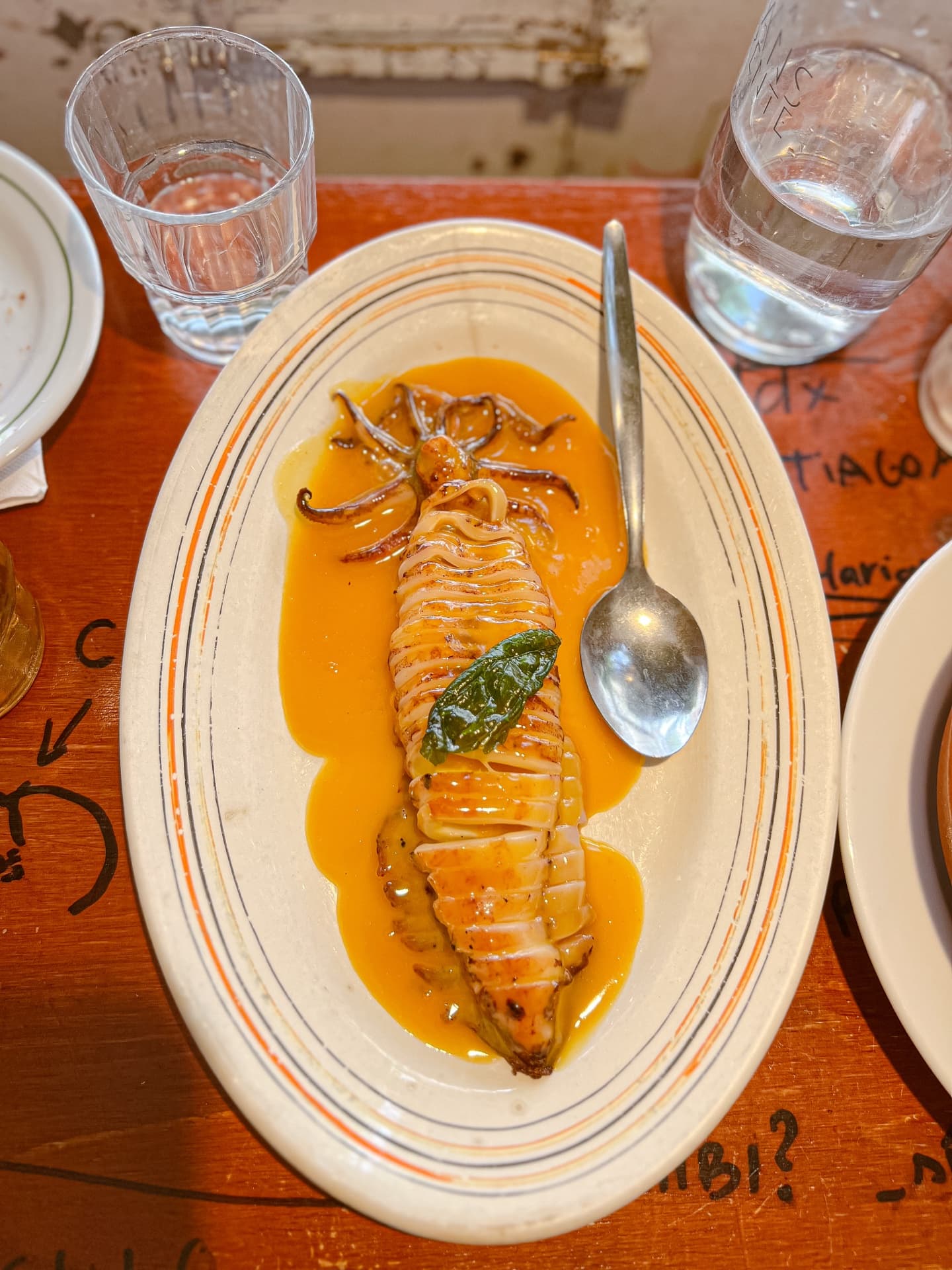
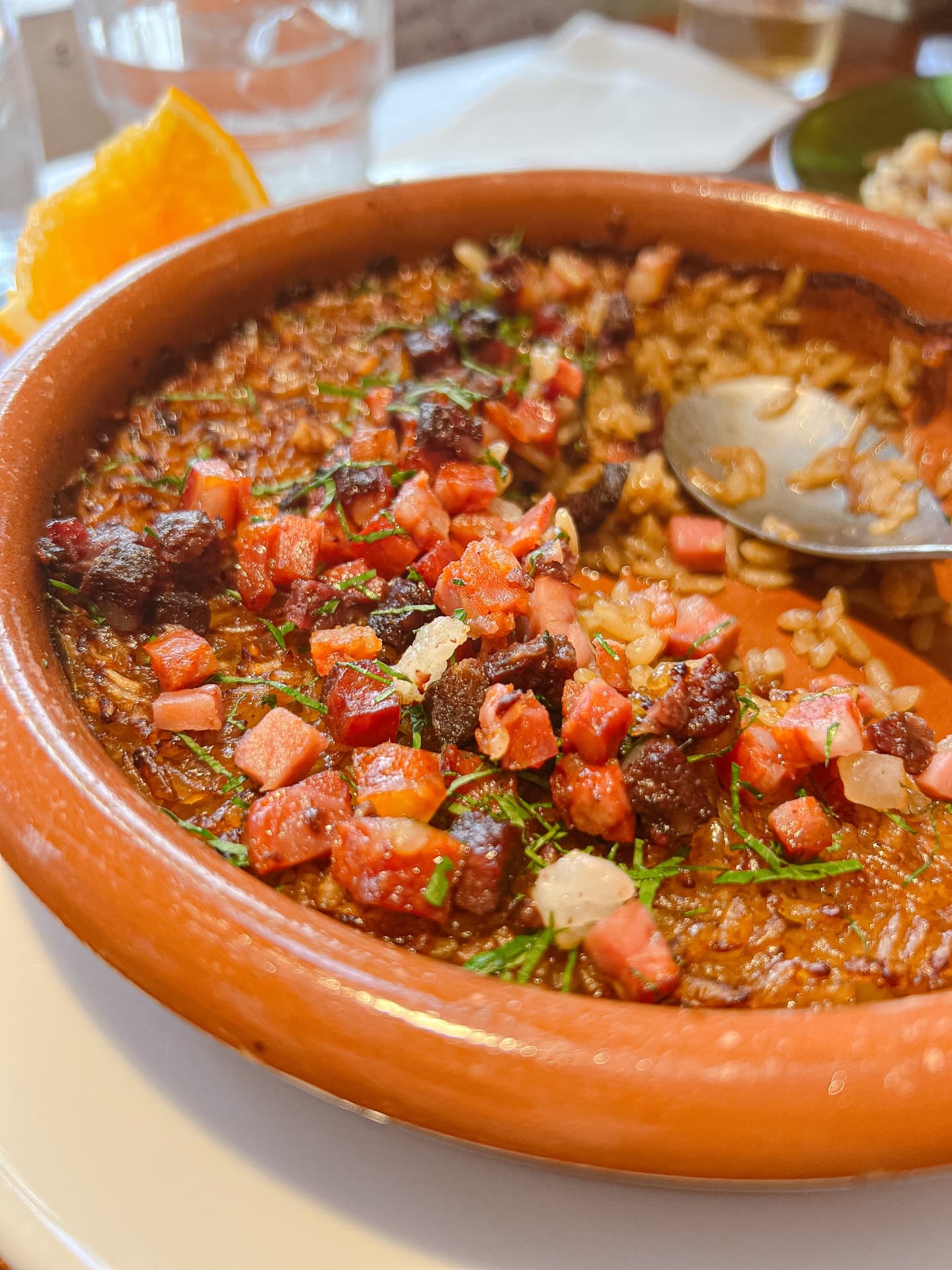
Rua dos Remédios area, near Santa Apolónia. The original — 27 seats, reopened in 2024 with a refreshed interior but the same kitchen. Smaller and harder to book than the São Bento spinoff, and the one most regulars still prefer. Open kitchen visible from the room. What to order: eggplant, beef cheeks, octopus with sweet potato — three sharing plates between two people, stop there. Reserve at least a week ahead.
O Velho Eurico — book in advance. This is the one.
If you didn't manage to get a table at O Velho Eurico — go to Petisco Saloio instead. Found in the central area, slightly refined traditional small plates in a tiny intimate space with a terrace. Flies under the international radar. It'll do.
The Best Coffee Shops in Lisbon for Working Remotely
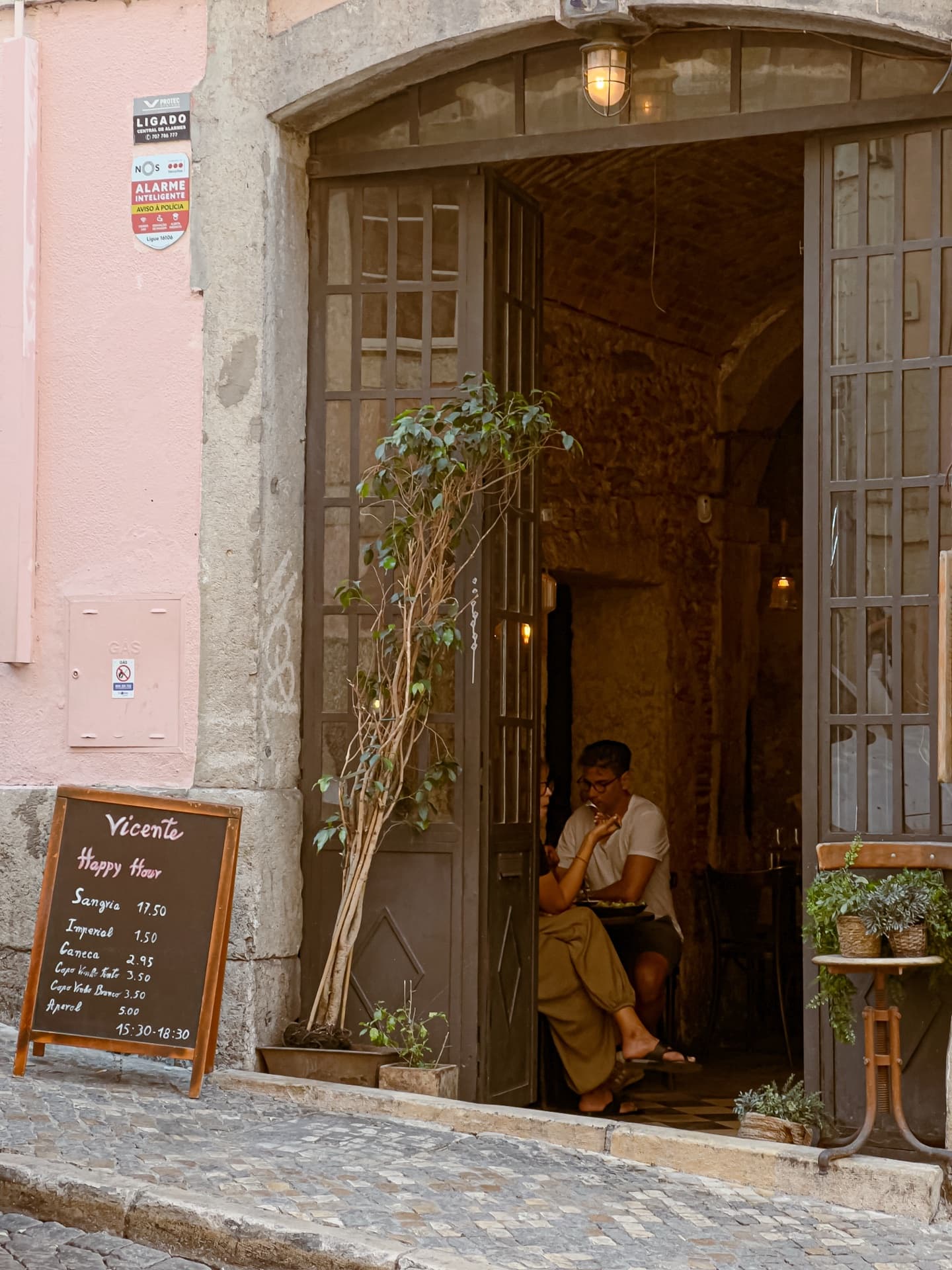
Lisbon takes its coffee seriously without making it a performance. Almost any neighborhood café will pull a decent cortado. The culture here is counter service, small cup, done in five minutes — or a longer sit if you want it.
A Padaria Portuguesa
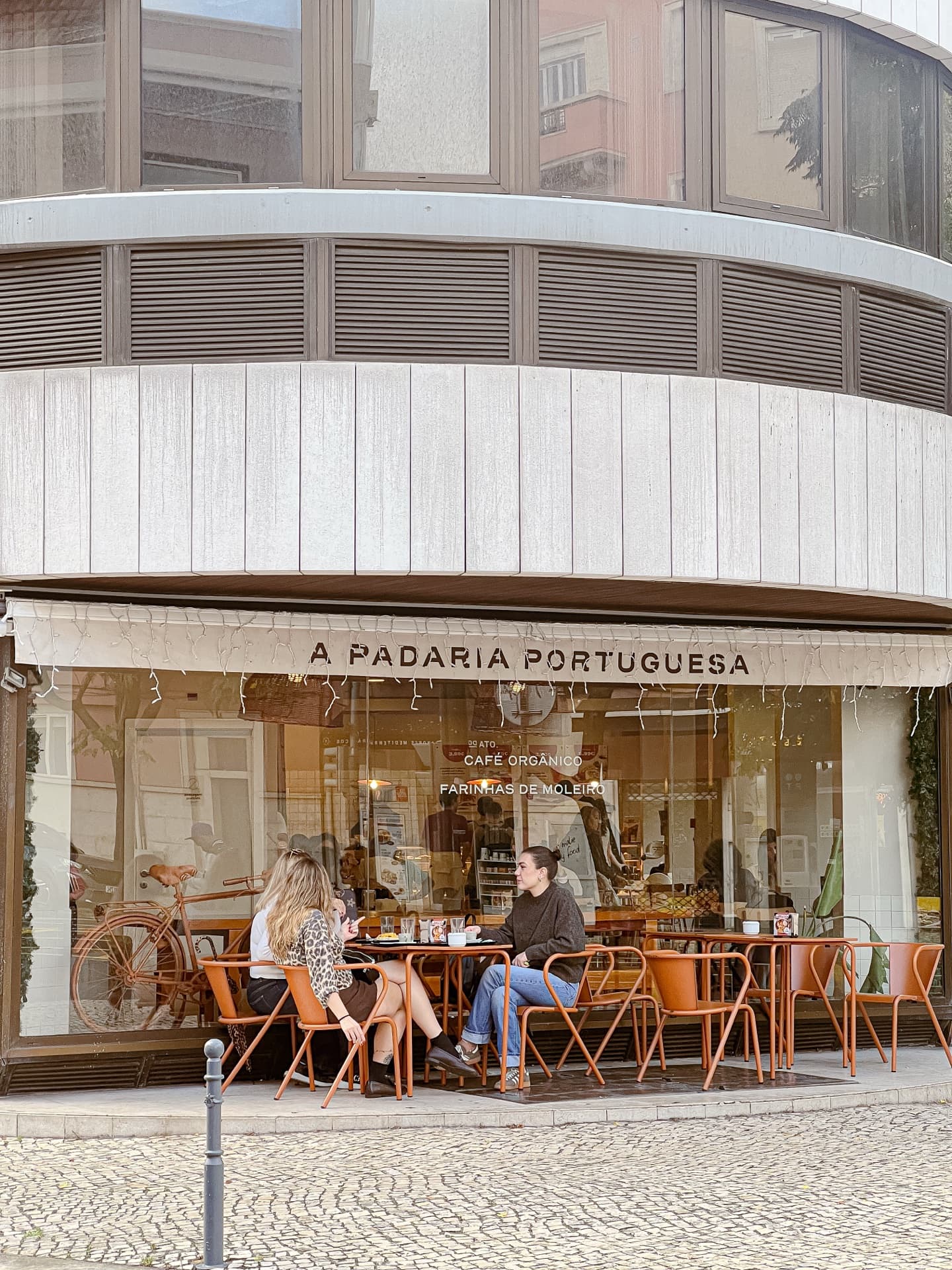
The reliable chain for a proper Portuguese breakfast. For €3.99 you get a coffee, a classic brioche croissant, and a freshly squeezed orange juice. Two convenient central locations: Praça dos Restauradores (Baixa) and Praça Luís de Camões (Chiado). Good for an early start before the city wakes up.
Manteigaria
Manteigaria in Chiado serves what many argue is the best pastel de nata in Lisbon — and it was founded here, so the claim has some weight. A nata and an espresso comes to under €4. Eat it at the counter, standing up, warm. The queue moves fast. This is the correct morning routine.
Laptop-Friendly Specialty Coffee in Príncipe Real
If you want a flat white that actually tastes like a flat white, or you're working from a café and need something that holds up over a few hours, Príncipe Real is your neighborhood. Four worth knowing: Neighbourhood Coffee, 94° Specialty Coffee, Milkees, and Buna Specialty Coffee Shop — all within a short walk of each other.
Need a monitor or a proper quiet desk? The Lisbon coworking guide lists the main spaces with prices and locations.
If you'd love someone to show you around
There's an award-winning guided food tour that covers Bairro Alto properly — petiscos, wine, local spots that don't show up on the standard tourist circuit: Lisbon Bairro Alto Guided Walking Food Tour (opens in new tab).
If you prefer hotel pickup and flexible timing with everything set up — small group, show up and enjoy: Lisbon Guided Walking Tour (opens in new tab).
7 Non-Touristy Things to Do in Lisbon: Your Local Side Quests
These are the moments that make a trip memorable. Not the monuments — the decisions.
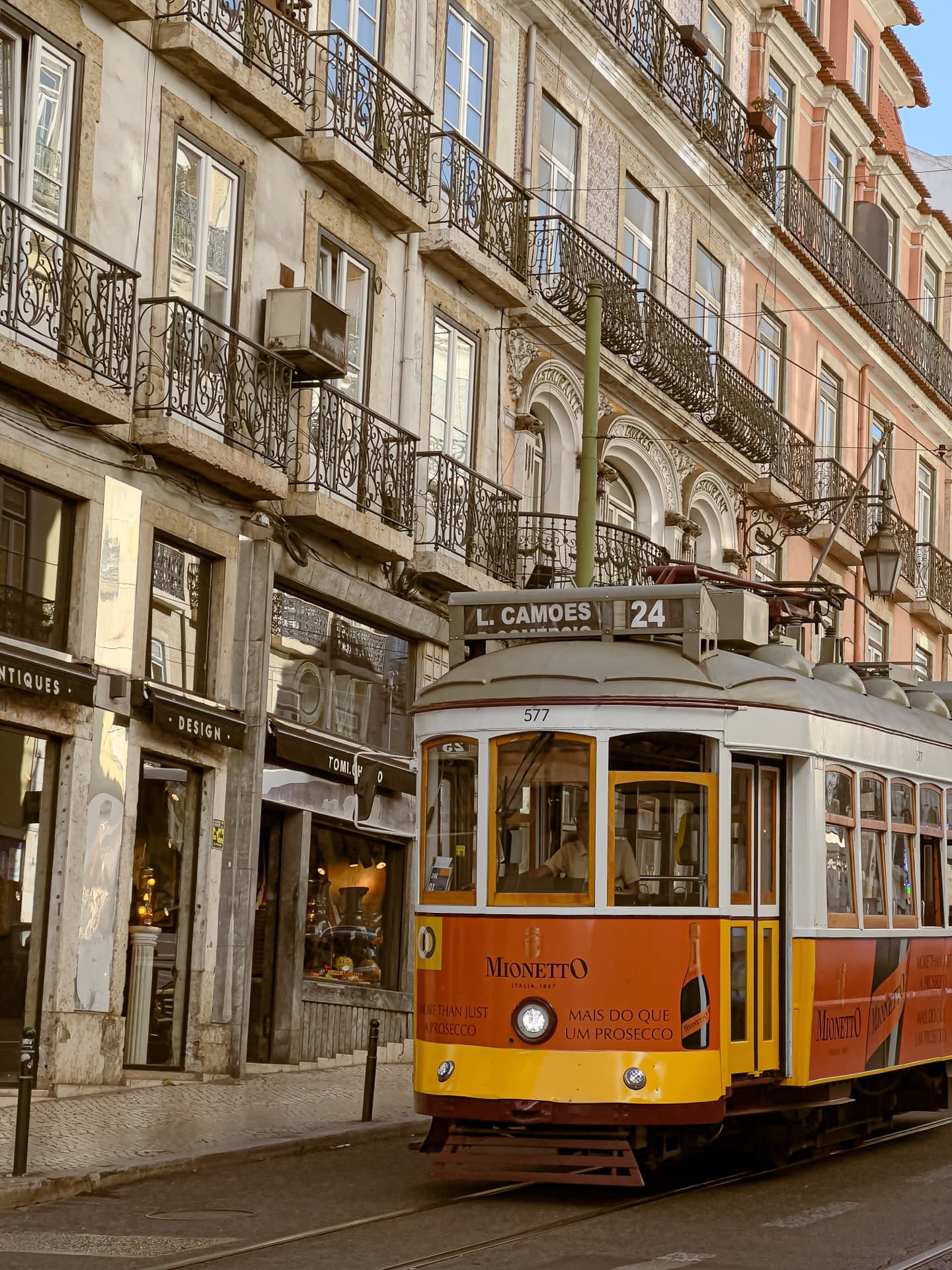
- 1Take tram 28 end-to-end at 7am. Before the tourists, before the crowds. It runs through Alfama, Graça, and Estrela. You'll see the city wake up. Watch your bag.
- 2Find a miradouro with locals on a warm evening. Miradouro da Graça or Miradouro de Santa Catarina. Bring a bottle of wine from the corner shop. Stay until it gets dark.
- 3Eat lunch at a tasca counter, alone, on a weekday. Order whatever's on the chalkboard. Don't ask for the English menu. This is the whole trip.
- 4Walk the LX Factory on a Sunday morning. Creative market, good coffee, vintage shops, the best stall for used books in Portuguese. Skip it Saturday — go Sunday early.
- 5Do the wine bars of Príncipe Real in one evening. Start at By the Wine (José Maria da Fonseca's wine bar), move to Embaixada for the building alone, end somewhere small on Rua da Rosa.
- 6Take the ferry to Cacilhas. €1.40 each way from Cais do Sodré, 10-minute crossing. Buy a beer at the dock, look back at Lisbon from the water. This is the view most people don't know how to get to.
- 7Find a fado performance in Mouraria that isn't in a restaurant. The Centro Cultural Mouraria and local associations sometimes host sessions. Ask at the tourist office on Praça do Comércio — they'll know what's on that week.

Next stop north

Porto
24 hours in Porto before the Camino
Where to stay, what to eat, and how to spend one day in Porto before walking north.

Camino
Camino de Santiago: Portuguese Coastal Route
What the coastal Camino actually looks like, day by day — from Porto to Santiago.
FAQ
You may also like
24 Hours in Porto Before the Camino de Santiago
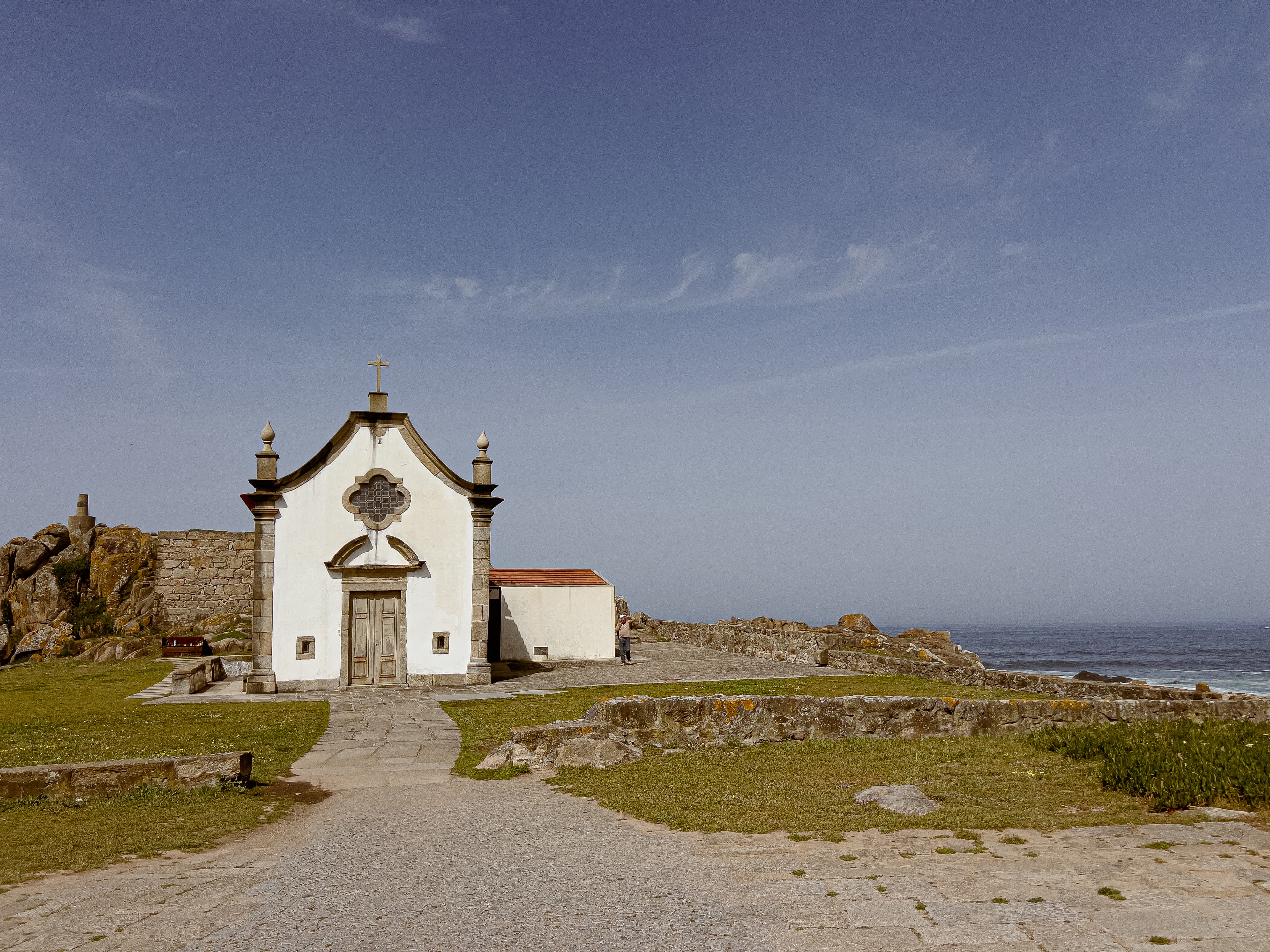
How I Walked the Camino de Santiago Portuguese Coastal Route in 10 Days
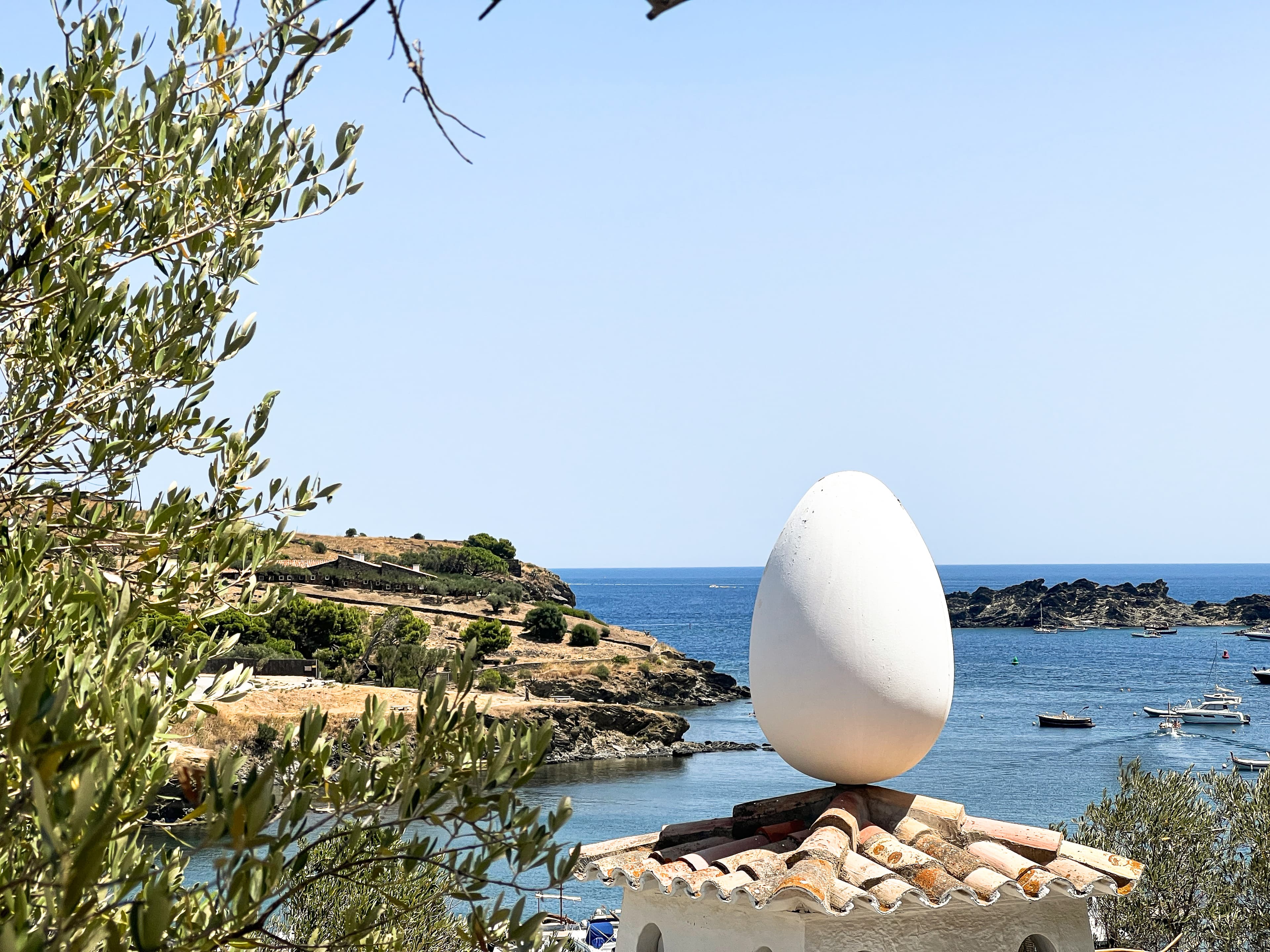
Cadaqués Travel Guide: What to Do and Where to Stay
Some of the links on this site are affiliate links. This means I may earn a small commission if you purchase them at no extra cost to you. I only recommend things I genuinely use or believe in.