Walking the Winter Camino: The Ultimate Porto to Santiago Guide (13 Days & 260 km)
October 22, 2026
Before booking a plane ticket to fly into Porto, it took me a few months of daily browsing to learn everything I could potentially need to know about Camino de Santiago. That research stage is one of the most fun parts and gets you excited for the journey ahead. It also, I noticed, takes time to work through the concerns, fears, and potential difficulties you want to be aware of before you commit to 2 weeks straight of walking somewhere in the woods of Spain, far away from home, spending your precious and well-earned time off work.
I eventually booked that ticket and started my Camino journey the moment I learned I was going to have 10 spare days to complete a shortened version of the Camino Portugués Coastal route, merging into the Central route — and I wasn't picking the most preferred season for it. Sometimes, you have to act around the spare time that you have — and in some cases it might fall into the winter season. There's a common misconception that Camino de Santiago during winter is not operational, which is a bit of an exaggeration of the fact that it doesn't operate the same way it does during summer. After doing my own Camino in spring, I got so many friends obsessed with the idea of exploring the opportunity of going on their pilgrimage to Santiago de Compostela in a quieter, less busy, and calmer season. I spent hours reading different blogs, official sources, and I even spoke with a few albergues and hostels I stayed at to confirm their operational schedules. This article is the result of my research that, I hope, will help you to plan your adventure to Camino de Santiago during the winter season.
Route Type: Porto to Santiago (Coastal Route)
Distance & Duration: ~260 km over 12 walking days
Open Albergue Availability: Verified year-round network (confirmed contact list)
Average Weather: 8°C to 15°C; mild coastal temperatures with higher chance of rain
Daylight Hours: ~9.5 hours (Planning for early 7:30 AM starts to finish before dark)
In this article
Things to Know about Walking the Camino in Winter
Camino de Santiago in winter has a special charm that turns into a completely different experience, which makes many seasoned pilgrims — who have already walked the route during the scorching summer season, alongside crowds, and been forced to wait in long lines at the cafes and supermarkets — actually head to the Camino again during winter. Unlike the most popular spring and summer seasons on the Coastal Route, which just set its record in 2025 as the third most visited route after the Camino Francés and the Central Portuguese route, hosting 89,509 pilgrims, the same route during winter turns into a tranquil journey that allows plenty of room for solo exploration and focusing on your own thoughts. The traffic during December through February drops by almost 95% and starts climbing back in March up to 75% of its peak season capacity. While it gives lots of opportunities to have a very authentic pilgrimage experience, as most say — Camino as it was in old times — solitude, self-reflection, meeting very rare lone pilgrims on the route, which sometimes is a better environment for a friendly conversation — it can be a little challenging from the perspective of the weather.
What is the weather like on the Camino during winter?
It's actually hard to reliably predict the weather, since year over year many pilgrims report quite different experiences, but what we can actually plan around is the range from 9°C to 18°C (48°F to 64°F) during November.
December is known to be the coldest, rainiest month, with lowest temperatures at 5°C (41°F) to highs of 15°C (59°F).
January is just as cold and wet, with lows around 5°C (41°F) to highs of about 14°C (57°F) — and once you cross into Galicia, it rains on roughly two out of every three days.
February is still cool, with lows around 6°C (43°F) to highs of about 15°C (59°F), but the days are getting noticeably longer — by the end of the month, the sun rises over half an hour earlier than at the start.
What dates on the Camino should you avoid?
There's nothing more stressful than being caught on the road during a cold winter day on the Portuguese coast, trying to find at least one open market for food or a family restaurant to serve you a hot meal. One thing that might be unimaginable for fellow Americans is that in Europe — and Spain and Portugal are no exception — you can actually get in trouble if you don't have some kind of food in your pack when you're caught on the Camino during the winter holidays. My general advice would be to avoid overlap with the winter Christmas holidays. The two weeks from December 23rd to January 6th are the time when it would be very hard to catch anything working in rural Portugal or Spain — meaning you might have to walk quite far until you reach a bigger city to do some shopping or have a meal. Coming right out of the Christmas season, coastal towns can also feel exceptionally quiet. While the chaotic shutdowns of late December are over, early January still has Three Kings Day on January 6th — once you cross into Galicia, Spain, it's a massive national holiday when supermarkets and restaurants will close — so I'd recommend planning the start of your journey after January 6th.
Booking accommodation during winter
The albergue and hostel network switches into winter mode, which leaves fewer accommodation options available. My strategy during the busiest spring times on the Camino was booking accommodation in advance, and it seems like a solid plan to apply the same logic during quieter times. Once you've made a reservation and your booking is confirmed, you know for sure where you'll be sleeping tonight — and you're in touch with the host if anything happens. I reached out to more than 50 albergues on the route and got confirmation from a few of them that they're open during the winter season — find them below.
It's generally a good idea to shoot a quick message to your booked accommodation 24–48 hours ahead to confirm heating and arrival times.
A general observation is that municipal albergues might not have hot water for showers, or sometimes a heater in the dorm rooms — which makes it tricky to get warm. So, the best advice is to assume that you might be sleeping in your clothes — and plan for around 15°C (59°F) in the room (which, as studies show, is generally good for your health, but you might want to disagree after walking miles in the rain).
In my experience, the majority of private hostels are equipped with minimal amenities like hot water in the shower, room temperature in dorm rooms and washing machines, sometimes even dryers for an extra cost.
Managing Short Days
Bear in mind way shorter stretches of daylight hours (8:00 AM – 5:30 PM — around 9 hours a day) and try to start walking as soon as the sun is out to make it to the hostel before the sun retires. There's nothing dangerous on the trail, but it's just not fun to walk in the dark.
Navigating Rain & Atlantic Winds
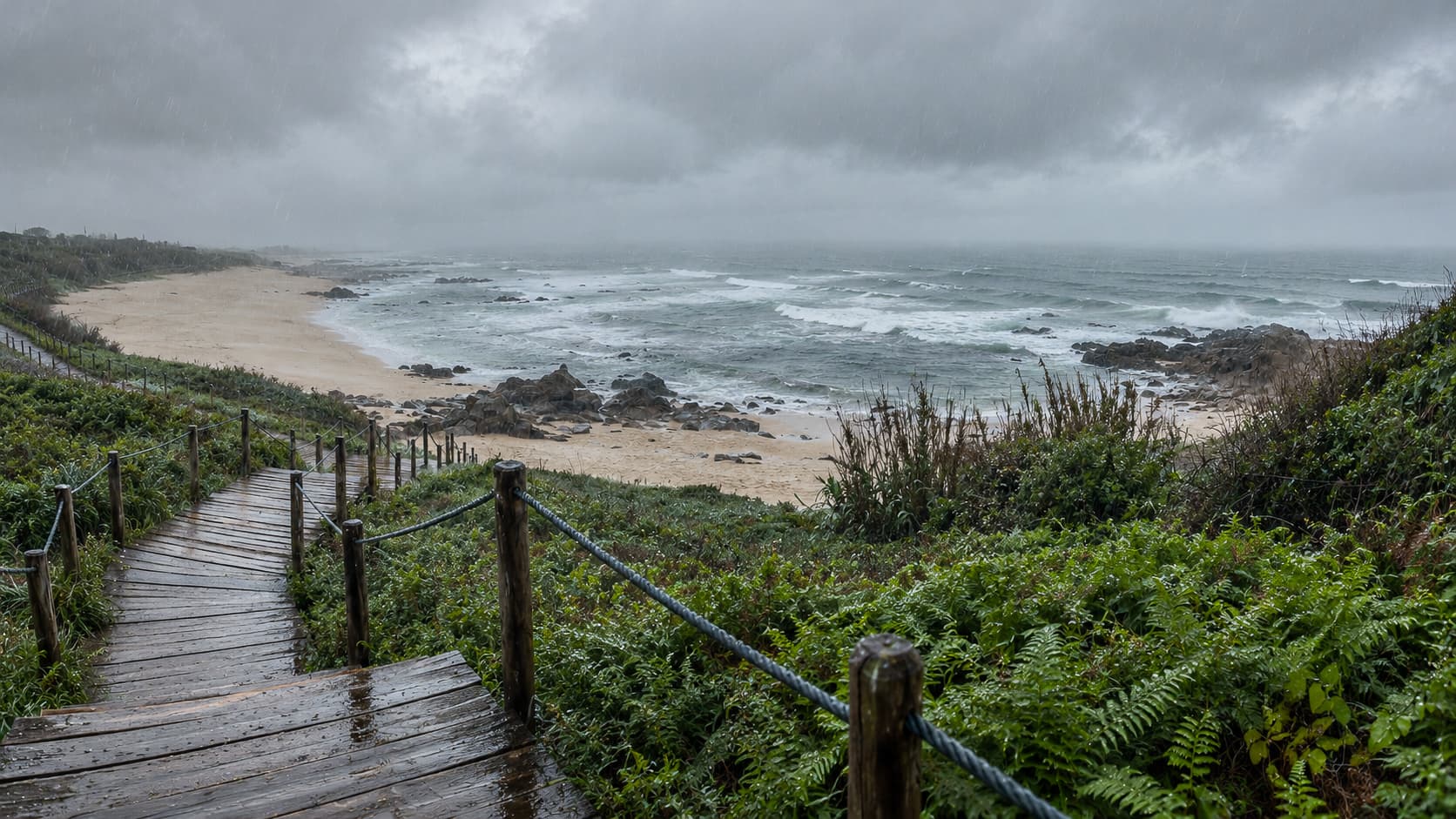
During winter, rainy days are a variable that is hard to control on the Atlantic Coast — some pilgrims report having at least a few rainy days during their route; some say it's been raining 80% of the time, with some really serious storms and winds. Since the route by the coast takes you along the Litoral boardwalks that are directly exposed to the winds from the ocean, at times of big storms or rain it might get really chilly and so wet that switching to the Central route — or just moving one street away from the ocean path — could be a good plan B until the sky clears out.
Food & Cafe Availability
Prepare yourself for potential seasonal closures of rural snack bars and convenience stores by stocking up a little more and carrying backup high-calorie trail snacks that will keep you going.
The Verified 13-Day Winter Route (Stage-by-Stage Breakdown)
Where a place has no Booking.com page, I've linked its own site or its Gronze listing.
Day 0
Porto
Day 1
Porto → Vila do Conde
Tip: take a taxi to Foz do Douro and start walking from there

Day 2
Vila do Conde → Esposende / Marinhas
Day 3
Viana do Castelo
Day 4
Caminha
via Vila Praia de Âncora
Day 5
Caminha to A Guarda / Oia
Cross the Minho by water taxi
Water Taxi — Winter Hours
Xacobeo Transfer runs only 08:00–09:00 Portuguese time from November to March. You can also phone Taxi Boat Peregrinos (+351 913 254 110) or Taxi Mar Caminha (+351 915 955 827).
Open all year if you contact them ahead in winter
Hostel
Day 6
Baiona
Day 7
Vigo
Day 8
Redondela
Day 9
Pontevedra
Day 10
Caldas de Reis
Day 11
Padrón
Day 12
Santiago
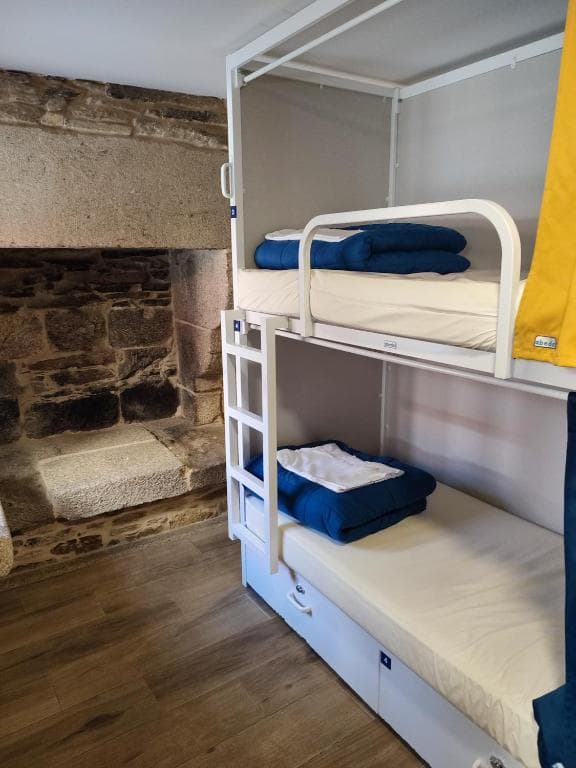
Has beds on Dec 22, Jan 10 and Feb 10 · From €17–22
Hostel
Essential Winter Packing for Camino de Santiago
Gear Layering Strategy
- •The 3-Layer System: Breathable base layers, thermal fleece/puffer mid-layer, and a reliable 10,000+ mm waterproof shell jacket.
- •Footwear Protection: Waterproof hiking boots/shoes (Gore-Tex) and merino wool socks (plus trail anti-blister care).
- •Backpack Waterproofing: Internal dry bags/liners vs. rain covers.
Winter Must-Haves on the Camino
When packing for summer or spring on the Camino, you'd include the headlamp, but more like an extra nice-to-have — and I, honestly, only used it once, on a morning when I started walking before the sunrise towards Santiago de Compostela to beat the crowds — in winter, this item becomes essential. During dark early mornings and late afternoons, a headlamp is a true best friend. Many pilgrims advise bringing a quick-dry microfiber towel for taking showers, and sometimes using it for drying damp clothes and outer shells. Bring a lightweight compact sleeping bag — not a thin liner, as some advise for the winter season — as many winter albergues only provide bare mattresses. You won't need it if you're staying in privately managed hostels, though — as they have clean sheets and warm cozy blankets.
Full packing list for Camino de Santiago during winter
Here's everything from above in one checklist you can tick off before you fly into Porto:
- •Breathable base layers
- •Thermal fleece or puffer mid-layer
- •Waterproof shell jacket (10,000+ mm)
- •Waterproof over-trousers
- •Waterproof hiking boots or shoes (Gore-Tex)
- •Merino wool socks
- •Anti-blister care
- •Internal dry bags or a backpack liner, or a rain cover
- •Warm hat and gloves
- •Headlamp
- •Quick-dry microfiber towel
- •Lightweight compact sleeping bag (not just a liner)
- •Backup high-calorie trail snacks
- •Credencial (Pilgrim Passport)
Final words: Is it worth walking the Camino in winter?
The short answer is — yes! It's worth doing in any season you can go, especially if you don't have the luxury of picking the time when you can be off work to do that. I'd say the winter Camino experience is not for the faint of heart: it takes more preparation, a little more clothing, and would suit someone who feels more comfortable in their own thoughts, enjoying their solitude. A few more variables here can get things off track, like unexpectedly closed supermarkets or no people around to ask questions and chat, or simply help you out in case of anything — but it's nevertheless very safe to walk the Camino in winter on your own. As someone who walked the Camino in the climbing heat, I'd say it wasn't fun, and I might prefer walking and enjoying the crisp air and some occasional rain instead of walking with your skin burned and having to stop for a water refill every hour.
Walking the Camino in winter asks a little more of you — more planning, more layers, more snacks in your pack — but it gives you the trail almost entirely to yourself. If you're planning your own winter Camino, drop your questions in the comments below. And if you walk it and find that one of the albergues on this list has changed its winter schedule, let me know — I'll keep the list updated so the next peregrina doesn't get caught out in the rain. Buen Camino!
Frequently Asked Questions (FAQ)
You may also like
Walking the Portuguese Coastal Camino in 10 Days: Full Itinerary & Map
The First-Timer's Guide to the Camino de Santiago
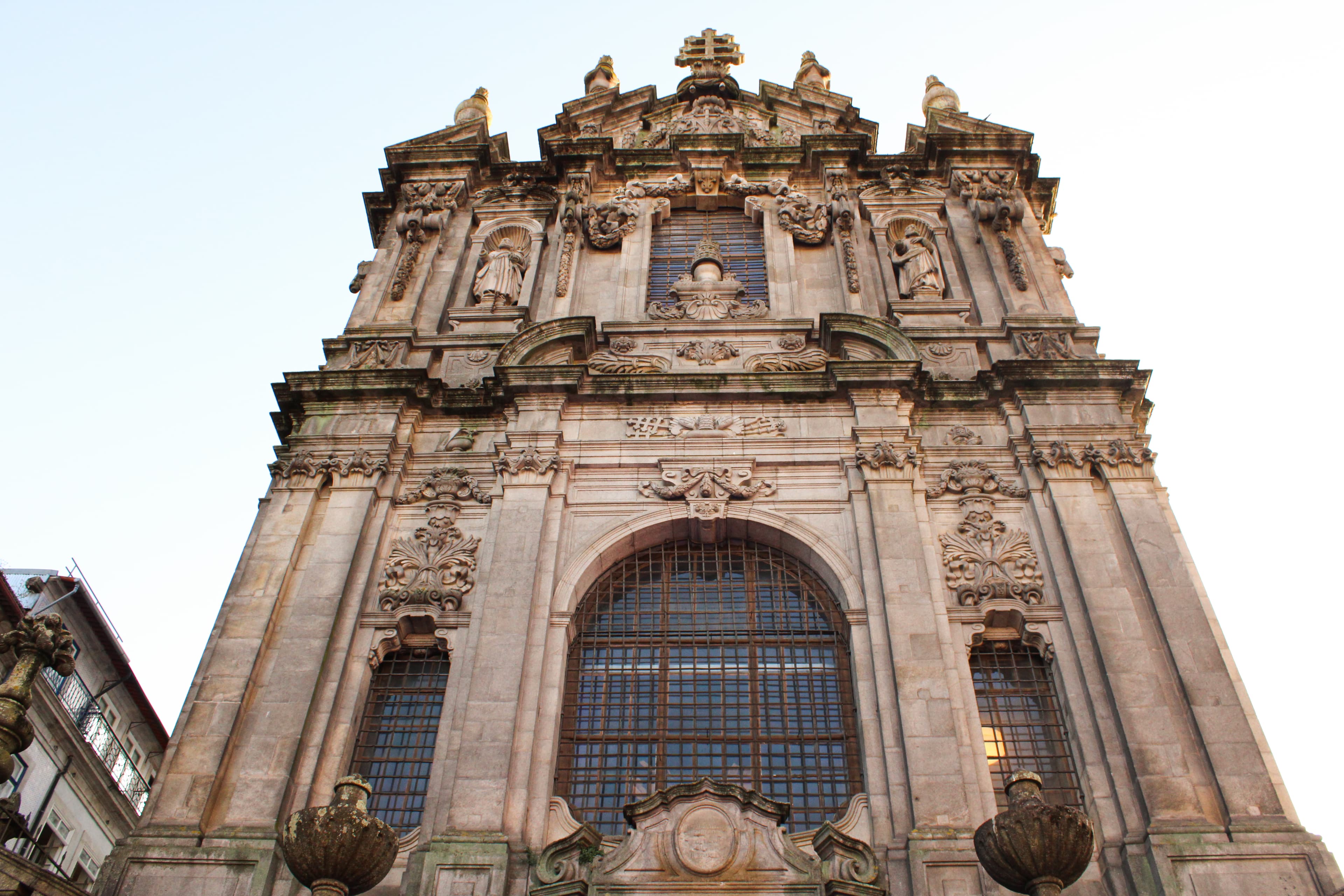
24 Hours in Porto Before the Camino de Santiago
Some of the links on this site are affiliate links. This means I may earn a small commission if you purchase them at no extra cost to you. I only recommend things I genuinely use or believe in.