Mexico City is competing to be one of the best shopping cities in the Americas that I've ever visited. Imagine a place where centuries-old indigenous textile traditions, hand-thrown Oaxacan ceramics, and small-batch mezcal can be found ten minutes away from trending Mexican fashion designers and Sunday flea markets. I've been on the road for more than 5 years and learned to be happy with only essential stuff in my suitcase, but in Mexico City I was ready to convert from an essentialist to a shopping addict. Dozens of shops with hidden gems of unique clothing attire, unique pottery pieces and candles, and very special Aztec-inspired cosmetics—all that can be found in CDMX, but you need to know where to look! Check out this guide that is designed to be your map for the best shopping experience in Mexico City.
Shopping Cheat Sheet
| Category | Top Spot | Days & Hours | Payment |
|---|---|---|---|
| Traditional Crafts & Textiles | La Ciudadela (Centro) | Daily 10:00–19:00 | Cash preferred |
| Mexican Fashion & Concept Stores | Roma Norte (Calle Colima & Orizaba) | Tue–Sun 11:00–20:00 | Cards widely accepted |
| Weekend Art & Folk Crafts | Bazar Sábado (San Ángel) | Saturdays 10:00–19:00 | Mix of card and cash |
| Antiques & Vintage | La Lagunilla | Sundays only | Cash only before 13:30 |
| Luxury & Designer | Av. Presidente Masaryk (Polanco) | Daily 11:00–20:00 | Cards accepted everywhere |
| Mezcal & Specialty Food | Roma Norte / Mercado de San Juan | Daily 10:00–19:00 | Check airline liquid limits |
Best Artisan Markets & Weekend Tianguis
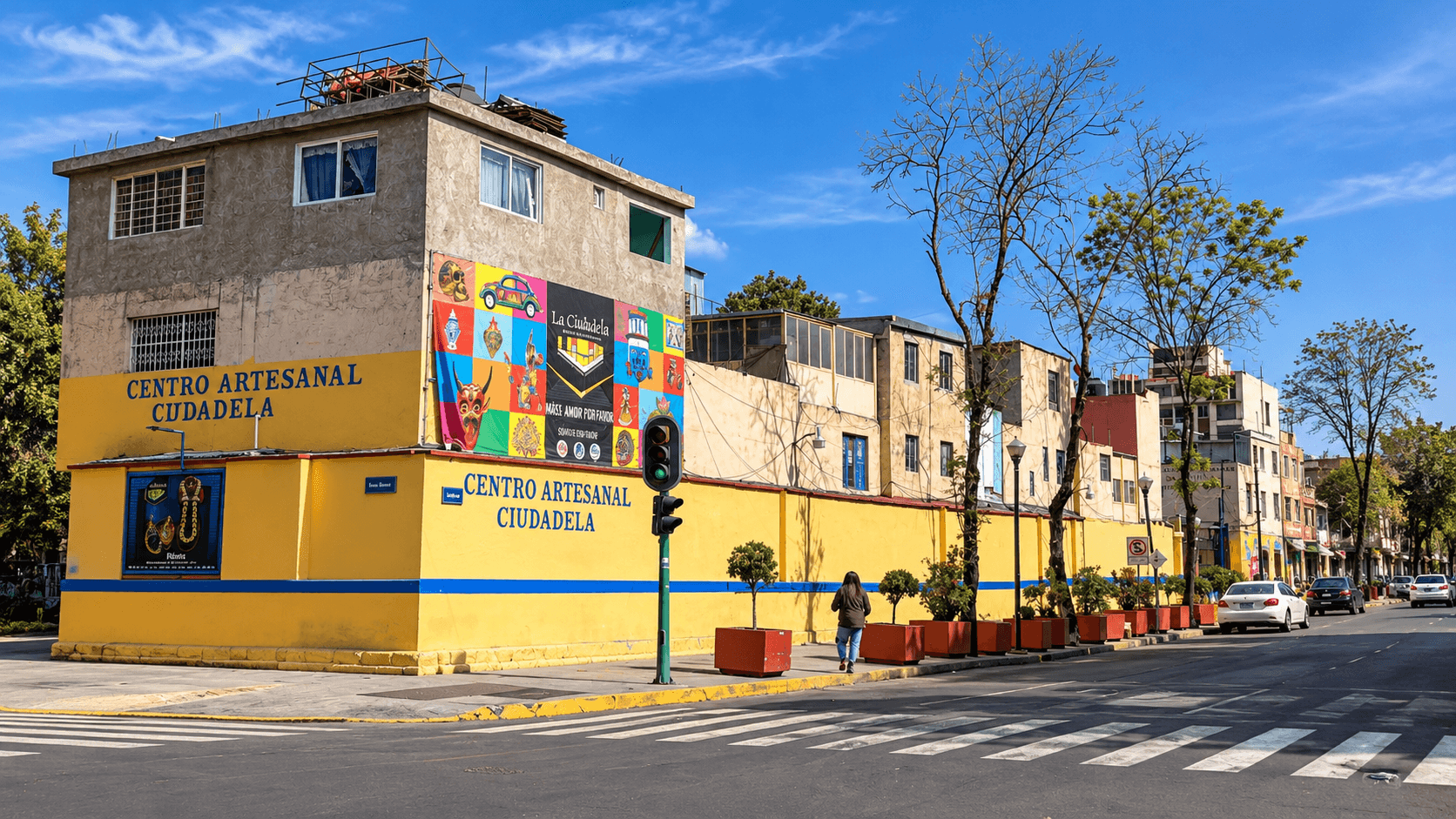
The market circuit hits four distinct styles across the city. La Ciudadela in Centro is the one-stop crafts marathon—350 stalls, every region of Mexico, open every day. Bazar Sábado in San Ángel is Saturday only: a colonial mansion with curated ceramics inside and painters on the cobblestone plaza. La Lagunilla is Sunday antiques and vinyl, best before 1:30 PM. And the Coyoacán artisan market is a good evening stop after the Frida Kahlo Museum—it stays open until 10 PM.
1. Mercado de Artesanías La Ciudadela
Over 350 stalls selling embroidered blouses from Chiapas and Oaxaca, handwoven wool rugs from Teotitlán del Valle, Huichol beaded art, silver jewelry from Taxco, and unique pottery pieces from small pueblos surrounding Mexico City. Walk the entire indoor grid before buying—prices vary widely between outer tourist-facing stalls and inner family-run workshops.
The broadest collection of Mexican crafts in one building, with over 350 vendors selling handmade goods from 22 states. The stalls at the Balderas entrance look like cheap souvenir stands — walk past them, because the real textiles and ceramics are further in. Walk the whole market once before you buy anything.
Note: Real textiles and ceramics are deep inside, past the tourist stalls at the Balderas entrance.
2. Bazar Sábado
Held every Saturday inside a restored colonial mansion on Plaza San Jacinto, featuring curated ceramics, sterling silver, fine textiles, and outdoor painters filling the surrounding cobblestone square. Combine a Saturday morning here with Frida Kahlo's Casa Estudio in San Ángel or nearby Coyoacán.
Saturdays only. A craft and design market running for more than 50 years inside a colonial mansion on Plaza San Jacinto. The building holds the curated pieces; the plaza outside fills with jewelry, textiles and art, from hippie to high-end. Get there by 11am before it fills.
Note: Arrive by 11am. Ceramics inside the mansion are the most reliable find.
3. La Lagunilla Sunday Flea Market
CDMX's legendary Sunday tianguis stretching for blocks—mid-century furniture, vintage Mexican film posters, antique silver, vinyl records, and street micheladas. Go between 10:00 and 13:30 before crowds peak, leave flashy jewelry at your hotel, and carry small bills in a zipped crossbody bag.
The city's best antiques and vintage hunt, set up every Sunday between Comonfort, Jaime Nunó, González Bocanegra and Matamoros. Old cameras, rotary phones, candelabras, tin toys, furniture, secondhand clothes. Lagunilla borders Tepito — keep your phone in a front pocket, carry small bills, stay on the market streets, and leave by mid-afternoon.
Note: Keep phone in a front pocket, carry small bills, stay on the market streets, leave by mid-afternoon. Tepito is adjacent.
4. Coyoacán Artisan Market
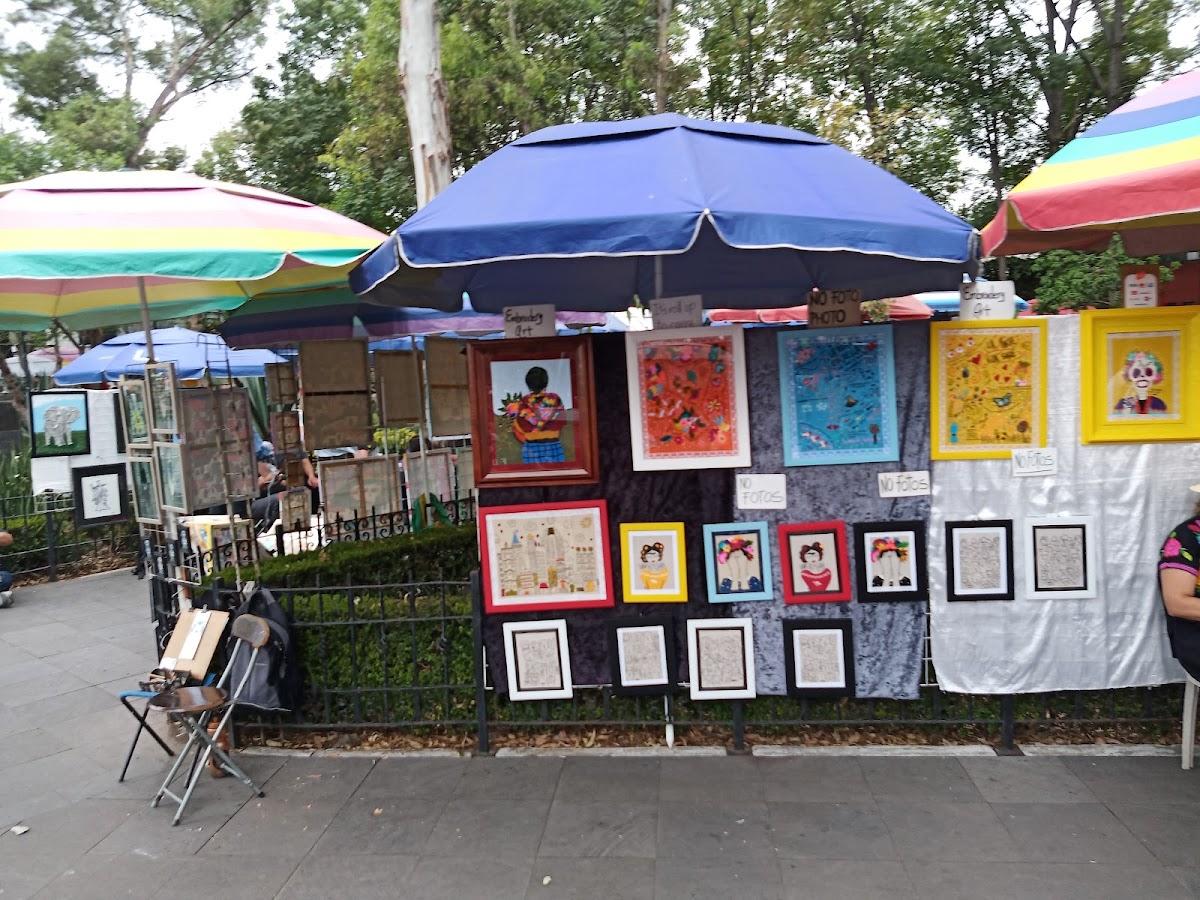
Two stories of leather huarache sandals, hand-painted Talavera pottery, wooden alebrijes, and traditional toys right off Jardín Centenario. Easy walk from the Frida Kahlo Museum, open until 10 PM.
Coyoacán's craft market at Felipe Carrillo Puerto, between Jardín Hidalgo and Jardín Centenario, a short walk from the Frida Kahlo Museum. One of the largest in the city with over 450 merchants. Because it's open until 10pm, it works as an evening stop after a day of museums.
Note: Many stalls don't take cards. Easy stop after the Frida Kahlo Museum — open until 10pm.
More markets in Mexico City
Touristy on the surface — most foreigners come for the Frida day and grab a churro on the plaza — but the tostada counters tucked inside the building are the actual local move and most visitors never make it past the entrance. Tostadas Coyoacán is the benchmark stall. Best between noon and 3pm.

The market locals actually shop at — not Mercado Roma's curated food hall, but a real Mexican mercado on Campeche 101 where Colombian, Venezuelan, Cuban, and Argentine vendors set up alongside the regular butchers. The fonda counters in the middle do comida corrida for what a single coffee costs in Roma Norte. Saturdays the carnitas counters draw lines of chilangos.
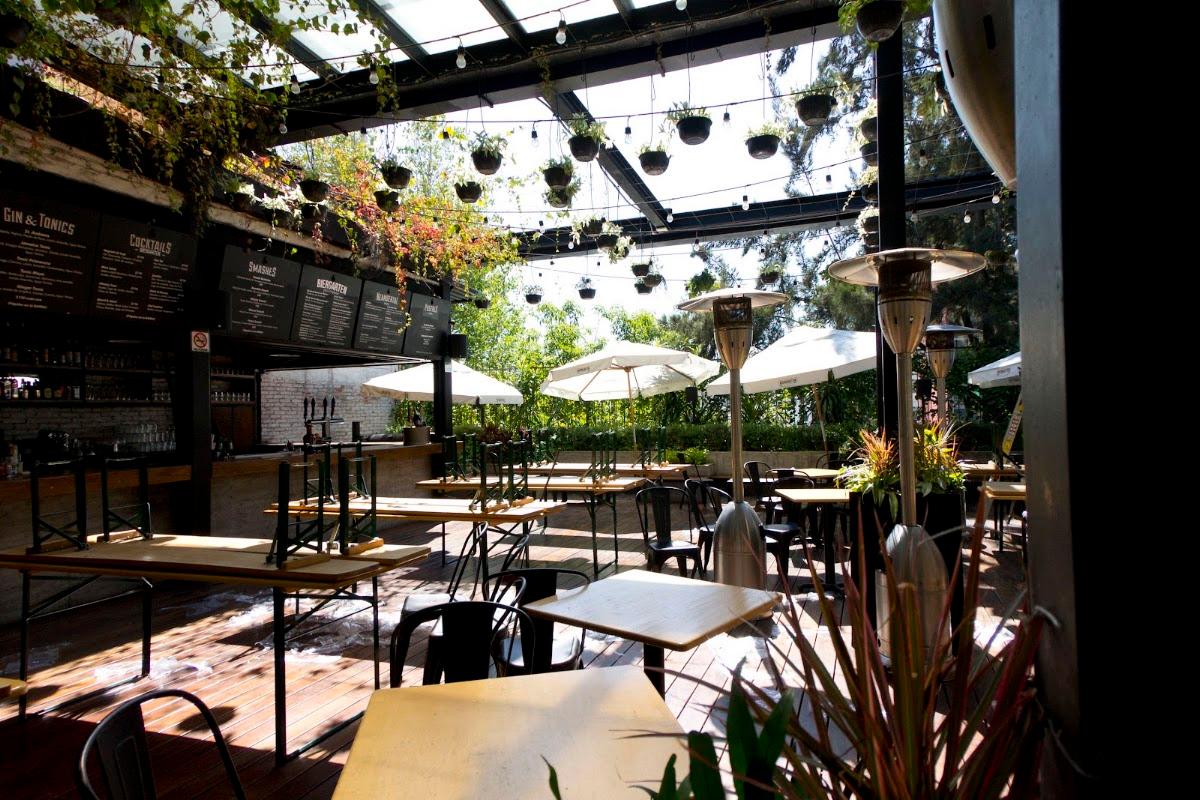
The upscale Querétaro 225 food hall — multi-level with a rooftop beer garden, communal seating, 30+ vendors covering Mexican classics, Italian, Vietnamese, Paraguayan, Spanish. More tourist-leaning than Mercado Medellín. Vendors mostly accept cards. Busiest after 7pm.
Best Neighborhoods for Independent Boutiques & Design
Roma Norte — Mexican Concept Stores
Leafy streets lined with independent Mexican fashion labels, apothecaries, architectural homeware studios, and perfumers. The main strip to walk is Calle Colima and Calle Orizaba. Standout stops: Utilitario Mexicano for nostalgic Mexican household objects with gallery-level taste; Xinú for botanical luxury perfumery celebrating native scents of the Americas; 180° Shop for emerging Mexican streetwear; and Laguna, a repurposed 1920s textile factory with independent architecture studios and ceramicists on the Roma/Doctores border.
The everyday objects of a Mexican home, picked out with a gallery eye. Most stock is made in small Mexico City workshops, the rest found by walking the Centro Histórico. A small shop at Marsella 3a — pair it with Carla Fernández and Xinú on the same street. Most things are light enough to pack.
Note: On the same block as Carla Fernández and Xinú at Marsella — do all three in one pass.
A perfume house built around plants of the Americas, with unisex scents made by Mexico's best-known perfumer, Rodrigo Flores-Roux. The Marsella boutique is a round wooden pavilion in an urban garden. Come on a weekday morning — crowds fill it on weekends. For a quieter visit, the original atelier is at Alejandro Dumas 161 in Polanco.
Note: Weekday mornings are quietest. Original atelier at Alejandro Dumas 161, Polanco, for a more private visit.
Widely considered Mexico City's first real concept store, open since 2011. Local streetwear and young Mexican designers, with small runs of each piece. Look for the old jukebox and the checkout counter built from VHS tapes. Carries their own lines: 180 grados, 180° Outwear and Leyenda Urbana.
Note: Small runs — what you see is what's left. Look for the checkout counter built from VHS tapes.
A 1920s yarn factory called La Barmenia, now home to architecture studios, ceramicists and design showrooms. Not a mall — you can sit in the café, browse the architecture bookshop, and buy from the galleries and studios. Open Mon–Sat 9am–7pm at Dr. Lucio 181. Come in daylight and take an Uber door to door (Doctores is rougher than Roma next door).
Note: Take an Uber directly to Dr. Lucio 181 — Doctores is rougher than Roma. Daytime only.
Condesa — Vintage, Bookstores & Slow Fashion
La Condesa is where I'd usually walk for relaxed browsing between coffee stops along Avenida Tamaulipas and Michoacán, without any particular plan or purpose. In my experience, this is how you eventually acquire your best pieces that would take a place in your home or would be a great gift for a friend who'd appreciate a unique piece that was brought from across the world. The curated second-hand boutiques Goodbye Folk (opens in new tab) and Erre Vintage (opens in new tab) are stocked with 70s–90s leather jackets, boots, and reworked denim.
Four floors of vintage at Córdoba 55, arranged like an archive — denim on one level, leather jackets (especially '90s) on another. They also make shoes and clothes to order, and there's a barber inside. The most reliable vintage stop in Roma.
Note: Four floors — walk all of them before buying. Denim on one floor, outerwear on another. Barber also inside.
Smaller and more carefully edited than Goodbye Folk. Everything reads menswear but the owner says it's all unisex. Known for jewelry by Mexican artisans and hand-sewn patched jackets. At Colima 100, easy walk from 180° Shop.
Note: At Colima 100, easy walk from 180° Shop. Reads menswear but everything is unisex.
Polanco — High-End Mexican Luxury
Alongside global luxury houses, Polanco showcases Mexico's premier resortwear and fine jewelry designers—such as Carla Fernández (contemporary fashion rooted in indigenous textile geometry) and Yakampot (Mexican heritage-inspired modern pieces).
What I love about Carla Fernández is that you can actually trace it to the indigenous community who stands behind the work. It's carefully designed and curated by a brand that works as a medium between artisan communities and contemporary fashion—catching the new turns of fashion and knowing how to market it, but produced by artisan communities across Mexico, bringing weaving and embroidery techniques into garments that feel contemporary rather than nostalgic.
Yakampot is Mexican heritage transformed for a modern rhythm of life, featuring handwoven panels and a reserved embroidery, without turning a look into a costume. These clothing pieces drape really well, making them extremely wearable day to day. If you want something that signals Mexico City in a very subtle way, this is a great choice.
Mexico's best-known designer working with Indigenous textile techniques. The flagship is a three-story house at Marsella 72, with a brutalist interior designed with sculptor Pedro Reyes. Clothes use androgynous shapes cut from Indigenous fabrics and are made to last years. Second boutique at Álvaro Obregón 200 in Roma Norte.
Note: Flagship at Marsella 72 (same block as Utilitario Mexicano and Xinú). Second boutique at Álvaro Obregón 200, Roma Norte.
Mexican womenswear with loose, flowing shapes made with craft workers around the country. Hand-woven ixtle (agave fibre) pieces by Hidalgo weavers are the highlight. Showroom at Salvatierra 45 is open Mon–Fri 10am–5pm; book a visit via their website. Drop-in option: the shop inside Condesa DF hotel at Av. Veracruz 102, open every day.
Note: Book a time slot on their website for the Salvatierra showroom. Walk-in at Condesa DF hotel shop, Av. Veracruz 102, open every day.
The easiest one-stop shop for Mexican design on Masaryk. Over 100 brands across women's, men's and genderless clothing, home goods and jewelry, with the best mix of local makers in one place. Polanco prices throughout — the sale rack is where the value is.
Note: Jewelry runs 1,600–30,000 MXN. The sale rack is where the value is.
More shops in Mexico City
The bigger-selection mezcal shop, early to stock bottles from several states, not just Oaxaca. Best visited once you know what you like and want to compare regions side by side. Ask for a tobalá from Oaxaca next to a verde from Guerrero.
Note: Multi-state selection, not just Oaxaca. Best visited once you know what you like and want to compare regions.
A small mezcal and agave spirits shop where staff walk you through free tastings with no pressure to buy. Over 56 brands and 120 labels, most not exported — unlikely to find them elsewhere in the city. Good first stop if you don't know mezcal yet.
Note: Free tastings with no pressure. 120+ labels, most not exported from Mexico.
What to Buy in Mexico City
Depending on the realities of your suitcase, there are multiple options when shopping for something that would bring you back to your time spent in Mexico City.
1. Artisanal Mezcal & Sotol
I decided to skip duty-free airport bottles and instead visit a dedicated mezcalería or tasting shop to sample small-batch wild agave spirits you can't find abroad. Both Tugurio Boutique (opens in new tab) and Mezcalia (opens in new tab) offer tastings and have bottle shops.
2. Hand-Thrown Ceramics & Barro Negro
Black clay pottery from Oaxaca, Talavera tilework from Puebla, or contemporary stoneware from local CDMX ceramic studios. La Ciudadela and Bazar Sábado are the most reliable sources.
3. Embroidered Textiles & Rebozos
Hand-loomed cotton shawls, Chiapas blouses, and woven table runners. Look for tight, even stitching on the reverse side to confirm handwork over machine prints.
4. Mexican Specialty Coffee & Single-Origin Chocolate
Whole-bean coffee from Chiapas, Veracruz, or Oaxaca, and stone-ground cacao. Good sources: Quentin, Buna, Avellaneda for coffee; Que Bo! or Tout Chocolat for chocolate.
5. Botanical Skincare & Perfumes
Locally formulated agave, copal, and cacao soaps, balms, and perfumes. Xinú (opens in new tab) is the standout—a perfume house built around plants of the Americas.
Practical Shopping Tips
Cash vs. Card
Boutiques, galleries, and Polanco stores take Visa/Mastercard without any problem. At La Ciudadela, Coyoacán, and Sunday markets, cash (MXN) is king—withdraw small bills (100 and 200 peso notes) from indoor bank ATMs beforehand, as stall vendors rarely have change for 500-peso bills (it happened with me twice).
Bargaining
Remember to never haggle in fixed-price boutiques or with individual indigenous artisans selling hand-embroidered work that took weeks to make—it's not going to land well and would generally be considered rude. At large markets like La Ciudadela, asking politely “¿Es lo menos?” (Is that your best price?) when buying multiple items from one stall is completely normal.
Packing for the Trip Home
It's easy to forget that mezcal, hot sauces, and mole pastes over 100 ml must go in checked luggage (pack bubble wrap or inflatable wine sleeves), and keep handwoven textiles clean and dry for customs inspection.
For where to base yourself while boutique-hopping, see the Where to Stay in Mexico City guide (Roma Norte and Condesa are the best bases). For the full city overview, read 10 Best Things to Do in Mexico City.