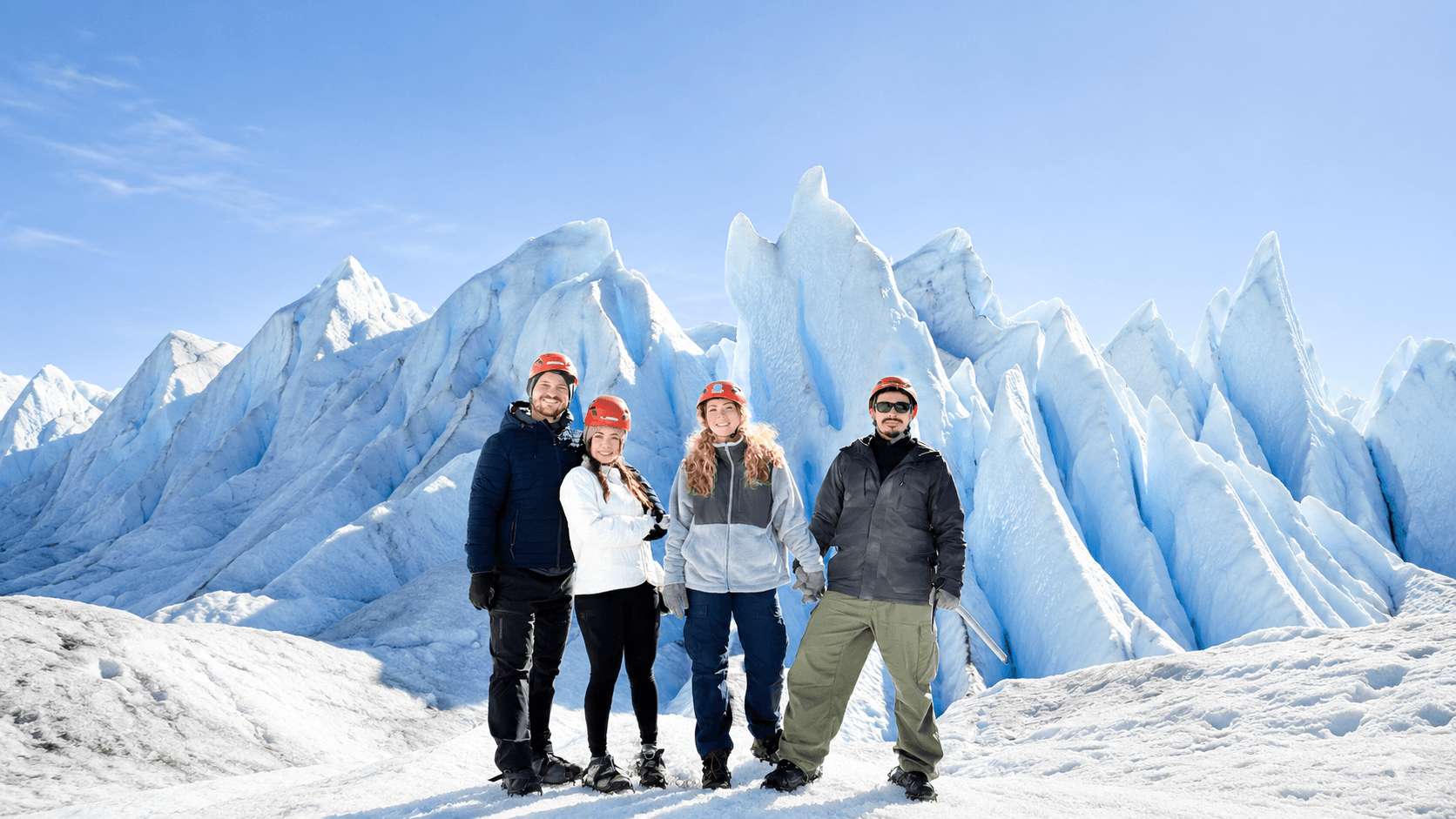
Perito Moreno Minitrekking Review: Is Walking on Ice Worth the Price?
Patagonia is so far out that just to get here you'd pay a high price for the plane tickets, but once you are here — you would totally get why it was worth the hustle. Untouched nature, pristine views on mountain peaks, and glaciers that face the threat of disappearing. Minitrekking is one of the most fascinating ways to explore one of the biggest glacial formations, the Perito Moreno.
Tour details:
- Length: About 1.5 hours walking on the ice itself, plus a 20-minute boat crossing and a short forest walk to reach the ice.
- Price: We booked directly with Hielo y Aventura and paid 372,000 ARS ($250 USD) per person, not including transfer since we had our own car. This was during shoulder season — rates shift with the season, so check current pricing before you book.
- Age limit: 8 to 65 years old.
Tour Logistics & What to Expect
Headed to El Calafate, we were looking into all available options to see the electric-blue, gigantic glacier Perito Moreno up close.
After careful research, here's what we found: Perito Moreno sits inside Parque Nacional Los Glaciares, about 50 miles from El Calafate — the closest town everyone uses as a base. Three tour options are available:
- A boat tour where you can get very close to see the glacier from the water
- Minitrekking — a hike on the glacier wearing crampons for grip on the ice
- Big Ice trekking — a full-day hike where you go deeper and see glacial caves and neon-blue tunnels
As visiting Perito Moreno was one of the few things we were looking forward to, we weren't ready to commit to a full-day deep hike — and flying from Buenos Aires, we barely had the right clothes for that. We decided on minitrekking, since it essentially includes the boat tour: you're taken to the national park by boat, and you get a unique opportunity to do a short explorative hike without straining yourself and saving some energy for other activities.
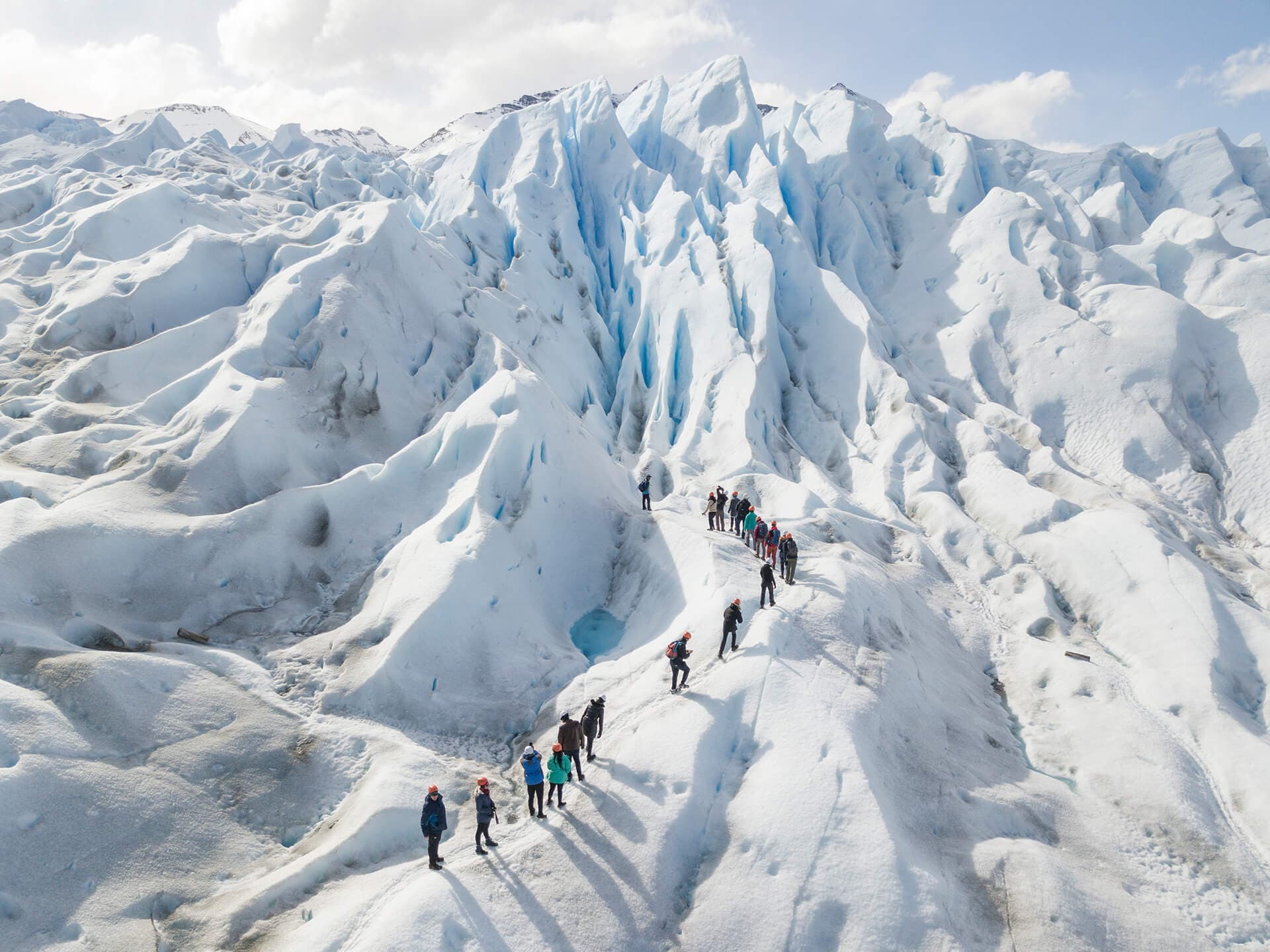
The Journey to the Ice
To get to the national park entrance, we drove about 50 miles from El Calafate city center. If you travel without a car, there's a transfer pickup option for an extra cost, so you don't have to worry about logistics.
Once you reach the gate, you pay an entrance fee to the reserve. My advice: get a Flexipass that works in El Chaltén too. The 3-day Flexipass covers both zones and is the smarter buy if you're doing hikes in both towns. As of January 2025, prices for foreigners are $45,000 ARS for a single day, $90,000 ARS for the 3-day Flexipass, and $157,500 ARS for the 7-day. Both multi-day passes are valid for six months and the days don't have to be consecutive — you can wait out bad weather.
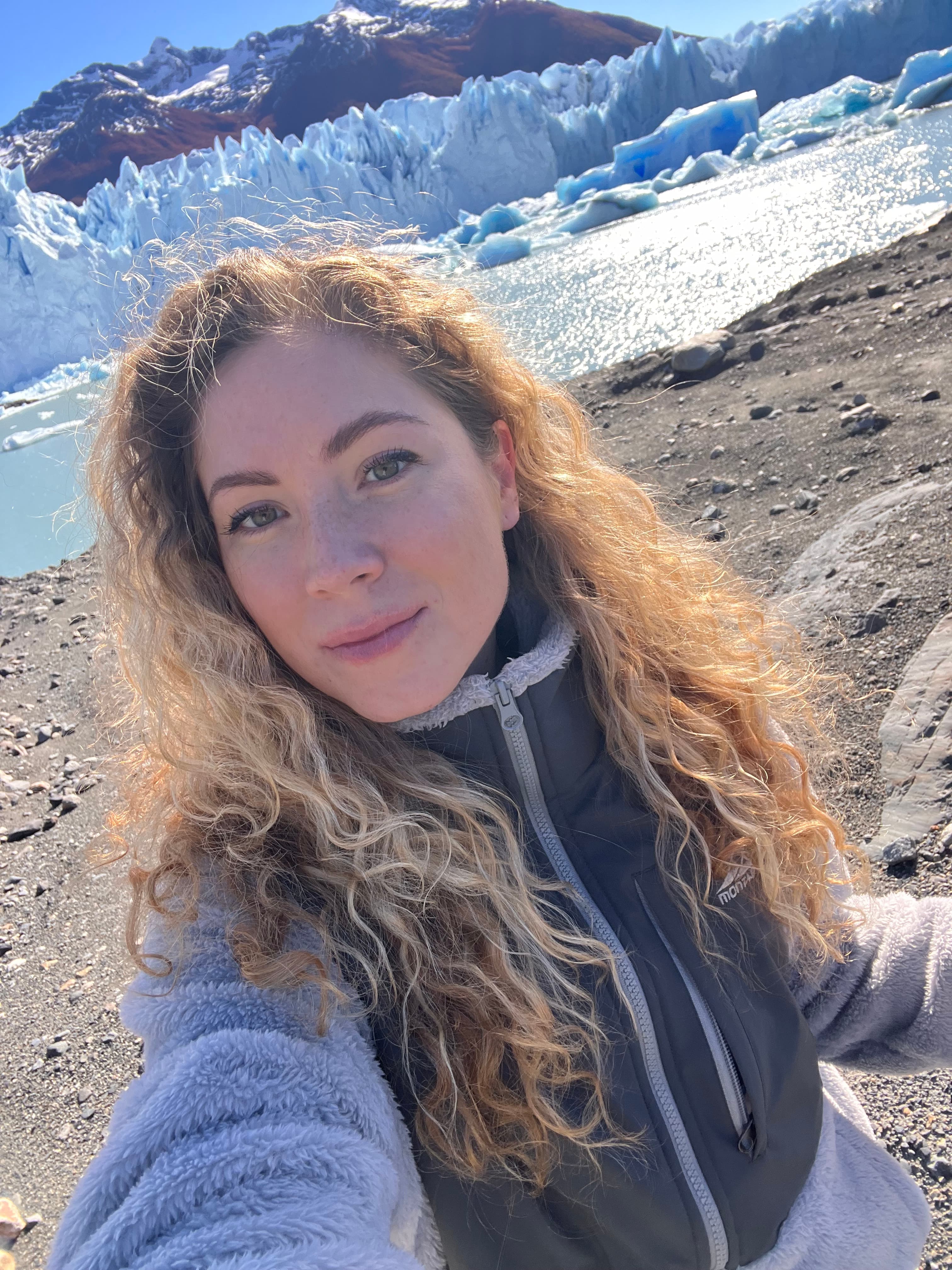
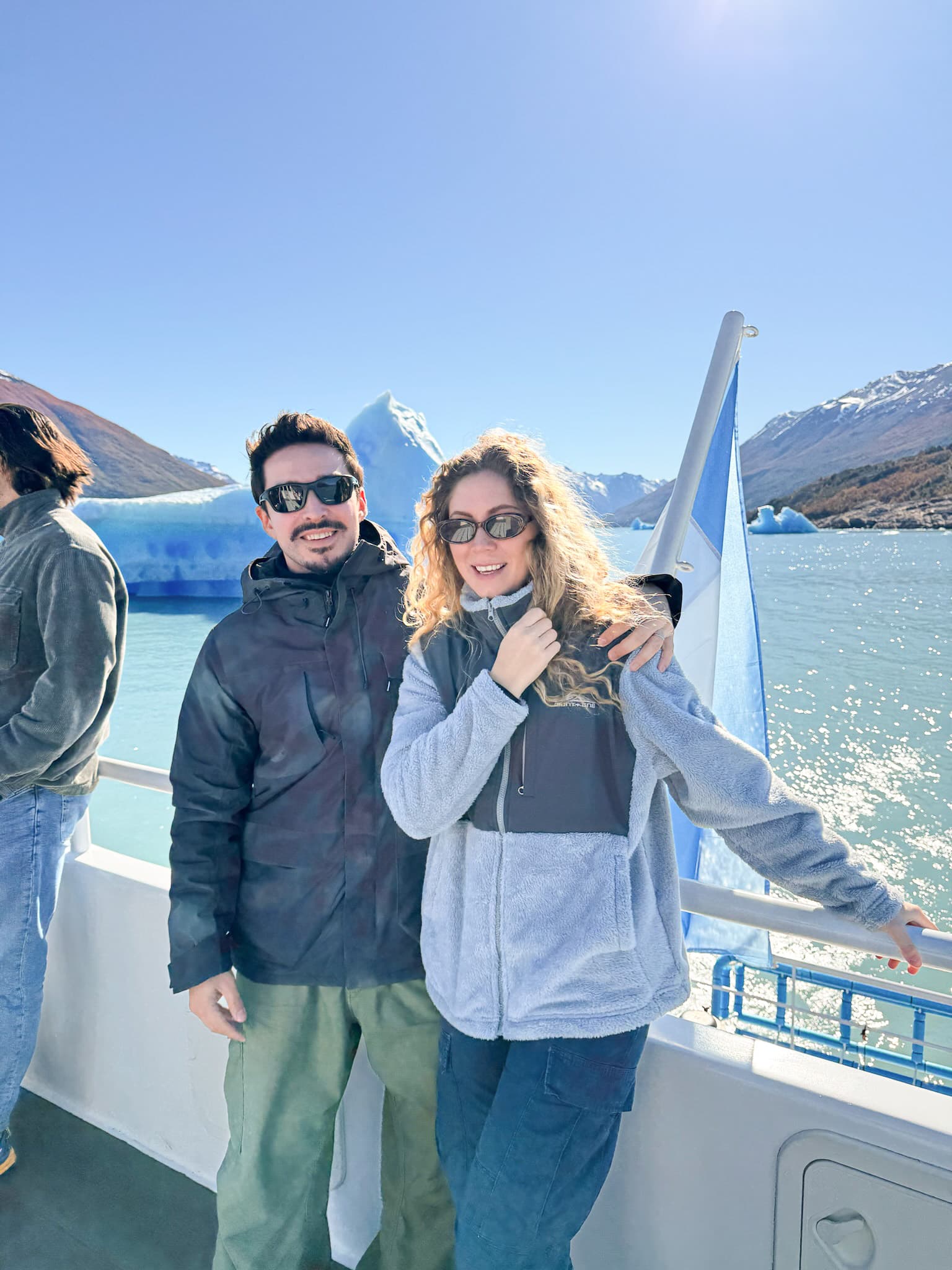
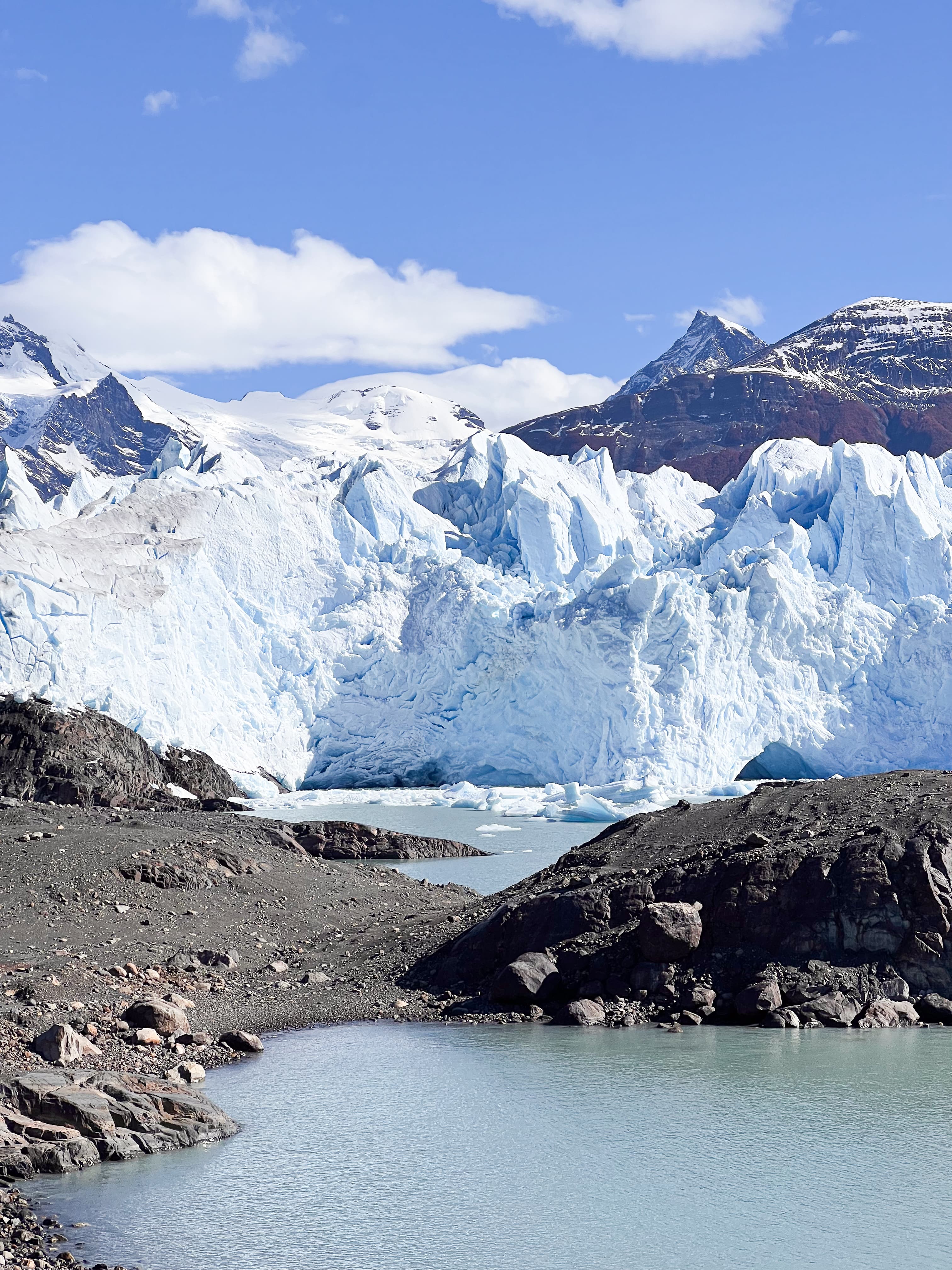
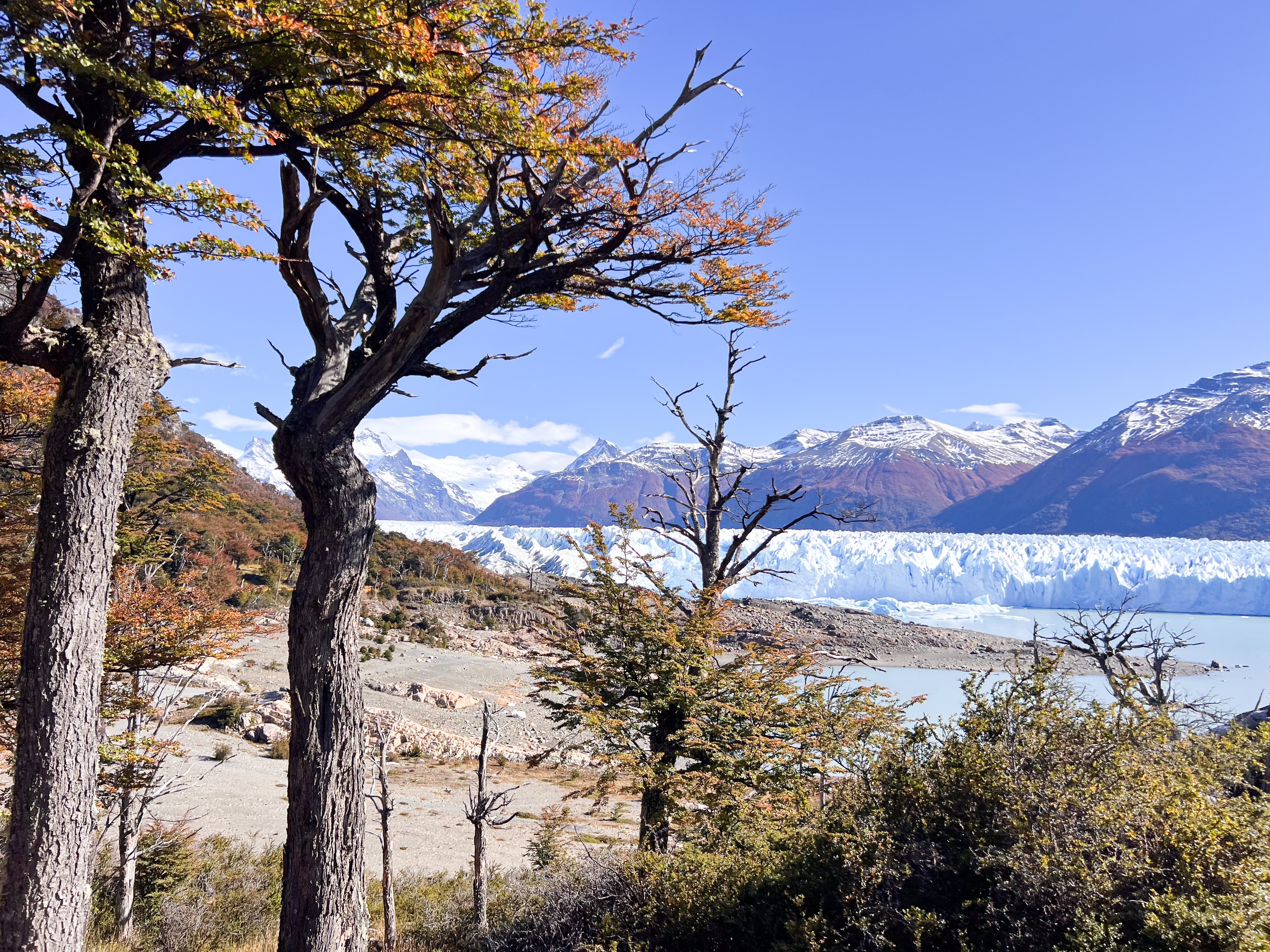
Once all paid up, we walked to the port where the boat picked us up. That's when we felt the adventure had begun — with every minute, anticipation was building up to finally take a little peek at the glacier. That's when we saw a tiny iceberg, freely floating in the pure turquoise lake, appearing out of meltwater streams. Slowly and steadily, the view opened up in front of us — there it was, a big moving, alive structure, thousands of years old, right in front of our eyes. I couldn't stop taking pictures.
Once we got off the boat, a group of guides greeted us and suggested we get some gloves to stay warm during the ice trekking and keep our hands safe from accidental cuts from the sharp ice.
The Age & Fitness Requirements
Minitrekking has a strict age limit: 8 to 65 years old. Before you're allowed on the ice, you'll fill out a health questionnaire — the activity isn't available to pregnant travelers or anyone with heart problems or serious cardiovascular conditions.
Take these restrictions seriously — this isn't a casual stroll. Physically it's rated moderate: you're walking on uneven, shifting ice for about 90 minutes at a steady guided pace, not scrambling or climbing. No prior hiking or ice-trekking experience is required, but a normal level of fitness and comfort with walking on an unstable surface for an extended stretch definitely helps. If you're out of shape or unsteady on your feet, the crampons and terrain will humble you fast.
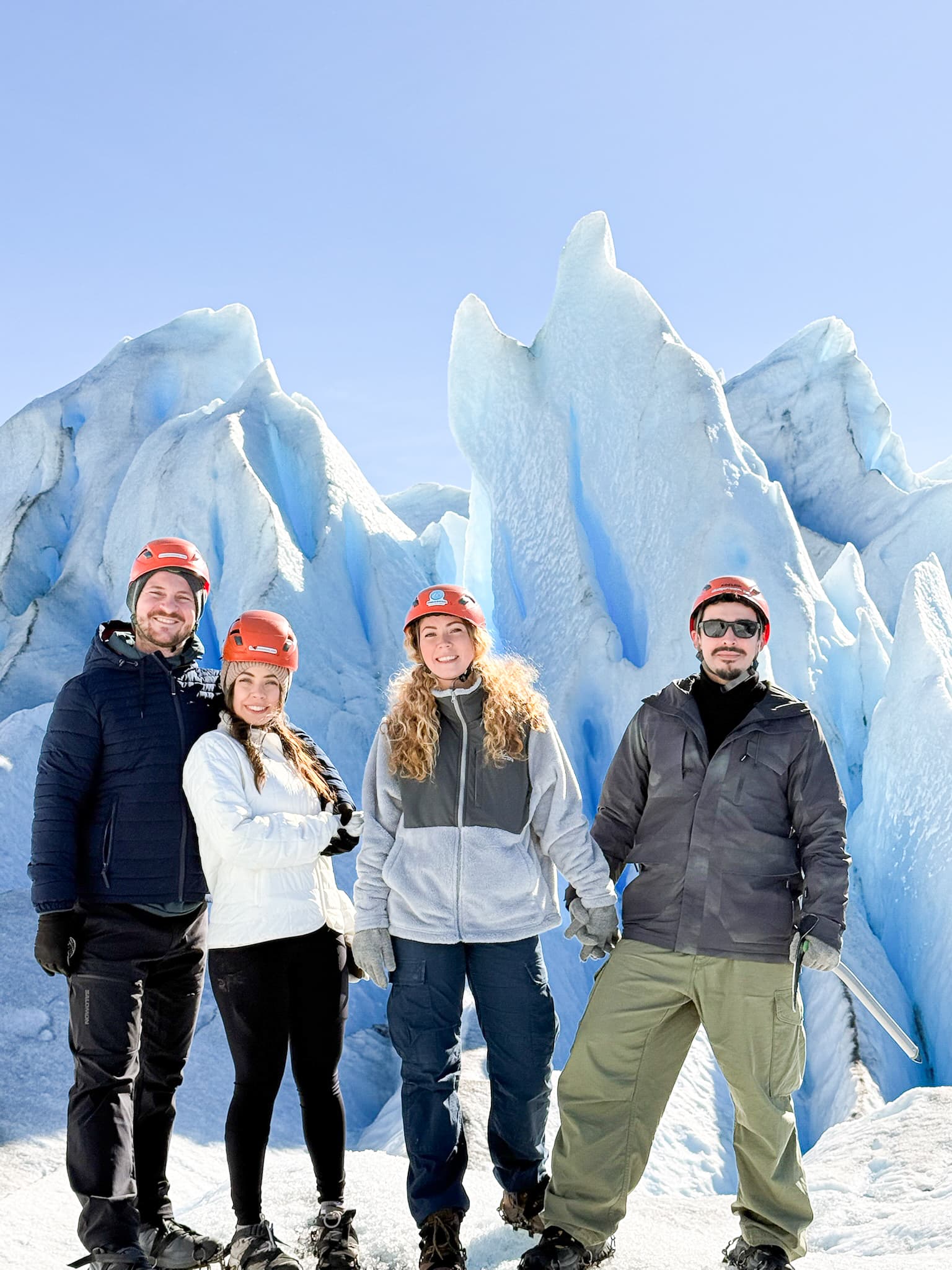
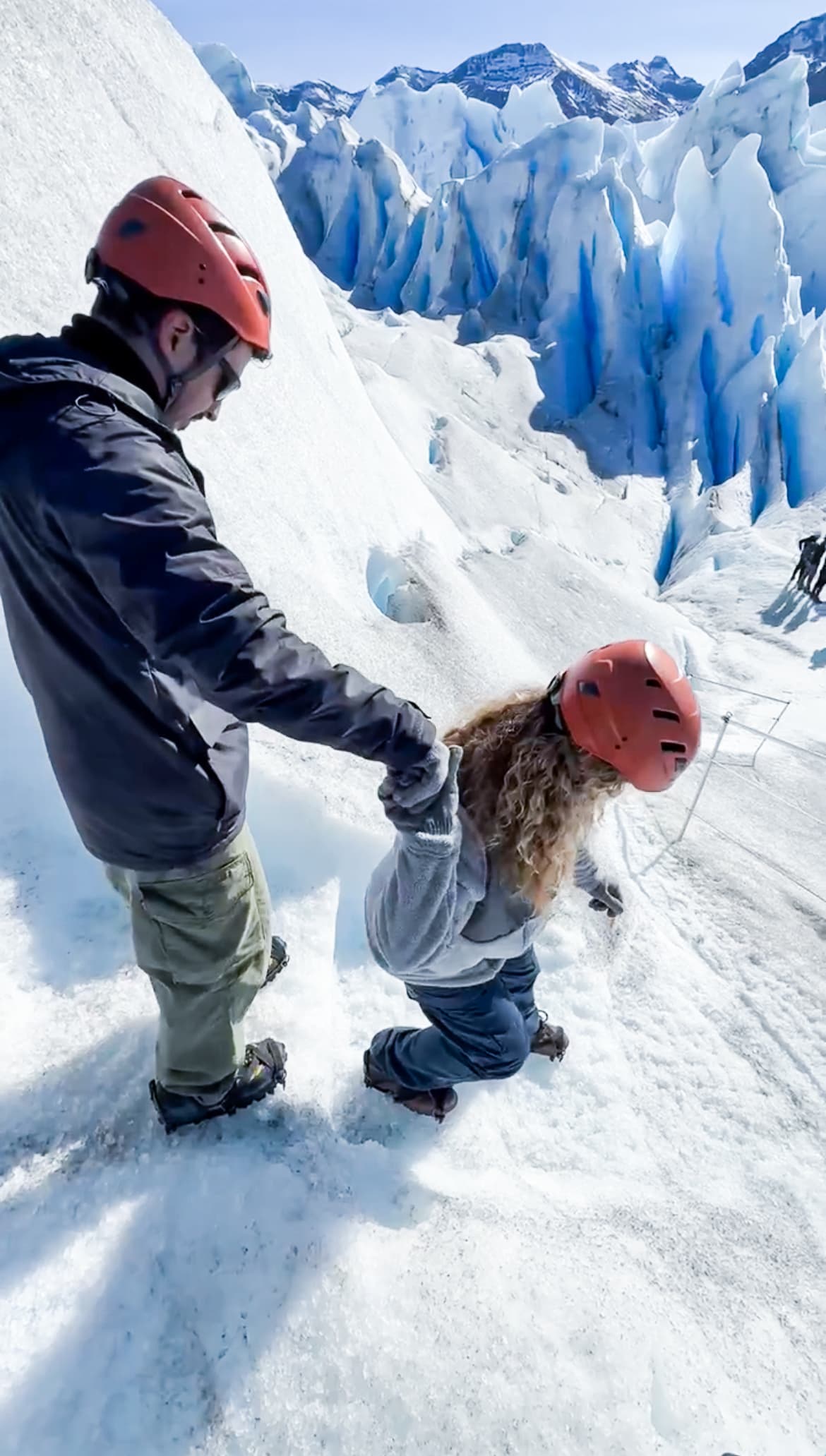
Pacing the Ice: The Glacier Experience
The “Cowboy Walk”
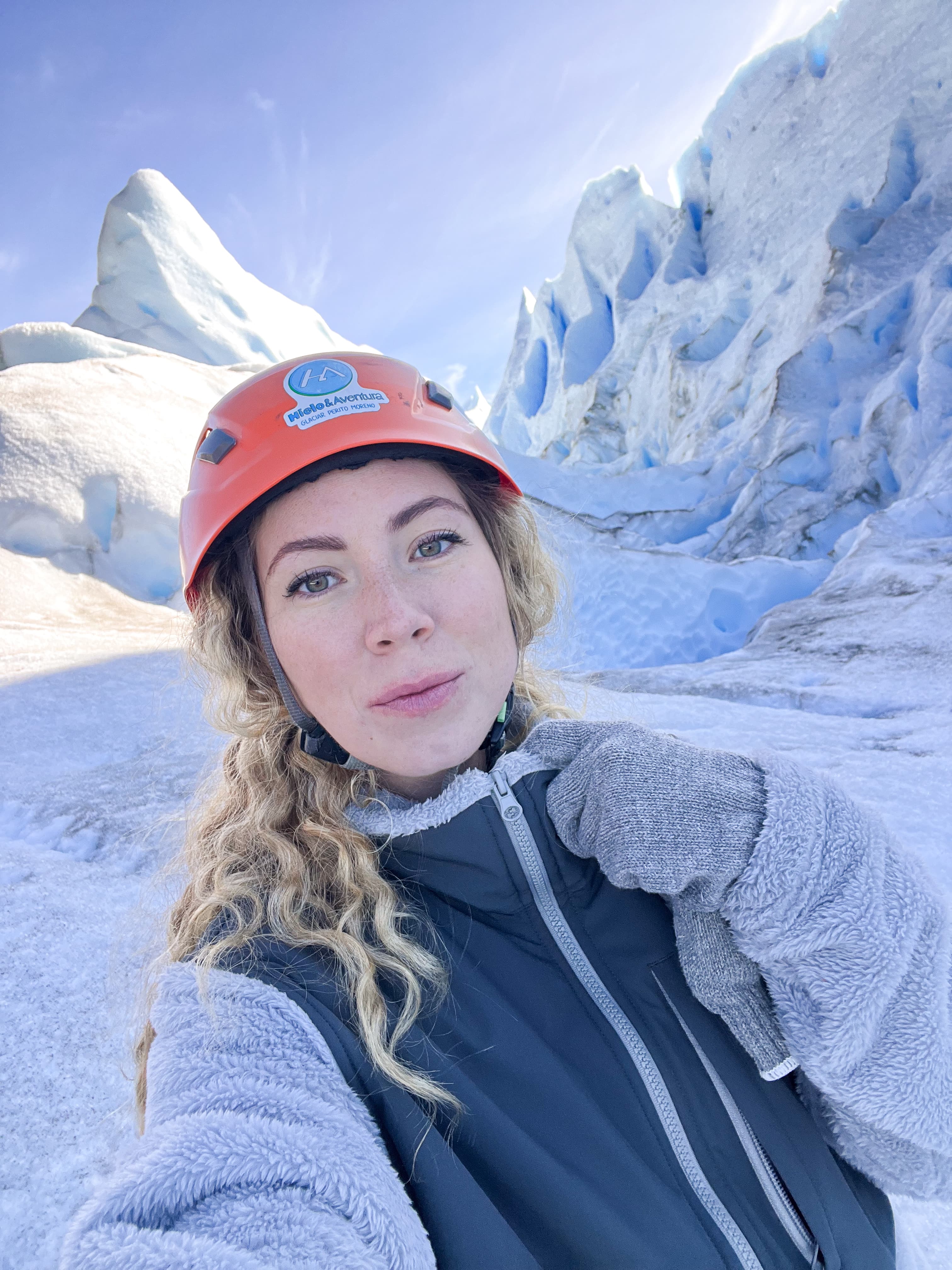
One essential part that can't be skipped is putting your crampons on. They look like a fork-like bracket that attaches straight on top of your shoes. Each of us was carefully assisted by a crew member who fitted them and made sure nothing was falling off or sliding when we started walking. We were also given helmets for extra protection, listened to a short safety briefing, and then we were ready.
Making a move with the crampons on definitely felt weird and super clumsy at the start, but then the crew taught us a “cowboy walk” — a wide-legged stride that creates perfect traction on solid ice. It very much reminds you of the riding spurs cowboys wear on their boots. Getting used to this gait required some practice, and I would say it wasn't easy to walk with crampons for 90 minutes straight — it always felt shaky and unstable (because it generally is) — but it was all very safe, and crew members were watching every step and helping on the hard, steep stretches.
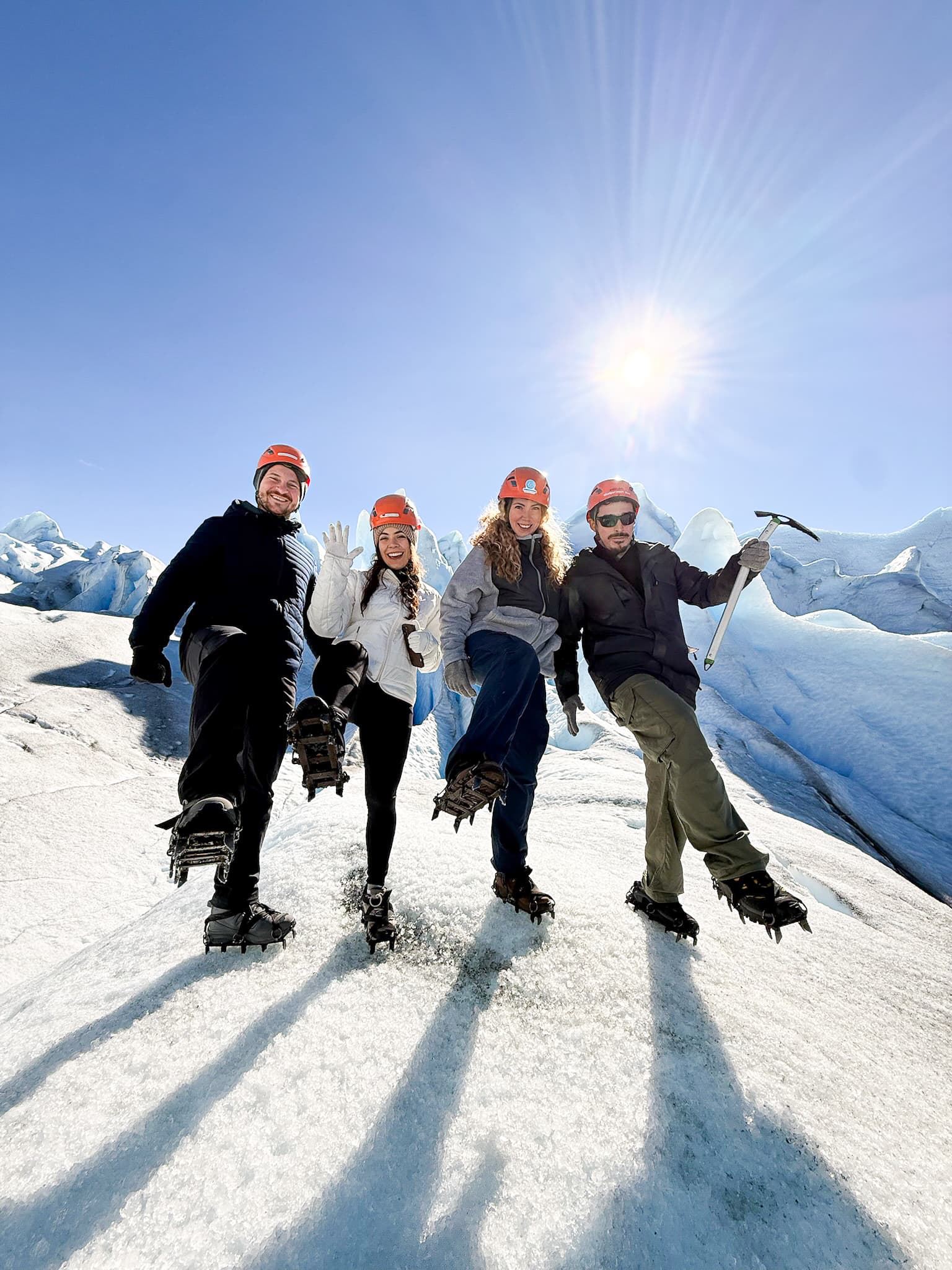
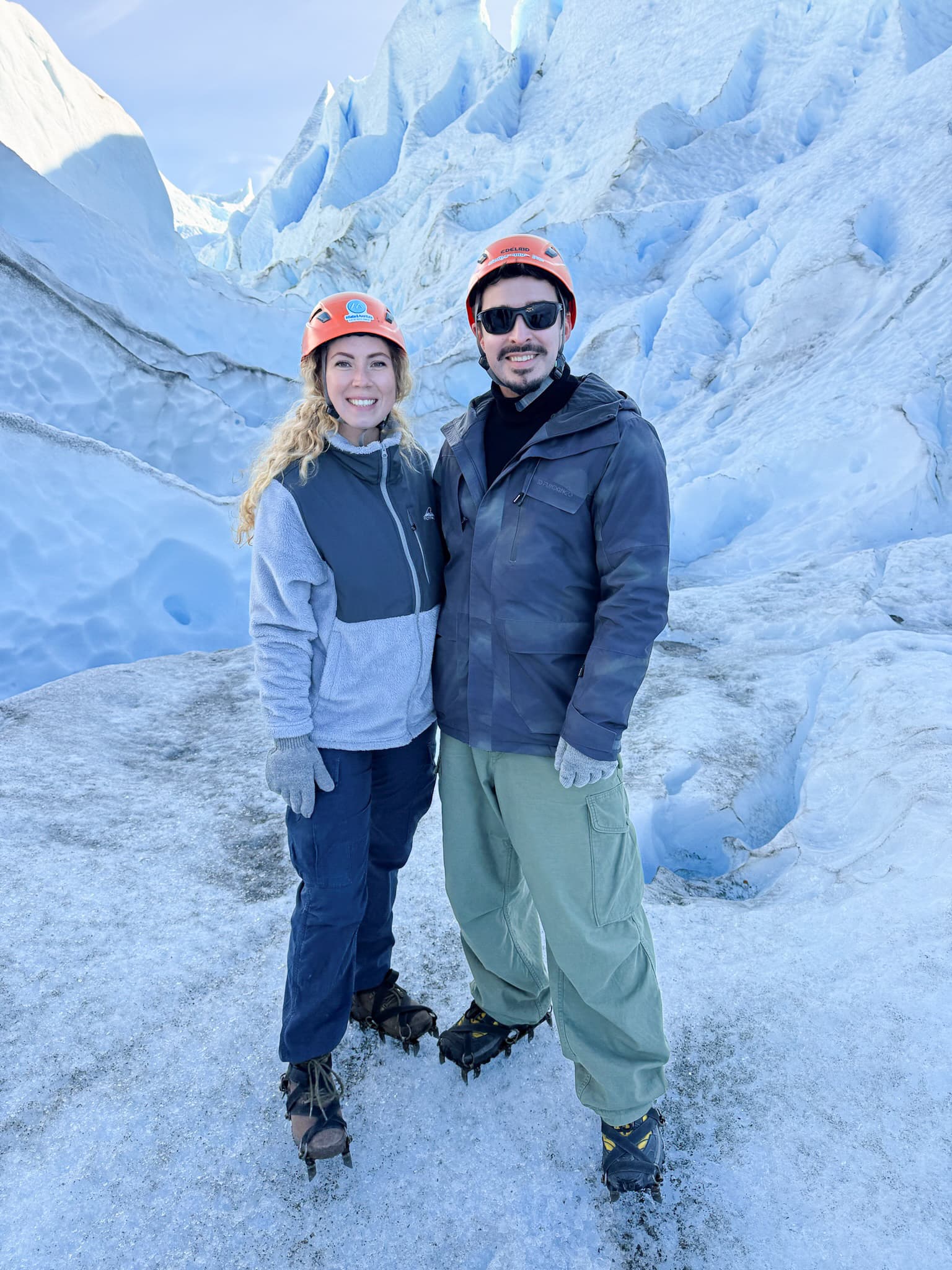
1.5 Hours in a Frozen Paradise
Let me paint a picture: I look right in front of me and I see this massive ice structure of an electric-blue color it got from centuries of immense pressure that squeezed out any trapped air or bubbles. The highly compacted, dense ice crystals absorb all red and yellow light wavelengths, reflecting back only a deep, sapphire blue. I start walking up, finding my footing and balance, trying to follow the marked path and the group, looking around more than at my feet because I want to study every little crack and feel the energy of its untarnished surface.
The guide tells us that Perito Moreno is 400 years old. Unlike other glaciers, it's highly dynamic — driven by steep Andean slopes and heavy precipitation, it advances roughly 2 meters (6.5 feet) every single day. Because it moves so fast, it's incredibly noisy. Its sounds feel like deep groans, sharp gunshot cracks, and thunderous roars as massive icebergs splinter off the front face and crash into the water below. I'm not going to lie — it's slightly nerve-wracking to hear this standing on top of it, but it's very safe. Those cracks happen far away from the trekking area.
I look down and see this rough, needle-sharp texture of the ancient ice, a moving, massive organism. All I see with my own eyes is just a tiny part of this giant. I try to find balance with my feet, and I imagine: I'm standing on an ice wall 60 meters (about 197 feet) high — like standing on top of a 20-storey building. I'm surrounded by a jagged, blindingly white-and-blue desert of ice peaks. This scale made me feel so small, surrounded by giant frozen waves stretching all the way back to the Andes. I have never experienced anything like it.
The Final Toast
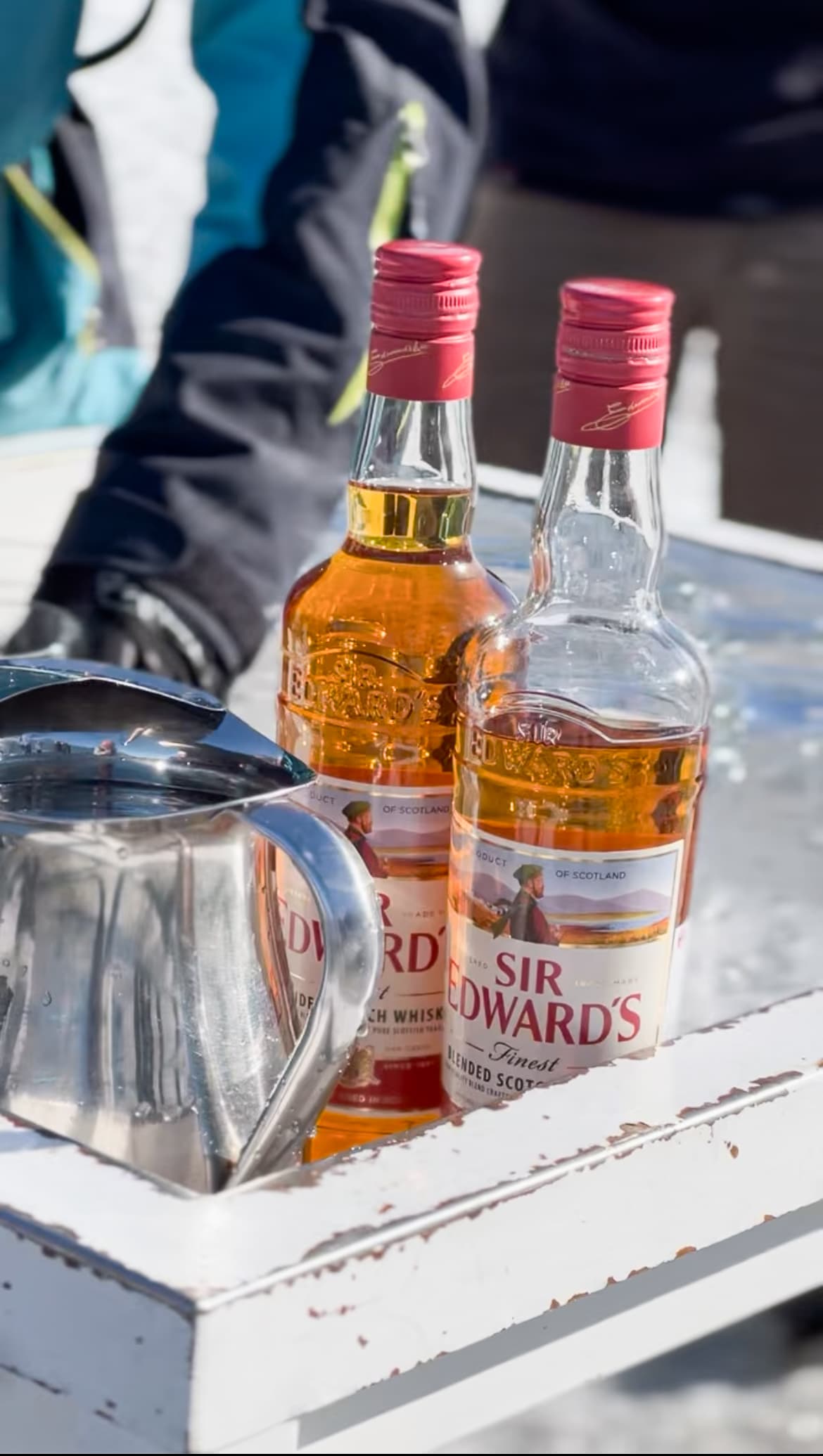
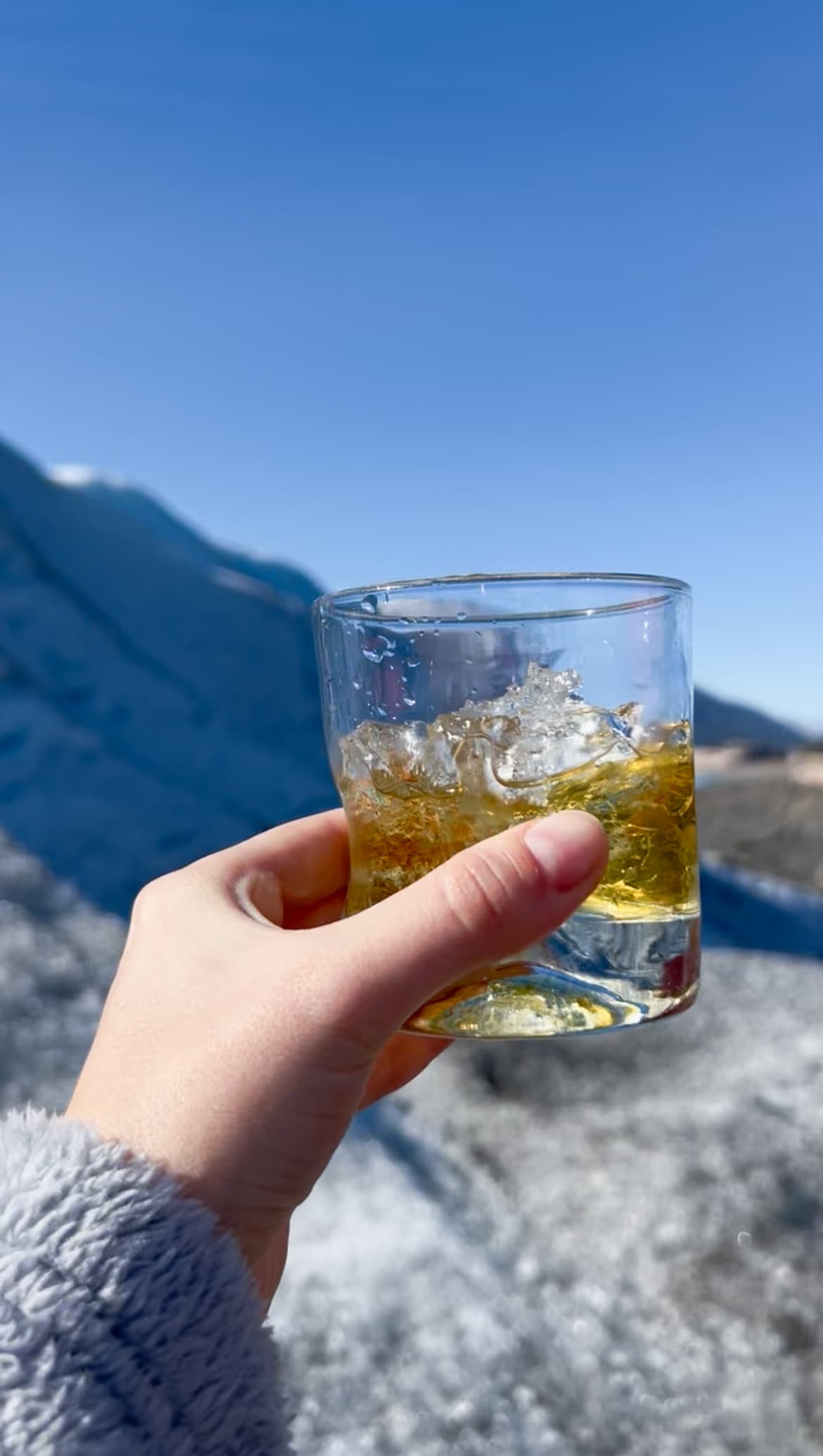
The cherry on top was a final toast with Scotch whiskey and freshly harvested, thousand-year-old glacier ice. The guides literally set up a temporary makeshift bar and poured the glasses. This little ritual felt so special, for the simple fact that it's probably the only circumstance where you'll ever drink whiskey with ice older than the whiskey itself. Our trip coincided with Easter holidays, so on top of the drink, we were given cute chocolate eggs.
Is It Worth Paying for Minitrekking, or Is Just the Boat Tour Enough?
If you ask me, it's 120% worth it. Access from the boat is limited to looking at the glacier from a distance, but actually climbing it puts everything into perspective — you see the colors and texture up close. Not to mention it's fun to challenge yourself with the crampons and test the cowboy walk. If I had to go back, I would choose minitrekking every single time. The price is not small, but when you experience it and see the setup, gear, and guides' preparation, you understand it's absolutely worth it.
Perito Moreno Glacier Is Under Threat
Tourism and tour groups don't impact the glacier in a bad way — it's affected by much larger forces like transportation emissions and global warming. By joining the tour, you're actually doing a good thing: tourist groups are the funding stream that helps the region support local environmental protection, scientific monitoring, and park conservation efforts.
It's hard to say how much time Perito Moreno has left in its current form. The glacier has officially entered a phase of rapid, irreversible retreat (opens in new tab). After decades of legendary stability, its front face has permanently detached from the underwater rock ridge (the pinning point) that held it in place. It's highly likely to retreat by several kilometers over the next decade, which will make the facing wall further away and harder to see. If you want to catch it before it changes, plan a trip soon.
Essential Packing Checklist for the Ice
Patagonian weather is famously fickle, and standing directly on top of a glacier makes it worse — wind picks up off the ice and temperatures can drop fast even on a sunny morning, so dressing in layers you can add or shed matters more here than almost anywhere else on the trip.
- Layered clothing: A moisture-wicking base layer, a fleece or down mid-layer, and a waterproof, windproof outer shell. You'll be generating heat walking, but standing still on the ice gets cold fast. Being able to peel off a layer and stuff it in a bag is key.
- Gloves: The guides will offer some on-site, but bringing your own means you know they'll fit. The ice is sharp and the wind bites.
- Footwear: Sturdy hiking boots or rigid athletic shoes with laces are required — no sandals or smooth-soled shoes allowed. The crampons are attached over your shoes, so anything that can't hold them firmly in place is a problem.
- Sunglasses: Bright sun reflecting off white ice is brutal on your eyes.
- Small daypack: For layers you peel off, a water bottle, and a camera. Leave valuables and large bags at the basecamp shelter.
Booking Strategy & Park Fees
Ice trekking permits are strictly capped by national park regulations to protect the glacier, so available slots fill up months in advance during peak trekking season (November–March). Book as early as possible.
We booked directly with Hielo y Aventura (opens in new tab), the only company authorized to run glacier treks at Perito Moreno. If you don't have your own car, securing a package that bundles transport is important — the port is a long way from town.
Here's the exact tour we did
Book the tour (opens in new tab)You may also like
Some of the links on this site are affiliate links. This means I may earn a small commission if you purchase them at no extra cost to you. I only recommend things I genuinely use or believe in.