Thailand | Chiang Mai
Is Chiang Mai Safe for Solo Female Travelers? Safety Tips, Neighborhoods & Transport (2026)
Last updated: October 22, 2026
Tucked away in the mountainous north of Thailand, Chiang Mai draws solo travelers in with Buddhist temples everywhere you look, one of the best specialty coffee scenes in Southeast Asia, and markets and food stalls that feel genuinely local rather than built for tourists. Many of my girlfriends had visited before me and said it felt safer than anywhere else they'd traveled. I wasn't convinced until I dug through forums, official sources, and firsthand accounts from solo women who'd spent real time there.
The short answer: yes, Chiang Mai is safe for solo female travelers. It was ranked the safest city in Southeast Asia on Numbeo's Safety Index (opens in new tab) in both 2025 and 2026, and once you arrive, you feel it — the pace is calm, violent crime against tourists is almost nonexistent, and the biggest real risk comes from the roads, not people.
This guide covers the neighborhoods worth staying in, how to move around safely after dark, what scams are worth knowing about, and what to do if something does go wrong.
In this article
- 1.Safest neighborhoods
- –The Old City
- –Nimmanhaemin (Nimman)
- –Best hotels
- 2.Areas to be cautious at night
- –Loi Kroh Road & Chang Khlan Road
- –Santitham
- 3.Getting around safely
- –Grab and Bolt
- –Red trucks and tuk-tuks
- –Scooter rentals
- 4.Things to watch out for
- –Street harassment & cultural norms
- –Common low-level scams
- –Burning season (Feb–Apr)
- –Nightlife & drink safety
- 5.Emergency & health checklist
- 6.FAQ
Chiang Mai Safety at a Glance
Overall Risk Level
Violent Crime Risk
Scams & Overcharging
Primarily tuk-tuks, night markets, gem shops
Transport Hazard
Road accidents — especially on scooters
Tourist Police (English-speaking): 1155
Ranking: #1 safest city in Southeast Asia — Numbeo Safety Index 2025 & 2026
Safest Neighborhoods in Chiang Mai for Solo Female Travelers
1. The Old City — Best for First-Timers & Walkability (opens in new tab)
The Old City
Vibe: Historic, charming, temple-lined — quiet alleyways, indie coffee shops, boutique guesthouses
Best for: Slow travelers, culture lovers, and anyone who prefers to get around on foot
Right behind the remnants of a 700-year-old defensive wall, a square-mile grid holds more than 30 active Buddhist temples, indie coffee shops in narrow alleys, and boutique guesthouses. The famous Sunday Night Market stretches down Ratchadamnoen Road and fills with hand-crafted Lanna goods, local art, and street food.
2. Nimmanhaemin (Nimman) — Best for Digital Nomads (opens in new tab)
Nimman
Vibe: Modern, walkable, high-end nomad neighborhood — co-working hubs, condo buildings, laptop-friendly cafés
Best for: Nomads who want convenience and a high density of other remote workers
The streets adjacent to Nimmanhaemin Road have grown into the main nomad base in Chiang Mai — trendy coffee shops, co-working spaces, and eateries where most of the remote-work crowd spends its days. Most condos in the area have small gyms; some have pools. The apartments are cosy rather than spacious, but they have everything you need.
My favourite hotels in Chiang Mai

Luxury spa resort set in the lush hills north of the city. Private pool villas, thermal springs, and valley views — worth it for a splurge night before or after a long stay.
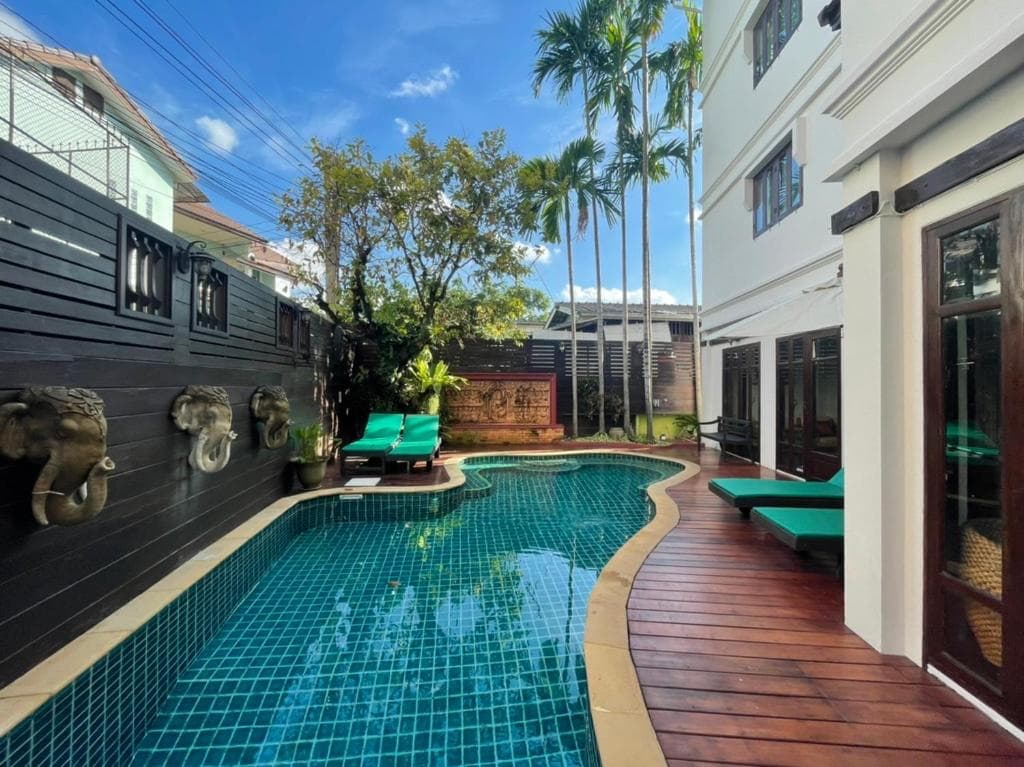
Boutique guesthouse with traditional Lanna-style architecture in the heart of the Old City. Quiet, walkable to all the major temples, and excellent value for the area.
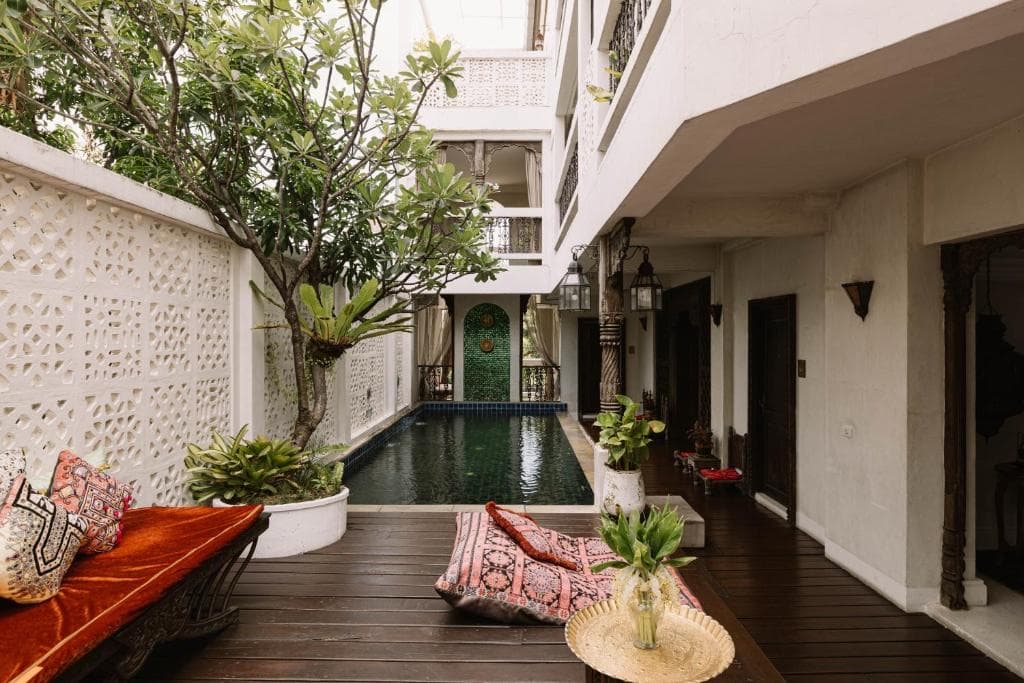
Design hotel steps from the Nimman coffee shops and weekend markets. Minimalist rooms, a relaxed lobby good for working, and easy walking distance to coworking spaces.
Areas to Be Cautious of at Night
Chiang Mai is genuinely low-risk, but a few specific pockets shift character after midnight and are worth knowing before you go.
Loi Kroh Road & Chang Khlan Road (opens in new tab)
These entertainment districts east of the Old City moat, leading toward the Night Bazaar, are heavily crowded with tourists during the evening. They're not dangerous, but after midnight — when crowds thin and the unlit side alleys branching off the main roads go quiet — the dynamic changes. Drunk tourists, minor scams, and pickpocketing are more common here than anywhere else in the city.
Santitham (opens in new tab)
A local, affordable residential neighborhood just north of the Old City — popular with digital nomads during the day for its cheap eats and local coffee shops, but with narrower, maze-like streets, fewer English signs, and sparse lighting in parts of it. Safe by day; if you're heading back late, book a Grab rather than walking through dimly lit streets.
Getting Around Safely as a Solo Woman
Grab and Bolt — Use These at Night
Rideshare apps are the single safest way to get around after dark. Every ride is GPS-tracked, you see the fixed price before you book, and you see the driver's name, photo, and licence plate before they arrive. Pay in cash or by card in the app.
Both Grab and Bolt operate well in Chiang Mai. Download both before you land — in my experience Grab has more cars available, but Bolt sometimes runs cheaper on quieter routes.
Red Trucks and Tuk-Tuks
You'll see red trucks (songthaews) and tuk-tuks everywhere. The short version: they can be a fun way to get around by day, but I'd skip them at night.
Neither has GPS tracking, which means no visibility over your route and no record if something goes wrong. Tuk-tuk drivers have a well-documented habit of steering tourists to gem shops or tailor shops mid-route — and some have taken advantage of drunk passengers, driving them to another bar and leaving them with a large bill.
Standard pricing for red trucks, for context:
- 20–30 THB per person for short shared rides within the city
- 30–50+ THB per person for longer routes
Scooter Rentals
The #1 risk in Chiang Mai is road accidents. Thailand has one of the highest road death rates in the world, and drunk driving is a significant part of the problem. Even experienced riders can get into accidents caused by other drivers.
Renting a scooter costs roughly 2,000–4,000 THB (~$60–$120) a month, and you'll see plenty of nomads riding them. But I wouldn't recommend it without real prior experience. Traffic can be chaotic, mountain roads to Doi Suthep are steep and winding, and Thai road culture has habits that catch foreigners off-guard.
Things to Watch Out for in Chiang Mai
Street Harassment & Cultural Norms
Catcalling and street harassment are much less common in Thailand than in many other destinations. Thai culture puts a high value on keeping calm and not causing a scene — a polite but firm "no, thank you" and walking toward somewhere busier usually works better than raising your voice. When visiting temples, cover your shoulders and knees: it's required at most of them, and it matters.
Common Low-Level Scams
Most scams in Chiang Mai are minor and annoying rather than dangerous.
- Red trucks and tuk-tuks without a fixed price. Always agree on the fare before getting in, or just use Grab.
- Night market pricing. Prices for tourists are often inflated — haggling with a smile is expected and fine.
- The "temple is closed today" line. A tuk-tuk driver tells you a temple is closed and offers to take you somewhere better. It ends at a gem shop where he earns commission. Politely decline and check temple hours yourself on Google Maps.
Burning Season (February – April)
Every year from late February through April, farmers burn their fields around northern Thailand and the city gets covered in smoke. PM2.5 levels can reach genuinely hazardous levels during peak weeks.
If you're visiting in burning season
- Check air quality every morning on the AirVisual app before going outside
- Wear an N95 or KN95 mask outdoors on bad days
- Book accommodation with a HEPA air purifier in the room
- Consider timing your visit before February or after May if respiratory health is a concern
Nightlife & Drink Safety
Chiang Mai's nightlife is lower-key than Bangkok or Phuket, but the usual rules still apply at popular spots like Zoe in Yellow or Spicy: keep your drink in your hand, don't accept drinks from strangers, and don't leave your glass unattended. When you're heading home, book a Grab or Bolt — not a tuk-tuk.
Solo Female Emergency & Health Checklist
eSIM for 24/7 Data Access
Being disconnected on arrival — no Grab, no maps, no way to reach your host — is a stressful start to any trip. I sort out data before I land. Instead of swapping physical SIMs for every destination, I use the Holafly eSIM (opens in new tab) for unlimited internet — the link gets you 5% off.
Apps to Download Before You Land
- Grab — rides and food delivery
- Bolt — backup ride option, sometimes cheaper
- Google Maps — save Chiang Mai offline in case you lose signal
- AirVisual — air quality, essential between February and April
Hospitals Worth Knowing
I hope you never need them, but anything can happen — from food poisoning to a scooter slide.
- Sriphat Medical Center. (opens in new tab) A semi-private wing of Chiang Mai University's public teaching hospital — you get direct access to the city's top medical faculty and university-grade diagnostics.
- Chiang Mai RAM Hospital. (opens in new tab) Centrally located private hospital, well-regarded by long-term expats for handling complex cases and emergencies. Many specialists trained at Chiang Mai University.
- Rajavej Chiang Mai Hospital. (opens in new tab) A smaller 150-bed private hospital south of the center along the Ping River. Strong marks for personal, efficient care — good if you want to avoid a big crowded ER.
Emergency Numbers
Travel Insurance
Medical bills and scooter accidents get expensive fast, even in Thailand. Don't travel without insurance — and remember that most policies won't cover you on a scooter if you don't have the right licence. You can check the price of nomad travel and health insurance here (opens in new tab).
Related
Chiang Mai Digital Nomad Guide
Co-working spaces, best neighborhoods to base yourself, cost of living, and what to know before you move.
Final Words
Chiang Mai is one of those places where you can relax a little as a solo woman — not switch off your judgment, but genuinely relax. Violent crime is very rare, and most of the real risks come down to roads, air quality during burning season, and the usual nightlife basics you'd watch out for anywhere. Stay in the Old City or Nimman, use Grab after dark, skip the scooter unless you're properly licensed, and you'll have a good time.